What's new

FILTER ADVICE - trying to capture a certain "look"

TA6126

TPF Noob!
Joined
Mar 17, 2013
Messages
9
Reaction score
1
Location
Canada
Can others edit my Photos
Photos NOT OK to edit
Hello!

I'm new to the forum so please excuse me if there is already a thread like this that I'm unaware of.


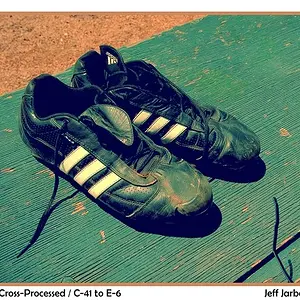
I just purchased a Nikon F5 film camera yesterday. I'd like to create film images that look like this: Eleni | Flickr - Photo Sharing!
Continue to click through the images to see other examples.

He used a Nikon F5, expired film and a filter. I tried asking the photographer what filter he used, but haven't received a response. Would I be able to achieve the same color tone with new film and a color filter?

I looked into the various 81 and 85 filters, but have no idea if these will help.

Any advice is greatly appreciated :) Thank you!
 
Last edited:
Why would anyone want to copy the effects of badly aged and expired film?:thumbdown:
 
I would think the biggest issue would achieving the effect consistently, especially considering it's created with OLD film.
 
Why would anyone want to come into a thread and reply with a jerk comment instead of saying something useful? :thumbdown:


ANYWAY, I like the color tones of the images. I didn't ask opinions on it. I asked how it can be done with new film and filters.
 
I would think the biggest issue would achieving the effect consistently, especially considering it's created with OLD film.

I guess I should clarify that it's the color tone I'd like to achieve. However, the photos he posted seem to be consistent.
 
Are you wet printing or scanning?
If you are scanning I would imagine that you could adjust the color sliders to achieve something similar w/ a photoshop or another photo editing program.
Lomography brand films I think are known for their different/hipster colors.
Alternatively, throw the film on the dash of you car and hit the defrost (joking of course, but could be interesting results).
 
Are you wet printing or scanning?
If you are scanning I would imagine that you could adjust the color sliders to achieve something similar w/ a photoshop or another photo editing program.
Lomography brand films I think are known for their different/hipster colors.
Alternatively, throw the film on the dash of you car and hit the defrost (joking of course, but could be interesting results).


Haha thanks, Canuk!

I haven't used my Nikon F5 yet, but when I do I'll be sending the film to a photo lab (a legit one, not a pharmacy). I was hoping I could get the tones in-camera, without photoshop help. I'll try looking into Lomography brand films. Thanks for the tip!
 
I would think the biggest issue would achieving the effect consistently, especially considering it's created with OLD film.

I guess I should clarify that it's the color tone I'd like to achieve. However, the photos he posted seem to be consistent.

I see 5 shots. Could be because they're all from the same roll.
 
You could try using some sort of a yellow filter to accomplish a vaguely similar color shift. I'm not sure how you'd get the desaturated look, though.

Or you can do it in post, either wet or digital.
 
You could try using some sort of a yellow filter to accomplish a vaguely similar color shift. I'm not sure how you'd get the desaturated look, though.

Or you can do it in post, either wet or digital.

I'll look into yellow filters.. thank you!
 
The color shift almost looks like redscaled film to me. (I know it wasn't - but I think you could get similar results that way.)

Redscaled film is nearly impossible to over expose. If you want 'red', expose anywhere from box speed to half the box speed. With more exposure it goes from red to orange to yellow. For example, a 400 ISO film, redscaled and exposed at EI 50 or lower would probably look more-or-less normal, with a yellowish-orange cast. More exposure = less red.
 
The color shift almost looks like redscaled film to me. (I know it wasn't - but I think you could get similar results that way.)

Redscaled film is nearly impossible to over expose. If you want 'red', expose anywhere from box speed to half the box speed. With more exposure it goes from red to orange to yellow. For example, a 400 ISO film, redscaled and exposed at EI 50 or lower would probably look more-or-less normal, with a yellowish-orange cast. More exposure = less red.

Great info! Thank you!
 
The color shift almost looks like redscaled film to me. (I know it wasn't - but I think you could get similar results that way.)

Redscaled film is nearly impossible to over expose. If you want 'red', expose anywhere from box speed to half the box speed. With more exposure it goes from red to orange to yellow. For example, a 400 ISO film, redscaled and exposed at EI 50 or lower would probably look more-or-less normal, with a yellowish-orange cast. More exposure = less red.

Great info! Thank you!

To get results like that using redscaled film, you'll need to "over-expose" the **** out of it. 3 or 4 stops worth, at least. It'll make for a slow film, but you'll get a nice yellow/orange like that without blowing anything out.
 
The color shift almost looks like redscaled film to me. (I know it wasn't - but I think you could get similar results that way.)

Redscaled film is nearly impossible to over expose. If you want 'red', expose anywhere from box speed to half the box speed. With more exposure it goes from red to orange to yellow. For example, a 400 ISO film, redscaled and exposed at EI 50 or lower would probably look more-or-less normal, with a yellowish-orange cast. More exposure = less red.

Great info! Thank you!

To get results like that using redscaled film, you'll need to "over-expose" the **** out of it. 3 or 4 stops worth, at least. It'll make for a slow film, but you'll get a nice yellow/orange like that without blowing anything out.

Noted. Thank you :)
 
If you go the redscale route, be prepared for a little experimentation. Not all films behave the same when redscaled. In my experience, Fuji films are MUCH more red than other films. (You may have noticed that the film base on color Fuji films tends to be more red/orange than Kodak films (for example) - I believe that is a factor that explains why Fuji films are so vibrantly red when redscaled.)

When dealing with redscaled film - if in doubt, over-expose. It can take a ton of over-exposure before you even start to approach any sort of failure. Extreme over-exposure just makes it look more like normal film.
 

Create an account or login to comment

You must be a member in order to leave a comment

Create account

Create an account on our community. It's easy!

Log in

Already have an account? Log in here.

New Topics

Back
Top Bottom