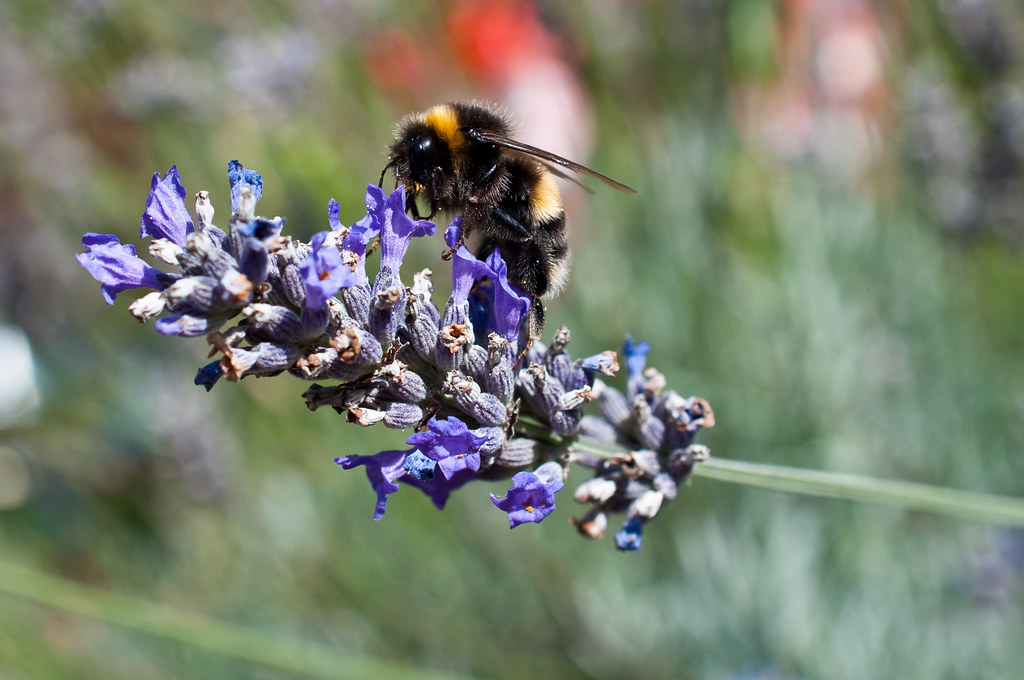
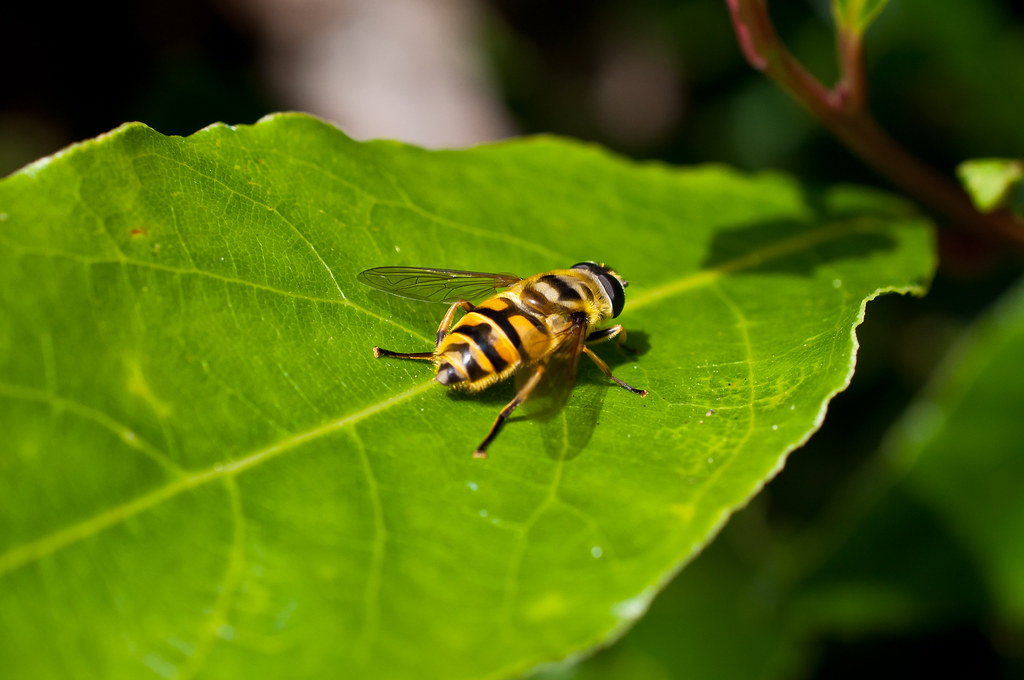
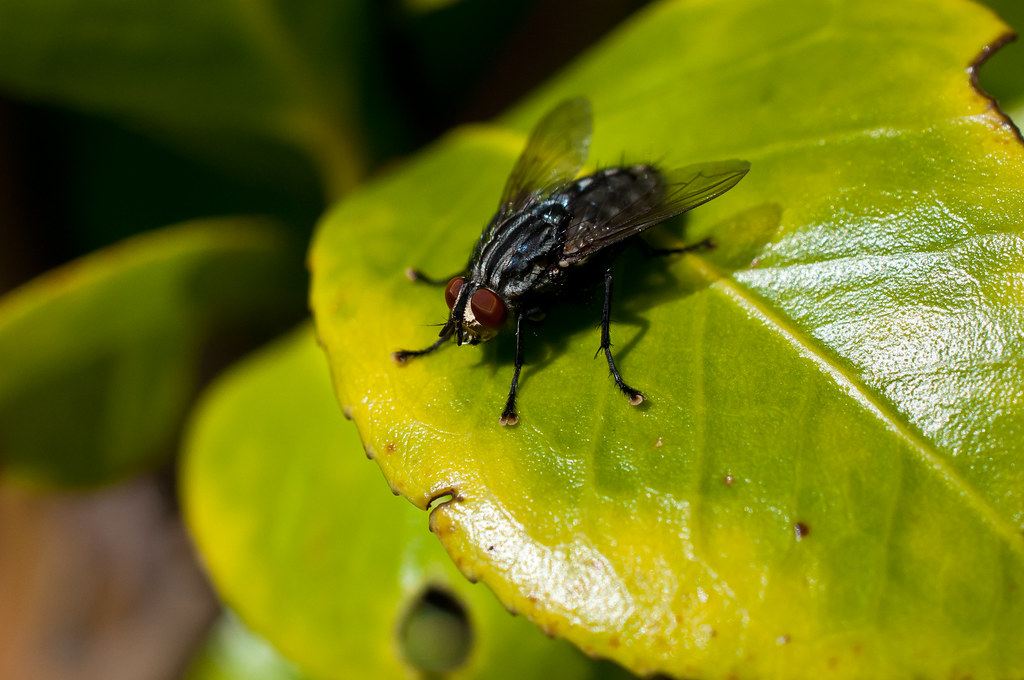
You can easily see for yourself - just set the focus to manual and focus on the closest point possible - then move the camera closer and closer to the subject until you get focus (ps this is how most macro photography is done - ergo without AF since its generally not that reliable at macro work).
With a 40mm you will be very close which presents a few difficulties:
1) Increased chance of spooking an insects - generally you'll want to be shooting either slow bugs or those cold after a long night, so getting up very early in the morning. Feeding times are also good chances to get insects at a less cautionary state.
2) Shadowing - you'll be close enough that the camera and lens will be shadowing the subject, making lighting much more tricky
3) Hard to add additional lighting - close up means its going to be harder to add light because you won't have much space to fit the lighting support into.
In general I'd say short macro lenses like that are good for close-up work of a similar scale to what you've shown and good for 1:1 macro when the subject is well lit and very static (flowers, documents etc...). For other work its a very difficult lens to use because of that short working distance (I say that as someone with a 35mm macro lens so I know well how tiny that working distance is) .