What's new

First photos - what went wrong

TheLurkingLoon

TPF Noob!
Joined
May 18, 2016
Messages
4
Reaction score
3
Can others edit my Photos
Photos OK to edit
Hey everyone,

So my wife finally told me to get a hobby. I enjoyed photography for a long time, I will sit and look through Nat Geo every month simply for the photo section. So I finally decided to purchase a starter kit I suppose.

Picked up a Canon Rebel T3 which came with the 75mm - 300mm lens. I know its not the greatest, but apparently for a first, and start camera, its not bad for the price.

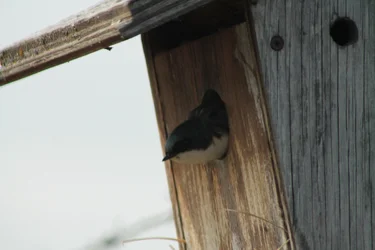
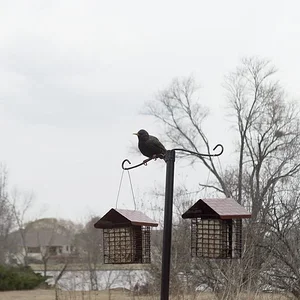
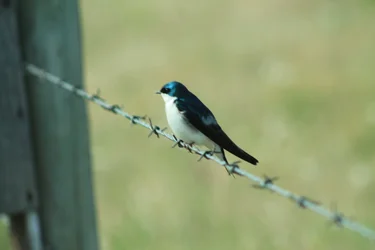
So today I set out for a few hours to take some photos of some birds nearby. After carefully thinking about my settings. I decided to go with the following for this photo.

SS 1/60
ISO 100
F 5.6

The lens was opened up to 300mm and I was maybe 10ft - 15ft to the bird, so nice and close.

As you can see.....the outcome of the image is....well...disappointing. I am curious, what could have or what went wrong here. At such a close distance I was expecting sharper.

REALLY open to guidance as obviously i'm fresh out the box.
 

Attachments

  • IMG_6655.webp
    IMG_6655.webp
    288.3 KB · Views: 404
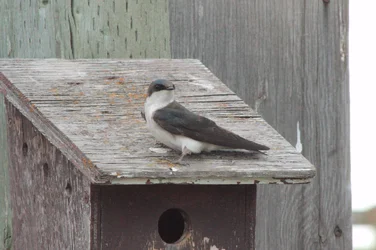
Same thing with this second photo, but with different settings.

open to 300mm
SS 1/640
ISO 1250
F 8.0
around 10ft from bird
 

Attachments

  • IMG_6656.webp
    IMG_6656.webp
    718.3 KB · Views: 397
1st shot appears to have good light but the 1/60 at 300mm will introduce a lot of camera shake.
A good rule is to be at least the same shutter 1/xxx as the focal length of the lens. So in the 1st shot 1/300. Aperture looks good.

If you are shooting in manual I recommend to switch your ISO to auto and the camera will expose the shot for you.

The second pic looks to be on a cloudy day and in the shade which will make the photos softer.
 
Assume you're not using a tripod. 1/60 sec. shutter speed with a 300mm lens is a no go. Nobody is holding that still so you have camera movement in the first photo. In the 2nd photo you got the shutter speed up, but still questionable. Focus seems to be forward -- in front of the bird.

Joe
 
One more problem to throw into the mix is that many lenses are not at their sharpest when wide open (smallest F#) or at their max focal range, in this case 300mm. So there could be an addition of various factors that can lead to a soft pic.

If possible in the second pic try the following.

Wait for better light.
Try to get closer and not use full zoom
try different F#'s
Up your shutter speed a bit.

Each lens has it's sweet spot where it will produce the best pic. Your job is to find it.

Keep trying and let us know how it goes.
 
Thank guys!

Zombie, I'm heading back form work then going to head out again. Going to put this into practice, and give it a go :) Also picked up a nice little, on sale tripod :)

I have nothing but time these days, so I am in no rush to the finish line. I am just enjoy learning, and being outside!

I will report back in :)
 
I have nothing but time these days, so I am in no rush to the finish line. I am just enjoy learning, and being outside!

This attitude and a willingness to learn will get far in life and photography.
You'll do well here.
 
The settings seem like they didn't work for the existing light. Seems like you'll need to learn how to meter a scene and adjust settings for the conditions.

As already mentioned, that's a slow shutter speed for the first one. You also might have done better with a smaller aperture to get more depth of field (more area around the subject/the bird) in focus.

Then the second one has such a fast shutter speed you didn't get blur/shake but probably weren't getting enough light into the camera (although the bird's in some shade from the birdhouse and mixed light can be tricky). The camera's meter may have been 'reading' the light coming from behind/around the birdhouse.

Next time try pointing the camera at the birdhouse (more to the right from this vantage point), adjust shutter speed and aperture - then reframe the shot to get what you want in the picture, then you should be ready when a bird shows up.

I'd expect it will take some practice. See if you can just get the birdhouse and some of the branch in focus and properly exposed, or try using some trees or flowers as subjects, then you might do better getting moving objects like birds.
 
The 75-300 tends to be bit soft anyway. That softness increases when zoomed out from 70mm.
 
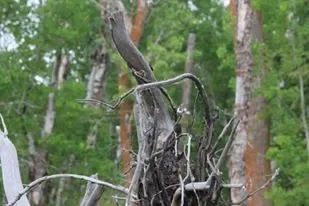
Hey everyone! Thanks for your input and advice. Went back after work to the lake, and had another go, putting some of these suggestions to work. I personally think they came better.

Bird pic settings

distance - 8ft
150mm
SS 1/250
F.16
ISO set to auto - 2500

Log settings
disatnce - 15ft maybe
125mm
ss 1/200
F.18
ISO set to auto - 3200


I could be way out here, but is the ISO getting "up there"?


anyhow, I think they are an improvement to the first. I purposely, went to a higher Fstop to help with sharpness, and brought the SS up a little.
 

Attachments

  • IMG_6668 - Edited.webp
    IMG_6668 - Edited.webp
    695.1 KB · Views: 329
  • 13245283_1712980238956438_5613186996620014446_n.webp
    13245283_1712980238956438_5613186996620014446_n.webp
    14.5 KB · Views: 244
Come down to F8 on both of those and you'll have more available light which will in turn have less noise but yes these are an improvement.
 
F16/18 is causing your ISO to go up ... you may not need to go that high ... f8 should be Ok.
I would crank down the aperture to up the shutter speed, a bit.
 
One other point that others haven't mentioned is: photographing birds (or wildlife in general) is tough. Not the hardest thing I've ever shot. But it benefits from some specific skills, shooting approaches, and equipment. As others have pointed out...a tripod (especially with a bigger lens) is critical. Patience is key. You need to become part of the scenery, something all the critters get used to and comfortable with. You want to plan...so you can anticipate where the backlighting is. "Seed" your shooting location so you can pre-focus for some initial good results. Study your subjects and learn to anticipate their movement.

For someone who hasn't shot a lot recently, with new equipment, shooting wildlife, those are decent starter shots. Not what you want, and not what you'll be shooting in 2 months, but okay for a beginning. So set challenges for yourself, keep shooting and keep seeking critique and input.

Cauzimme is a great example of someone who started out and did exactly of those things with her boudoir photography. And now she's making a living off of it and producing outstanding, kick-ass images.
 
I'm assuming that lens isn't stabilized. Having one will make a huge difference at 300mm. If shooting at 300mm without a stabilized lens, your going to need faster shutter speed than 1/640. I'm going to say 1/1000th minimal. Remember, when you are at 300mm..every little movement is magnified by A LOT.

Turn that ISO up! Don't be afraid of it :D

Here is a shot I took. My settings are:
300mm @ f/8, 1/1000th and ISO 1800.

Erwin-160407-2067.webp


Granted I took this with my D610 and a 70-300 VR so I had a slight advantage, but with the right settings you should be able to achieve the same image.
 

Create an account or login to comment

You must be a member in order to leave a comment

Create account

Create an account on our community. It's easy!

Log in

Already have an account? Log in here.

Back
Top Bottom