

amolitor
TPF Noob!
- Joined
- May 18, 2012
- Messages
- 6,320
- Reaction score
- 2,131
- Location
- Virginia
- Can others edit my Photos
- Photos OK to edit
- Banned
- #1
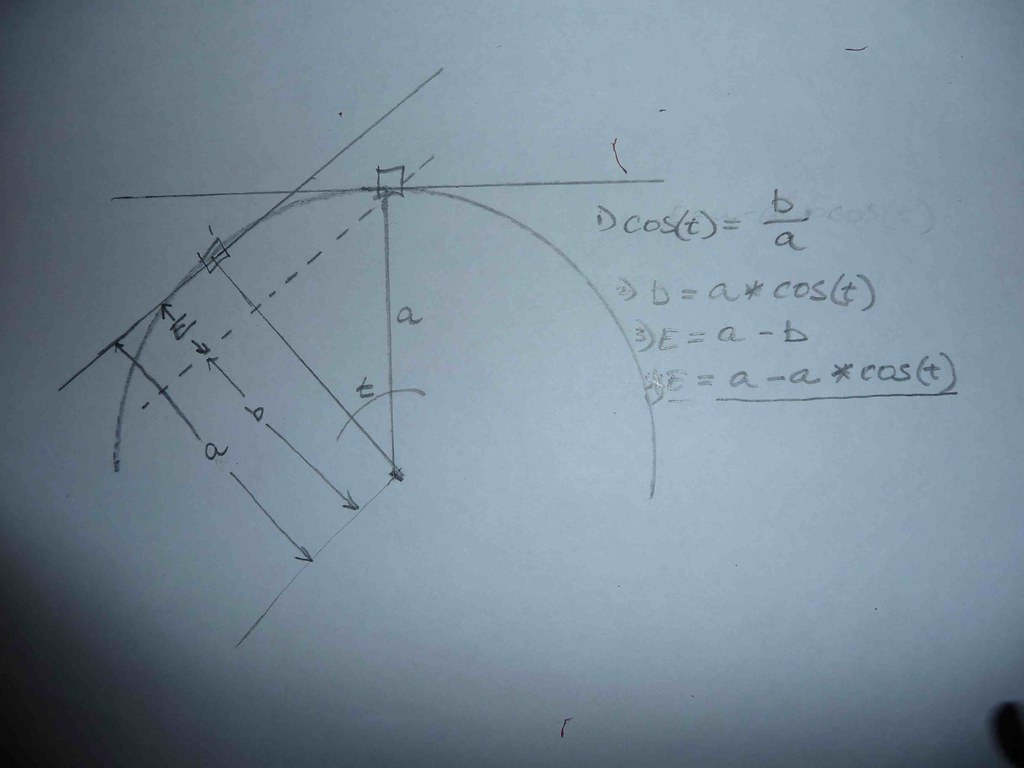
At some point pretty early you'll learn to use single point focus, to do that, and then to recompose the picture after you've locked focus. This works fine, a lot of the time. Geometry tells us that whatever you focused on isn't quite the same distance away after you recompose, though. So your focus isn't quite perfect when you recompose. The more radically you move the camera to recompose, the worse it gets. How can you tell how much you can get away with?
First you need to know, or remember, that your f-stop determines how much depth of field you have which is, roughly, how wrong your focus can be before it starts to look all unsharp and bad. You can look up more about Depth of Field elsewhere. What you need to know here is that the bigger your f-number, the more you can get away with.
Second, hold your hand out at arm's length, and see how wide your thumb appears to you. It should be about 2 degrees unless you're somewhat non-standard. That doesn't matter. Yes, this rule of thumb uses actual thumbs!
Here's the rule: You can recompose by one thumb-width per f-number. At f/2.0 you can move the camera's view from one side of your thumb to the other. Here's an example:
Let's say you focus on the model's eyes. Then you recompose so that same focus point has moved to the middle of her chest. Hold your thumb out at arm's length and estimate how many thumbwidths would cover the distance from her eyes to her mid-chest. Let's say it's 5 thumb widths. Then you better be "stopped down" to about f/5.6 or so.
CAVEATS AND WARNINGS:
- this rule falls apart for closer distances, under about 6 feet, or with lenses longer than about 100mm. It is useless for macro work.
- with closer distances and longer lenses, be more conservative
- with longer distances and wider lenses (say 50mm lens at 30 feet) this rule is pretty generous you can push it a fair bit
- don't use it for more than about 8 thumbs, that's a lotta recomposing there, find a better way to focus on what you want
- if you have multiple focus points, use the closest one to minimize the amount you have to recompose
- it's always possible i have botched the math, so, use with caution
First you need to know, or remember, that your f-stop determines how much depth of field you have which is, roughly, how wrong your focus can be before it starts to look all unsharp and bad. You can look up more about Depth of Field elsewhere. What you need to know here is that the bigger your f-number, the more you can get away with.
Second, hold your hand out at arm's length, and see how wide your thumb appears to you. It should be about 2 degrees unless you're somewhat non-standard. That doesn't matter. Yes, this rule of thumb uses actual thumbs!
Here's the rule: You can recompose by one thumb-width per f-number. At f/2.0 you can move the camera's view from one side of your thumb to the other. Here's an example:
Let's say you focus on the model's eyes. Then you recompose so that same focus point has moved to the middle of her chest. Hold your thumb out at arm's length and estimate how many thumbwidths would cover the distance from her eyes to her mid-chest. Let's say it's 5 thumb widths. Then you better be "stopped down" to about f/5.6 or so.
CAVEATS AND WARNINGS:
- this rule falls apart for closer distances, under about 6 feet, or with lenses longer than about 100mm. It is useless for macro work.
- with closer distances and longer lenses, be more conservative
- with longer distances and wider lenses (say 50mm lens at 30 feet) this rule is pretty generous you can push it a fair bit
- don't use it for more than about 8 thumbs, that's a lotta recomposing there, find a better way to focus on what you want
- if you have multiple focus points, use the closest one to minimize the amount you have to recompose
- it's always possible i have botched the math, so, use with caution




![[No title]](/data/xfmg/thumbnail/32/32717-74f4cee577117aa4476c9eb68fec51c7.jpg?1734162352)

![[No title]](/data/xfmg/thumbnail/37/37131-0af98967b391a8bd22ce1d14f6afb9cc.jpg?1734169834)
![[No title]](/data/xfmg/thumbnail/37/37130-15360a524d273bc7dcd0beda3e9299ee.jpg?1734169834)

![[No title]](/data/xfmg/thumbnail/37/37134-5a2bb173004bc7a08fdf2124814ebdc1.jpg?1734169835)