What's new

Having trouble with focus. Any tips?

Stacie

TPF Noob!
Joined
Aug 13, 2013
Messages
30
Reaction score
5
Location
Trempealeau, Wi
Can others edit my Photos
Photos OK to edit
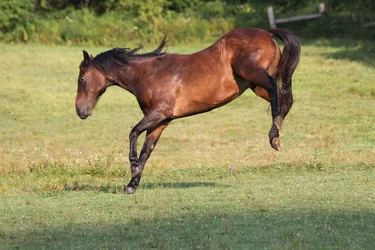
I seem to be having trouble with sharp images. Part of my problem I think is I'm constantly zooming in and out with my lens. I'm using a Canon EF70-300mm f/4-5.6 IS USM. It seems to be getting worse! Like I said I've gotten in this bad habit of zooming way too much. I don't use a tripod so I suppose that doesn't help. However, sometimes just I can't use one! I like taking action shots (like horses) so I would like to get a better, faster lens. What do you recommend? Or is there any tips you can give me for more sharper images? This may sound crazy :blushing: but would cleaning my camera (professionally) and lens help? Like maybe it's dirty? It seems I got sharp images when I first got this camera (a Canon T2i). Also, it's just not action shots I'm struggling with. I've been seeing blur in portraits. I primarily use automatic settings. Trying to use AV more. Still learning about settings and all that fun stuff. I also use the 300mm for portraits as well. I hope I don't sound like too much of an idiot. The first photo I took the other morning. Not sharp enough for me:
$Jasperbuck.webp

This one is just not sharp enough for my liking.
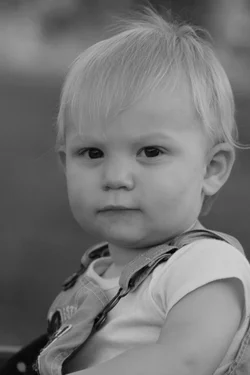
$Bray.webp
 
$IMG_4508.webp

Also I used automatic action settings for the action shots.
 
View attachment 82513

Also I used automatic action settings for the action shots.

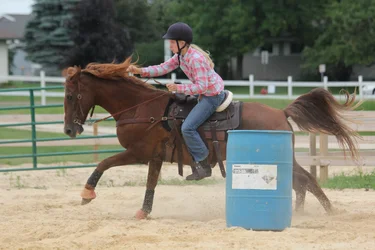
In this shot the focus is SHARP as a tack: on the label of the barrel! She's out of focus by maybe four to five feet, behind the actual focus spot. Look at the label on the barrel: I would say that the camera's AF system LOCKED right onto that high-contrast target, the white rectangle against the blue barrel.


In the bucking horse shot in the OP, the speed is just a little bit too slow and it looks like the focus very close to being right on the horse's body, but the MAIN issue is actually subject motion blurring!. A horse's body on an animal like that one is basically, amono-colored mass with low contrast, and it's not a realllly good AF target. AF systems love to lock onto sharp, crisp,high-contrast targets with well-defined edges, like the blue barrel with the crisp white rectangle: a PERFECT focusing target for a dumb camera system that has no human sensibilities.

In the shot of little Bray, I think the focus is actually pretty good, but the image needs a good dose of Unsharp Masking applied in post, and the image needs to be "boosted" a bit in brightness and contrast.
 
With running horses, of the few that I've shot I have to shoot in Manual and keep shutter above 640 to 1000 and Aperture around 5.6-7.1 and I let ISO in AUTO.

I'm just learning this type of photography and hopefully I'll get better and be able to improve. BUt those are my settings. Using any auto setting I don't think would be to your advantage.
 
Ok, well not terribly familiar with the autofocus settings on a Canon, however, I do have a few recommendations based on my own experiences.

First, take the camera off auto mode and use shutter priority for action shots. As a rule of thumb try not to let your shutter speed drop below the focal length of your lens, so if your using a 70-300 mm try to keep your shutter speed set to at least 1/300, for the barrel racing shots I'd go with a shutter speed of probably 1/800 or 1/1000 so that you get a nice sharp image and the action is stopped.

On my Nikon I can set the autofocus so that it uses just a single point - that's my preferred for people/portrait shots or for animals that aren't in rapid motion. I put my autofocus point over the eye - since that is what most people will look at first when looking at the final image. My Nikon also allows me to select 9 point or 11 point autofocus as well, so that it will start with wherever my focus point is set for and pick the highest contrast target only within those 9 points or 11 points depending on which I've selected. I'm not sure about the canon but I'm guessing that you should also have a way of limiting how many autofocus points your camera will choose from.

This is very useful for action shots - that way I don't have to be exactly on target, just close and I can still get a nice sharp image - but I don't run the risk of having the camera choose a focus point that is way off from the subject I'm interested in just because of a higher contrast (like what happened in the barrel shot above).

You don't need a lot of fancy high dollar equipment, or a super fast lens, or even a tripod to get good sharp images. You can shoot handheld and get some really great captures, just keep your shutter speed up and get your autofocus system working for you instead of against you.
 
Thanks so much for the help! This forum has been very helpful for me! :hug::
 
Also, just out of curiosity. What would be the next step up from this lens? Maybe someday I will be able to get to that point!
 
Also, just out of curiosity. What would be the next step up from this lens? Maybe someday I will be able to get to that point!

I think the next step up would be the L-series 70-300 from Canon. Canon EF 70-300mm f/4-5.6L IS USM Lens 4426B002 B&H Photo Video

In another way though, a 70-200mm f/4 L IS USM, the "newer" 70-200 f/4 L, is a step up. And so would be an f/2.8 speed 70-200 L-series lens, of any vintage. One thing that reallllllly helps a camera autofocus better is MORE light being allowed in: f/2.8 versus f/5.6 means four times more light. That greater light level is helpful, but so is the shallower depth of field that the wider aperture brings with it: that helps a phase-detection AF system discern "in focus" from "out of focus" with greater ease and better discernment, which can lead to overall better AF performance.

At longer distances, my experience is that the slower, f/5.6 zoom lenses I have used (several of them!) will occasionally miss focus by two to five feet, which can be enough to consider the focus "off"; like the barrel racing shot!!!! The BARREl has been absolutely NAILED, focus-wise, but the horse and rider...not so much. Again, at longer ranges, at f/5.6, the depth of field band is wide enough that the AF system can call the focus good, and so some shots when blown up or zoomed in on will show less-than-optimal focusing. With the big, pro-grade f/2.8 lenses, the focusing is almost always better in lower lighting conditions, like late afternoon, or in broad, open-shaded areas [think open horse barns at fairgrounds!], and so on. That FOUR TIMES MORE light coming in is the difference between wearing sunglasses, and wearing no sunglasses!
 
View attachment 82513

Also I used automatic action settings for the action shots.

How many/which focus points were turned on? If there were an active focus point on the barrel and another on the horse, the barrel would get focus because it is closer.
 
Not sure. I was using the automatic action focus setting.
 
Also, just out of curiosity. What would be the next step up from this lens? Maybe someday I will be able to get to that point!

I think the next step up would be the L-series 70-300 from Canon. Canon EF 70-300mm f/4-5.6L IS USM Lens 4426B002 B&H Photo Video

In another way though, a 70-200mm f/4 L IS USM, the "newer" 70-200 f/4 L, is a step up. And so would be an f/2.8 speed 70-200 L-series lens, of any vintage. One thing that reallllllly helps a camera autofocus better is MORE light being allowed in: f/2.8 versus f/5.6 means four times more light. That greater light level is helpful, but so is the shallower depth of field that the wider aperture brings with it: that helps a phase-detection AF system discern "in focus" from "out of focus" with greater ease and better discernment, which can lead to overall better AF performance.

At longer distances, my experience is that the slower, f/5.6 zoom lenses I have used (several of them!) will occasionally miss focus by two to five feet, which can be enough to consider the focus "off"; like the barrel racing shot!!!! The BARREl has been absolutely NAILED, focus-wise, but the horse and rider...not so much. Again, at longer ranges, at f/5.6, the depth of field band is wide enough that the AF system can call the focus good, and so some shots when blown up or zoomed in on will show less-than-optimal focusing. With the big, pro-grade f/2.8 lenses, the focusing is almost always better in lower lighting conditions, like late afternoon, or in broad, open-shaded areas [think open horse barns at fairgrounds!], and so on. That FOUR TIMES MORE light coming in is the difference between wearing sunglasses, and wearing no sunglasses!


I know this might be the dumbest question you've heard but why are some higher end lenses white when the body is black? Is there any particular reason?
 

Create an account or login to comment

You must be a member in order to leave a comment

Create account

Create an account on our community. It's easy!

Log in

Already have an account? Log in here.

Back
Top Bottom