What's new

How many ?

When I got my 70-300 I was so excited (it was my biggest lens purchase to date at the time) I went out and spent 7 hours in a wildlife area trying to get shots of ducks splashing down into the water. I shot 1,120 shots. I ended up keeping about 20. So that's about a 1% keeper rate for that day.

Other days I've shot 5 frames, and kept all 5. There's so many variables it really just depends on the situation, subject, etc.
 
So, whadda' ya think of the 70-300 VR so far, adversus? I just happened to pick one up yesterday afternoon when I stopped into a pawn shop on the way to the grocery store...haven't had a chance to get out and shoot much with it yet...but looking forward to this weekend!!!
 
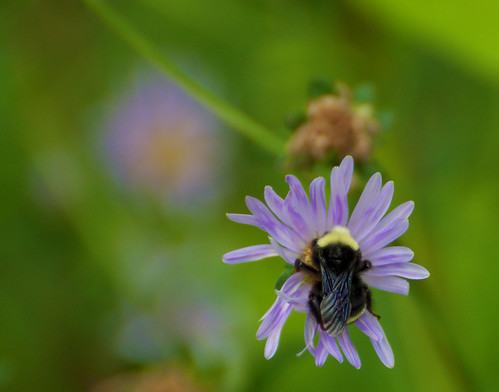
I am gettin my number from shots of landscape or flowers something that is still and adjusting my settings so that it is lit correctly and not blown out in focus and the colors are the way they should be. It takes me around 20 adjustments from when I look at the scene and think ok I need to use 100 iso aperture f11 and 1/250 shutter speed. Should it take me that long with a motionless object? Not even bringing composition or rule of thirds etc into the equation. I am just getting comfortable in manual moving from aperture and shutter priority mode. I know a photographer who is a good friend and worked for 15 years in a dark room. In the beggining I would call him with my distance and subject matter and describe the time of day and sky and he could tell me over the phone how to set everything to get the shot and woyld be right on the money. Is this an unrealistic expectation for the average photographer? Is ge like the Steven hawking of photos?

You are using the cameras built in meter to give you a place to start from, right? I didn't see what camera you are using, but it sounds like you are using a fairly modern DSLR. You don't need to look at a scene and guess the exposure. Your built in camera meter wants to see a scene that is around 18% grey. If you take a shot of a complete white piece of paper and you take a shot of a completely black piece of paper, your meter will pretty much give you an exposure reading that will make them both grey. Knowing that, you can look at your meter reading, look at your scene, and generally you should be able to come pretty close to the right settings for your scene on your first shot.

It almost sounds like you are trying to look at a scene and guess the settings without ever looking at your meter?
 
I do use the meter but dont always get the exposure I am looking for I get the meter to 0 than tweak from there to get the desired effect I am after.
 
I do use the meter but dont always get the exposure I am looking for I get the meter to 0 than tweak from there to get the desired effect I am after.
Ok, well, then it probably shouldn't be taking 20 adjustments. First step, there isn't really a point to get the meter to 0. You can generally look at a scene and know that the meter is going to either read high, low, or right on for that type of scene(is it a normal scene, brighter than normal, or darker than normal? remembering the fact that your meter wants to get you to 18% grey). Also, you can look at a scene, in your case landscape, and decide what kind of shutter speed or aperture you are going for to get the kind of results you are looking for. From there, you just adjust the other one to get you close, take a shot, and fine tune from there. Probably 3 shots at the high end if you aren't shooting HDR or waiting for a particular cloud to be in a specific location.
 
I work with an unruly infant most times, so I'm lucky if I get 5 framers out of 50 or 60. When photographing inanimate objects I take less photos, but still probably only come up with 1 or 2 that I would really consider good.
 
If you really want to nail most shots, you'd be shooting tethered, and you'd be examining each shot immediately (histogram, 400% magnification, etc) on a large, color-corrected screen. You'd have worked out your light and ratios, shot a white-balance sample, figured out the DOF/aperture considerations... Of course, if you're shooting outside the studio, with subjects that are moving and are not under your control/direction, then that approach doesn't work. I'd say that the pros have enough experience to know technically what the exposure has to be and what the light has to be to get a desired result. Then they finetune this as they are still human and still make mistakes. Your friend was obviously reaching into his pool of knowledge to give you those instructions. To get to that level, it helps to take lots of shots, and then to critically examine why YOUR best guess/attempt didn't work. It's the old "plan-do-measure-adjust" method that works for just about any human activity. Unfortunately, most do the "do" part, and forget the other three components that allow learning to take place. Over time, your starting point will be closer to what it needs to be, and who knows, maybe someone will be calling YOU for advice...
 

Create an account or login to comment

You must be a member in order to leave a comment

Create account

Create an account on our community. It's easy!

Log in

Already have an account? Log in here.

New Topics

Back
Top Bottom