What's new

how to get something like this?

bsxiong

TPF Noob!
Joined
Feb 28, 2006
Messages
1
Reaction score
0
hi all

i want to get a digital camera under 300 dollars. But i want to achives this kind of effect http://www.equisit.com/images/professional_services.jpg

how much do i need to pay to get one that will do this? What is the least? Any recommendations?

Or what is this effect called? when the back is blurred and the focal point is clear?

thanks
 
Welcome to the forum.

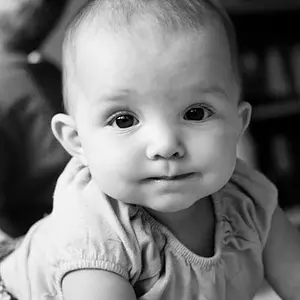
That effect would be the result of shallow Depth of Field.

The degree of blurriness is a result of many factors;
Aperture of the lens,
Distance between subject and background,
size of recording media.

Now, the last one is important because all digital cameras under $600-$700 (and many over that) have very small digital sensors. This makes it hard to get a shallow DOF.

A digital SLR camera, (Cheapest ones are; Canon Rebel XT, Nikon D50, Pentax *ist Ds) with a bigger sensor, would make it easier to get this effect. Even then, a lens with a wide maximum aperture would be needed to get really shallow DOF.

You can get a $300 camera and do things to maximize this effect...but I really don't think you would be able to get a shot that is exactly like the example.

Although, this effect can be somewhat replicated with software like photoshop.

Another option would be a film camera. Film SLRs can be found quite cheap.
 
There are 4 things that will give you shallow DOF:

1) short camera to subject distance
2) wide open aperture
3) big circle of confusion (bigger format)
4) longer focal length

As Big Mike pointed out, point-n-shoot digital camera have a very small sensor or format. They also tend to come with zoom lenses. It's very expensive to make a zoom lens with a wide aperture, so most point-n-shoots can't do wide aperture.

You could buy a used, mechanical, 35mm film SLR with a f/2 (or less) 50mm lens for around $50. That would give you the tools to get this effect.
 
Nice to see you around here Matt.

Have you read this?
In fact, if the subject image size remains the same, then at any given aperture all lenses will give the same depth of field.

It's from The Luminous Landscape, here is the link to the test
 
my old sony dsc-w1 from 2 years ago was 300 new and now its 200 used...
although ill admit its pushing it to its limits, but the tiny zeiss lens does do F2.8 (i always had to use attachments to get the look i wanted also)
Depends how much you want to get into photography, and if you need to be digital. with the point and shoot this is the absolute limit. with film, or DSLR the sky's the limit!!!

DSC00854.jpg

serenity.jpg

DSC01042.jpg
 
Thor,

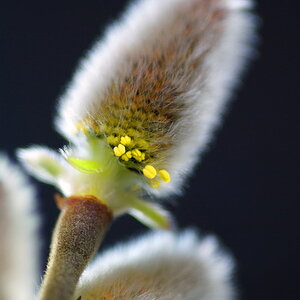
Not to get off subject but that 3rd pic you attached is just awesome! You should post it in the nature area.!!!! Beautiful work! I am not going to chime in on the question being a few already answered it.
 
Big Mike said:
Have you read this?

"In fact, if the subject image size remains the same, then at any given aperture all lenses will give the same depth of field."

It's from The Luminous Landscape, here is the link to the test

In order to keep the subject the same size he has to change the camera to subject distance. When he goes longer focal length, reducing DOF, he then has to move farther away from the subject to keep it the same size, increasing DOF. When he goes to a wider focal length, increasing DOF, he then has to move close to the subject, decreasing DOF.

It's interesting, but doesn't change the fact if you increase focal length, and stand in the same spot (and your subject does too), then your DOF will decrease.
 
MyCameraEye said:
Thor,

Not to get off subject but that 3rd pic you attached is just awesome! You should post it in the nature area.!!!! Beautiful work! I am not going to chime in on the question being a few already answered it.

I agree! Not only a great comp, but a wonderful example of selective DOF!
 
ksmattfish said:
In order to keep the subject the same size he has to change the camera to subject distance. When he goes longer focal length, reducing DOF, he then has to move farther away from the subject to keep it the same size, increasing DOF. When he goes to a wider focal length, increasing DOF, he then has to move close to the subject, decreasing DOF.

It's interesting, but doesn't change the fact if you increase focal length, and stand in the same spot (and your subject does too), then your DOF will decrease.

Very true. When I first read that article...I said to myself "ya, but you're moving and changing the distance to the subject"....still, kind of interesting.
 

Create an account or login to comment

You must be a member in order to leave a comment

Create account

Create an account on our community. It's easy!

Log in

Already have an account? Log in here.

Back
Top Bottom