What's new

ISO recommendation

cool09

TPF Noob!
Joined
Oct 24, 2012
Messages
54
Reaction score
5
Location
Elkton MD
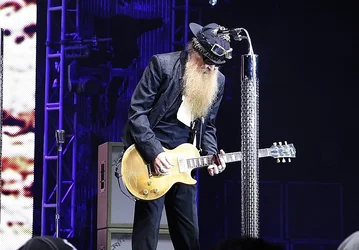
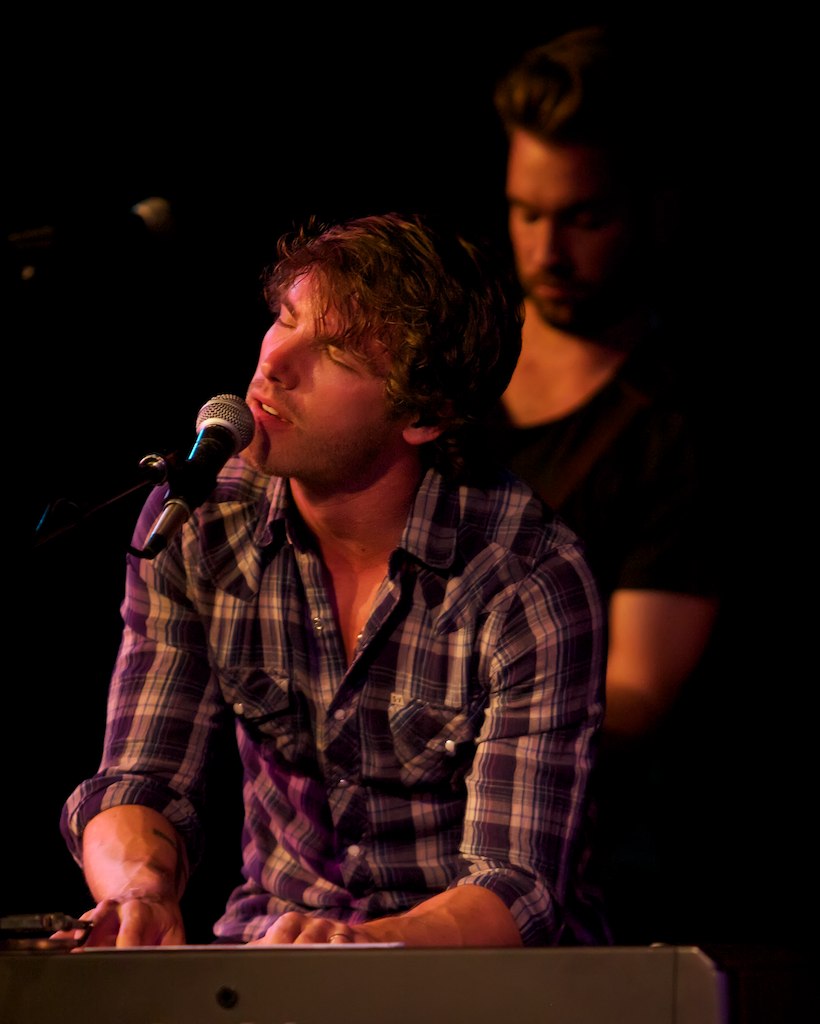
What ISO # would you use in a fairly decently lit concert like this (and the background/foreground lighting quite different)? Or maybe even a spotlight on the subject at times? 400? (Not overly sensitive?) And use exp compensation maybe for this type of light situation, too?


Just bought an LX5 and I'm used to a Canon DSLR 20D. Panasonic's explanations (or lack of) ISO # aren't very good. Seems like ISO range is wider with LX5. With Canon 20D I would avoid ISO 800 at concerts because of grainy photos.


(I took this photo w/Canon 20D - with exp compensation set incorrectly by accident.)

$8vuky1.webp
 
We can't tell you what ISO to use. It depends on your exposure needs and your tolerance to how much noise you get from your camera. A little bit of testing should show you how much noise you'll get with your new camera. Then you'll know.
 
What Mike said. I've used 6400 - 8000ISO with acceptable noise.
 
What ever iso it takes to get the shot
 
I dont know how old the 20D is (without looking it up on Wikipedia, anyway) but yes, cameras get more noise tolerant over time. Thats the main thing they get better at.

The new D600 from Nikon, for example, seems to have hardly any noise even at ISO 6400, at least judging from test images I've seen on the net. Very impressive, since I get noise at ISO 1600 and higher on my D5100; ISO 6400 looks already very noisy and above ISO 6400 the colors change.

My new compact, a Ricoh GR Digital IV, seems to be fine until ISO 400.
 
Most of my concert shots are ISO 3200, but the lighting is a bit lower and I have to go up to 6400. And just occasionally the lighting is extra bright and I can bring the ISO down to 1600.

What's more important than knowing what ISO to use is knowing HOW to choose.

I'm generally going to shoot wide open or perhaps within a stop of wide-open (depending on the shot). Have good glass (because wide-open is never the best optical performance.) That means I'm setting my f-stop to f/2.8 or maybe f/2.

Now that that's settled, time to find a shutter speed. If you're hand-held with a 200mm lens on an APS-C crop-frame sensor body and the lens doesn't have image stabilization then you're in trouble, because now you need a shutter speed closer to 1/300th. That'll be a problem. Most of my concert shutter speeds tend to be about 1/60th. You can do this IF you have image stabilization. Otherwise you're going to need to find a way to steady the camera (you trying to be really really still is probably not going to be adequate.) I'll lean on a column/post, find a rail, scaffolding, ... something. You can generally trust that image stabilization will buy you about 2 stops. It might buy you 3. And if you're really really lucky... 4. That means if you needed 1/300th, you can probably get away with 1/60th, but you're pushing your lucky at 1/30th.

Suppose now I set my camera to f/2.8 and 1/60th...

NOW... put the camera into "spot" metering mode. Meter the performers face (not their clothing. not their guitar.) Find an ISO that provides a correct exposure of the skin on their face without have to adjust the f-stop or shutter speed any further.

I might not use manual to shoot a concert (actually I usually will NOT use manual at a concert). The light is usually changing fairly rapidly. Often I'll use aperture priority. Lock in a wide aperture, set my ISO and let the camera pick the shutter speed knowing that all the shutter speeds will tend to be in the neighborhood of 1/60th. You can spot meter off the skin of a performer, OR you can let the camera use a center-weighted or even matrix/evaluative metering IF you dial back the exposure compensation on the camera. I find that for most concerts I'll need at least -1 and possibly as strong as -2. Usually I find about -1 1/3 or -1 2/3 is about right.

You will have noise. While it's true that you can de-noise the images in some post-processing software, it's also true that this will result in softening the image and you'll lose some detail. There's a trade-off between noise & detail vs. low-noise with a soft image. I favor the detail so I leave a little more noise in.
 
Keep in mind that nailing your exposure or following ETTR, will give you much, much less noise than if you underexpose and have to bump up exposure in post. At any ISO.
 
Thanks for replies. This has been a great lesson.

NOW... put the camera into "spot" metering mode. Meter the performers face (not their clothing. not their guitar.) Find an ISO that provides a correct exposure of the skin on their face without have to adjust the f-stop or shutter speed any further.
What's the procedure to find an ISO that provides a correct exposure? Use the Histogram as guidance (or reference)? Or is there a camera function that will help you (or is more essential) to find the correct exposure? (Then the next step is obviously to set the ISO correctly.) Guess I need to brush-up on ISO and exposure guides.
 
Thanks for replies. This has been a great lesson.

NOW... put the camera into "spot" metering mode. Meter the performers face (not their clothing. not their guitar.) Find an ISO that provides a correct exposure of the skin on their face without have to adjust the f-stop or shutter speed any further.
What's the procedure to find an ISO that provides a correct exposure? Use the Histogram as guidance (or reference)? Or is there a camera function that will help you (or is more essential) to find the correct exposure? (Then the next step is obviously to set the ISO correctly.) Guess I need to brush-up on ISO and exposure guides.

When you use the camera's built-in meter, it's only going to tell you if it thinks your "current" settings will be under-exposed, correctly exposed, or over-exposed. It wont provide specific values like a hand-held meter (but even a hand-held meter works a bit like an algebra solver... you fill in a few values that you'd like to control and the meter tells you what to set the remaining value to in order to get a correct exposure.)

What are the focal ratio options for the lens(es) you own? Can you shoot at f/2.8? How about f/2?

I have two different lenses that usually get used for concerts. One is a 70-200mm f/2.8, the other is a 135mm f/2.

Based on my experience, a typical concert exposure might be f/2.8, 1/60th, and ISO 3200. But this is really based on the lighting at the the time. If I'm using the f/2 lens then I might be able to increase to 1/125th. If the lighting is better than average, I can drop the ISO down to 1600. I'm just working the meter off the performer's face. The lens wont let me open the f-stop any further (I'm at the limit) so this leaves me with shutter speed and ISO options. The image stabilization on the lens will let me get down to about 1/60th for a hand-held shot. If I can brace the lens AND if I'm really watching the performer and waiting for the right moments, I might be able to get a shot at 1/30th (but clearly there's an element of luck at work here to go that slow.) That leaves ISO. I prefer to keep it as low as possibility, but given the choice between a low ISO shot that forces a shutter speed that was too slow and ends up blurry OR a higher ISO resulting in a sharp image which is grainy, I'll take the grainy shot.

Here's f/2, 1/60th, and ISO 6400. While it probably looks ok in this web-sized image, the full-size version shows that it has quite a bit of noise. Notice the blur in his hand as he plays the guitar... his hand is moving too quickly for the 1/60th shutter.
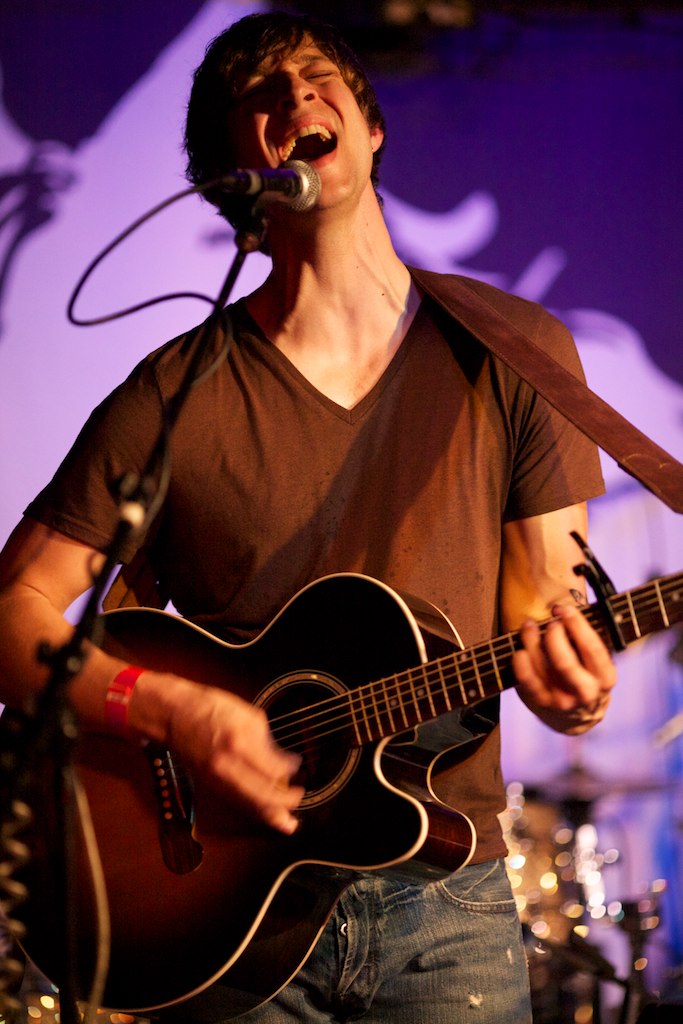

Chris Koza in Concert by Tim Campbell1, on Flickr

Here's one where I got a bit luckier. This shot (of Jon McLaughlin) at f/2.8, ISO is down to 3200, and yet I was able to get the shutter speed up to 1/500th because of the lighting (Usually I would have dropped the ISO down to 1600 and cut the shutter speed since I really don't need 1/500th for these shots.)

IMG_4743 by Tim Campbell1, on Flickr

In these examples, I arrive at the exposure by setting the f-stop to what the lens will allow, setting the shutter speed to the minimum I know I'll need, then setting the ISO to whatever I can get away with to balance the exposure. Concert lighting can vary quickly. The rapidly varying lighting is all part of the "show".

 
Most of my concert shutter speeds tend to be about 1/60th. You can do this IF you have image stabilization.
While the IS would help avoid motion blur caused by the photographer, how will a 1/60th exposure freeze the subjects? I shot a concert recently where I didn't use speeds slower than 1/125th, yet many of the frames show motion of varying degrees (hands, heads, etcetera).

EDIT: Tim, we were typing at the same time, it seems. Your first photo is a perfect example of what I was talking about.
 
Most of my concert shutter speeds tend to be about 1/60th. You can do this IF you have image stabilization.
While the IS would help avoid motion blur caused by the photographer, how will a 1/60th exposure freeze the subjects? I shot a concert recently where I didn't use speeds slower than 1/125th, yet many of the frames show motion of varying degrees (hands, heads, etcetera).

EDIT: Tim, we were typing at the same time, it seems. Your first photo is a perfect example of what I was talking about.

1/60th is slow. I even have a *few* shots at 1/30th. (I did one particularly concert where they kept the lighting ridiculously dark... I was lucky to come back with anything at all.)

I definitely prefer the faster shutter speeds when I can get them. But sometimes you're pushing your ISO, shutter, and f-stops all to their limits and you don't have much choice.

Always watch for the "moment". I try to capture the performer when they're showing some energy/drama/mood/etc. but I watch them to try to get a feel for how they'll move to the music and learn to anticipate when they're going to hold a pose for a moment (long enough to squeeze off a shot.)

Showing a little motion blur isn't necessarily a bad thing. I'll take a little motion in the hands, but prefer a clean face shot. If I shoot a drummer, I prefer to get some motion blur on the sticks.
 
Always watch for the "moment". I try to capture the performer when they're showing some energy/drama/mood/etc. but I watch them to try to get a feel for how they'll move to the music and learn to anticipate when they're going to hold a pose for a moment (long enough to squeeze off a shot.)

Showing a little motion blur isn't necessarily a bad thing. I'll take a little motion in the hands, but prefer a clean face shot. If I shoot a drummer, I prefer to get some motion blur on the sticks.
I had the luxury of shooting during the band's whole set. I can't imagine the pressure of those photographers that are limited to shooting during the first three songs. Like you said, one watches for the "moment"... but three songs might be not enough to catch one of those, especially if you don't know the band or the songs.

I guess the answer is: if you're shooting concerts professionally, go get a D4.
 
What are the focal ratio options for the lens(es) you own? Can you shoot at f/2.8? How about f/2?
Just bought Lumix LX5 f2.0 3.8x 24-90mm (needed something small for concerts). Problem I have with it is the LCD does not show detail well (while focusing or reviewing photos - I need a magnifying glass to see good detail). That's going to cause problems. My Canon 20D LCD was excellent at showing detail.

Canon 20D, Sigma f2.8 50-150mm (w/exp comp. turned up several stops by mistake):

308jxfo.jpg
 
Keep in mind that nailing your exposure or following ETTR, will give you much, much less noise than if you underexpose and have to bump up exposure in post. At any ISO.

Yes but noise is only one consideration regarding ISO. Choosing to underexpose using a lower ISO will give you greater DR, colour-depth..than correct metering at a higher ISO. The higher the ISO, the poorer the SNR. Noise can be removed but you can't enhance what wasn't captured.
 

Create an account or login to comment

You must be a member in order to leave a comment

Create account

Create an account on our community. It's easy!

Log in

Already have an account? Log in here.

New Topics

Back
Top Bottom