I'm looking at buying a circular polarizer, and everything I read says it's important to buy a multi-coated one. Can someone explain to me why? I'd like to justify it if I'm going to spend the extra money. Thanks!
" I'd like to justify it if I'm going to spend the extra money. "
I don't use big dollar filters because I don't have big dollars at stake. i.e. a big career and pay check on the line. (likely my employer would buy it anyway) I do shoot weddings and rarely get flares or other undesirable effects that big dollar coatings claim to solve. Furthermore none of the clients ohh and ahh over the technical purity of the shot of Aunt Mildred. They ohh and ahh over the emotional expression that I captured of Aunt Mildred.
If you are employed to deliver the very highest technical quality then use them if not don't. It is like a man that has $20,000 worth of woodworking equipment in his garage. All he makes is bird houses for his yard and christmass gifts. Seems like a pointless focus on fine equipment.
==
"
High quality filters are multi-coated,
http://en.wikipedia.org/wiki/Photographic_filter#cite_note-7 with multiple-layer
optical coatings to reduce reflections. Uncoated filters can reflect up to 9% of the light, while multi-coated filters can allow for up to 99.7% of the light to pass through;
the loss of light is not important,
but part of the light is reflected inside the camera, producing flare and reducing the contrast of the image.
Manufacturers brand their high-end multi-coated filters with different labels, for example:
- Hoya: HMC (Hoya Multi Coating)
- B+W: MRC (Multi Resistant Coating)"
Photographic filter - Wikipedia, the free encyclopedia
==
[SIZE=+3]
What about coatings?[/SIZE]
Multicoated is better than single coated, which is better than uncoated, but the results are not usually visible at all.
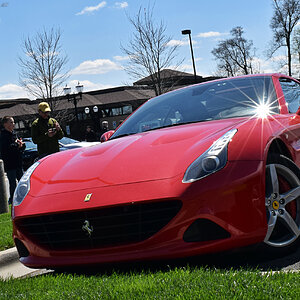
The only time you may see a difference is if you have a bright light or the sun shining directly into the lens. In some of these cases you may get less ghosts and reflections from the filters with the better coatings.
Otherwise there is no visible difference.
99.9% of the time there is no difference.
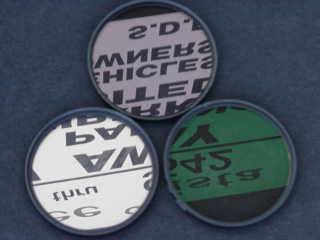
[SIZE=-1]How to see what kind of coating you have: look at the reflection directly from the front of a filter against the dark. The white reflection is from an uncoated filter, the magenta reflection is single coated, and the dark green reflection is from a multi-coated filter.[/SIZE]
How to Use Filters