Actually, for digital photography, UV filters are more a hinderance than a 'safety', and offer nothing that the built-in UV filter in the camera doesn't already do. ANY piece of glass in front of your lens will cause some image degredation. Obviously, the cheaper filters cause more degradation, and the pricey ones, very little...but still some does occur. Probably the test/thread that 'really hit home' on cheap filters is one performed by Lens Rentals:
LensRentals.com - Good Times with Bad Filters
In general, most 'general' photography doesn't require any filter.
Probably the most useful filter, however, is a Circular Polarizer, aka CPL, used primarily to cut reflections/glare from smooth surfaces like windows and lakes. It takes some practice to frame your shot, focus, twist the filter to get the desired effect, then shoot...all without dropping the camera.
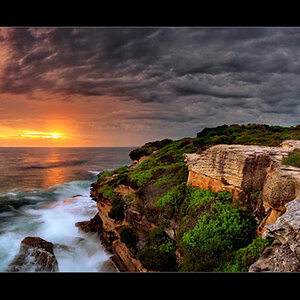
The second group of filters are neutral density (ND). They are used to darken the image reaching the sensor, thus forcing a longer exposure, for 'special effects' like 'smooth, soft water' in a waterfalls or at a shoreline, or intentionally blurred motion, and a variety of other effects. They can be stacked to 'additively' darken the image more. Graded neutral density (GND) filters are darker on the top than the bottom and are most useful for sunrise/sunset pictures where the sun itself would 'blow out' the exposure and the subjects in the foreground would be back-lit/dimly lit/under-exposed as well. Positioning the darker area of the filter above the horizon will darken the sun/sky and with the longer exposure, the subjects in the foreground would be closer to proper exposure.
Beyond CPLs and ND/GND filters, I would class all the rest of the filters as 'fun' filters...various colors, star, soft focus, etc. If you're coming from 35 mm photography and remember all the various filters to match film type and lighting, those are all done in-camera or during post processing as 'white balancing'.
No need to rush out and get 'a bunch' of filters. Start slow and build up from there. One idea is to get a filter that has the same screw-on size as your largest filter-sized lens. Then, by appropriate 'step up' rings ($8-15 apeice, generally) to adapt the larger size filter to a smaller-size lens. Saves a lot of money when you have 4 filter-sized lenses like I do. The only 'hook' with this method is the lens hood may not fit. I've resorted to put the hood on first, then screw on the filter with step-up rings (step up 'from' the lens 'to' the filter size), IF the filter will fit the opening of the hood. If not, I use my hand above the lens to act as a 'hood' when shooting.



![[No title]](/data/xfmg/thumbnail/31/31011-439c1242fe08cf6b54f32bf06523a567.jpg?1734159083)