What's new

New here with a few film questions

CatonMcCarty

TPF Noob!
Joined
Oct 28, 2013
Messages
4
Reaction score
1
Location
Tennesee
Can others edit my Photos
Photos OK to edit
Hello there! My name is Caton (Pronounced Kay-ten or K-10). I am 17 years old and homeschooled. I have been on a few other forums, but none of them related to photography. I am an avid aquarist and aquascaper. (Don't know what that is? Its creating an artistic landscape inside of an aquarium, it requires months of patience to let it grow out. Sorta like an underwater bonsai - google Iwagumi)

Creativity has always been at the forefront of my mind since childhood. My parents always taught me to be creative, and it eventually stuck. I prefer different forms of art, such as photography and literature. I unfortunately never got into traditional forms of art, like music or painting. But I needed that creative outlet, and photography was it.

I currently have a D5100 with kit lens and an old Pentax K1000 with 50mm F2 prime. While I have readily taken up digital photography, this past week has started a new era in my photographic quest. I want to shoot more film. There is something classic about it. Maybe its just the hipster in me, but I love the retro-ness and the elegance.

My favorite type of subjects are macro photography, abstract, and landscapes.

Here are some of my favorite photos I have taken.

Mosquito in flight - taken in Israel
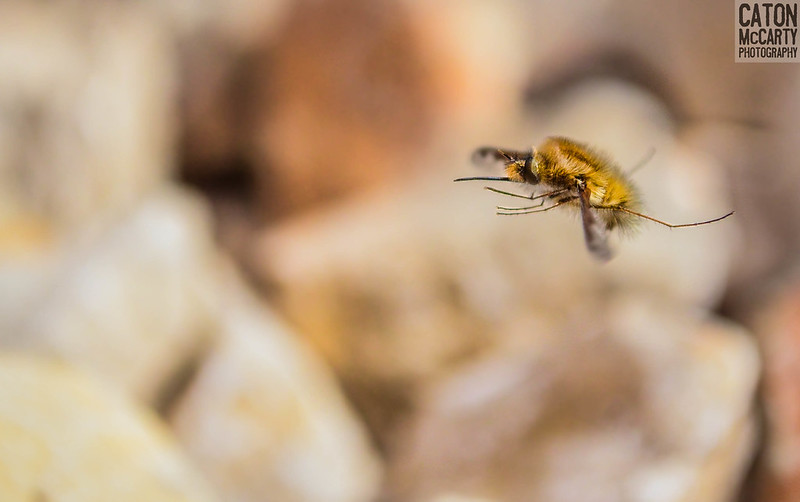
Mosquito in flight by caton mccarty photography, on Flickr

Creative Self Portrait - I don't have a flash and couldn't find enough flashlights so this was taken with 2 kerosene lamps and a flash light. The match in my hand help light some of my face. 3sec exposure.

A creative self portrait by caton mccarty photography, on Flickr


Kittens make great subjects
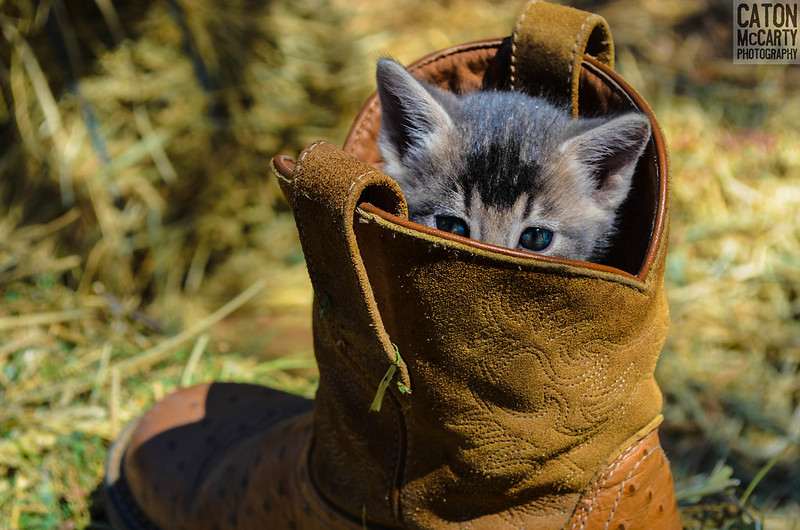
There's a kitten in my boot! by caton mccarty photography, on Flickr

An old Arab-Israeli man in Jerusalem
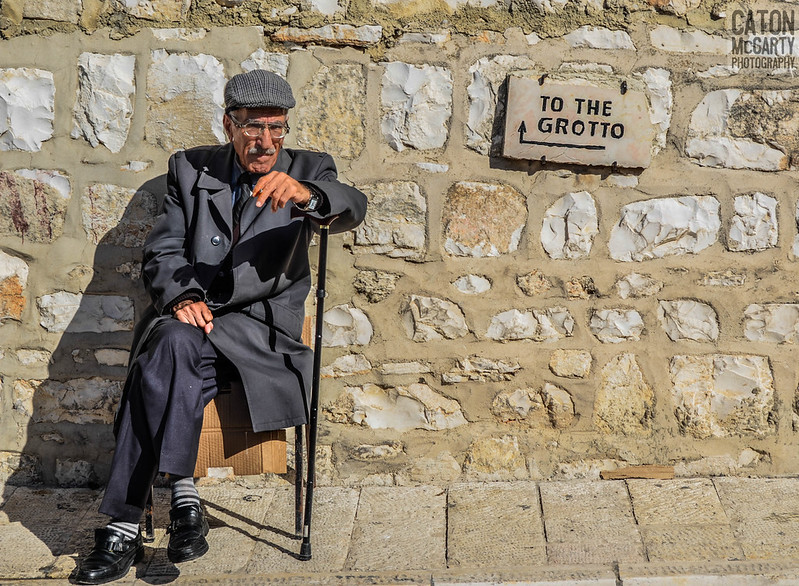
Man in Israel by caton mccarty photography, on Flickr

This is the creek on my property. The Fireflies were spectacular this particular night and I managed to capture the light trails of one with a 30 second exposure.
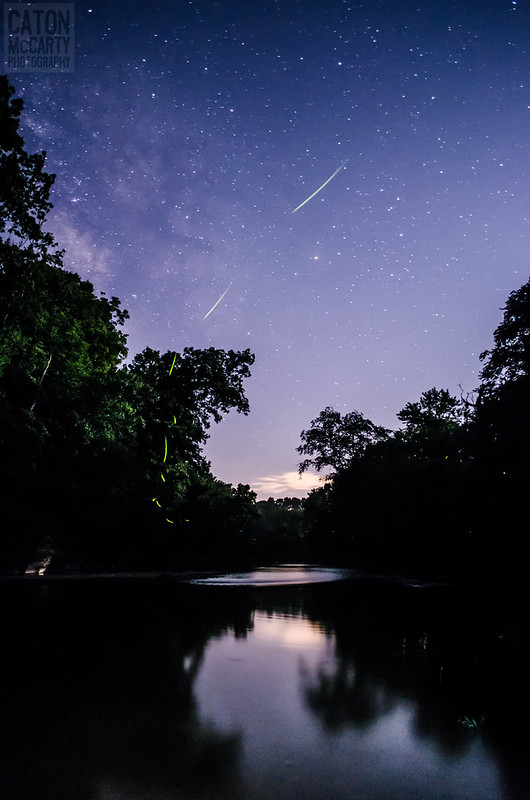
Fireflies by caton mccarty photography, on Flickr


Thanks guys! I hope you enjoy some of my stuff. I have more, so feel free to check out my Flickr account. Some of the stuff on there isn't my best, and I have some of my best not on there, but that is a fairly accurate representation of what I like. I choose to not be limited by my lack of funds and just have fun with my kit lens and d5100 body. I obviously would love to get a flash, lens, better body, and all that, but with no money, I think I can push my self so that when I do get proper gear, I can have more experience.
 
Your post title says you have questions, so why are there no questions in the body of the post?
 
I have and use all kinds of vintage film cameras (and have one digital camera too!). You might find Film Photography Project | An Internet Radio Show & On-Line Resource for Film Shooters Worldwide of interest especially if you're just starting with film. If you post in the film section here with questions you can probably get suggestions, or try the Flickr discussion group for FPP.

Nice use of background and shadow in the photo 'Man in Israel', and the reflection in 'Fireflies' adds to that composition; and I was thinking your T-shirt looked somewhat 3-D - and then realized Darth Vader is wearing 3-D glasses! Excellent.


(Why not give him a chance to get something posted first? then get to specifics on film...)
 
Caton,
Welcome to TPF. :thumbup:

There are a lot of members who shoot film here.
I've moved this to the forum section where the people who shoot film hang out.
 
Ah, I wrote this late at night, had a few film questions written out and then decided to just make a dedicated thread with question in the morning. I guess I can ask them now!

Which film is most popular? I like high contrast and price is definitely an issue.

Which B&W film do you like most?

Is there a difference in quality in color slides vs. color negs?

Thanks!
 
"Popular" is tough to pin down these days and probably not a necessarily useful criteria for you to use. There are a lot fewer choices for film these days and those of us who still shoot film have varying tastes and preferences in films.

Look for the qualities you want. This might mean testing a few different emulsions. You said high contrast and low cost...that might be tricky. The cheaper color emulsions are usually Fuji Superia or Kodak Gold Max. They are both nice films and you'll get varying opinions on them so it just comes down to personal preference. For deeper color saturation and contrast, the ones that come to mind are Kodak Ektar or Portra, but neither are cheap.

I don't shoot slide film but I understand that they will also give you better color saturation and rendering, but they are much much pickier when it comes to exposure. When they go right, they're gorgeous shots, but they can go wrong easily. Might want to stick to negative film to start with if money is an issue.

As for black and white, I adore Kodak Tri-X 400. If you like finer grain, try the TMax emulsions. I've also found Kentmere 100 to have a bit more contrast, if you're looking for that. Plus, Kentmere 100 tends to be on the cheaper side as well.
 
I've also found Kentmere 100 to have a bit more contrast, if you're looking for that. Plus, Kentmere 100 tends to be on the cheaper side as well.
I've never shot Kentmere 100, but I shoot a LOT of Kentmere 400. It is one of the cheaper films, but it's really grown on me. At first I didn't like it - I thought it was too grainy.

That, and Fuji Acros are probably my favorite B&W films. Acros does NOT push well, but it has excellent reciprocity failure characteristics. Up to 120 seconds needs no correction, and after that it only needs 1/2 a stop. For some perspective, Ilford Pan F Plus needs correction after just 1/2 a second and Kodak Plus-X, Tri-X, and T-Max (both 100 and 400) need it after 1 second.
 
My boyfriend and I just bought a bulk loader and we're splitting a 100' roll of the Kentmere 100. It is a bit grainier but I don't mind grain. Since we're just getting started on developing our own b&w, we figured it was better to start with some cheaper film in case we totally sucked at developing ;) But in addition to it being cheap, I've also come to really like the Kentmere.

Good to know the reciprocity on the Acros. I've only shot a roll or two of it but it seemed quite nice.
 
I shoot a LOT of Kentmere 400. It is one of the cheaper films, but it's really grown on me. At first I didn't like it - I thought it was too grainy.
Not only your experience. :)

I never shoot Acros, but I can vouch for Tmax 100 and Delta 100 (in normal conditions) quality.
 
Since we're just getting started on developing our own b&w
Really ? Very good, but I thought you do it for long time.
Here is another I suspect film from Ilford/Kentmere stable sold only in the poorer parts of the world: Ilford Pan 100 and 400
Ultrafine Xtreme Black & White Film ISO 100 35mm x 100' - Ultrafine Xtreme Black & White Film ISO 100
Ultrafine Xtreme Black & White Film ISO 400 35mm x 100' - Ultrafine Xtreme Black & White Film ISO 400
http://darkroom.ru/info/manuals/ilford_pan_100_400_manual_eng.pdf
And some opinions:
http://www.photomalaysia.com/forums/showthread.php?148989-Is-Ilford-Pan-100-Ilford-FP4
 
Thanks everybody! That really helped.

That, and Fuji Acros are probably my favorite B&W films. Acros does NOT push well, but it has excellent reciprocity failure characteristics. Up to 120 seconds needs no correction, and after that it only needs 1/2 a stop. For some perspective, Ilford Pan F Plus needs correction after just 1/2 a second and Kodak Plus-X, Tri-X, and T-Max (both 100 and 400) need it after 1 second.

I keep reading about this reciprocity failure. Is that when I try to do a long exposure? I was planning on trying some night photos with the stars. The air is really clear here with low light pollution so its perfect.
------------------
Is it hard to reload your own film from a 100' roll? If I really get into this, that might be a money saver for me.
 
I keep reading about this reciprocity failure. Is that when I try to do a long exposure? I was planning on trying some night photos with the stars. The air is really clear here with low light pollution so its perfect.

Reciprocity failure is something that happens to the film when exposed for longer times usually more then a second. Basically the longer film is exposed the less sensitive it becomes and you have to add additional exposure time to compensate. Each different type of film reacts differently and thus each will have different reciprocity characteristics. I use an app on my iPhone called reciprocity timer to calculate the compensation.

Is it hard to reload your own film from a 100' roll? If I really get into this, that might be a money saver for me.

It's super easy.
 
I keep reading about this reciprocity failure. Is that when I try to do a long exposure? I was planning on trying some night photos with the stars. The air is really clear here with low light pollution so its perfect.
------------------
Is it hard to reload your own film from a 100' roll? If I really get into this, that might be a money saver for me.
Reciprocity failure is when the reciprocity you get when changing exposure (increasing aperture (or shutter speed) one stop = one stop additional exposure ... if you don't want to change the exposure, you have to adjust another setting in the other direction to get the same net exposure) starts to break down.

After a certain amount of exposure time, the film stops behaving in this one stop = one stop manner. Someone else will have to explain the science behind it - but every film has it at some point. The datasheet for the film will tell you when and by how much you have to make corrections.


RE: Bulk film - I buy 100' rolls and bulk load whenever I can. It IS a huge money saver - you end up paying half price, or less. The first couple times can be tricky, getting the 100' roll into the bulk loader, but you get the hang of it eventually... It helps to cut the corners off the end of the film when you're trying to get it started in the loader (some films come precut like that - you just have to feel the end after you open the box (in a changing bag or darkroom, of course).
 
For star trails, reciprocity failure can actually be a good thing though, from what I've heard (I don't do many star trails...). You'll get properly exposed stars without blowing out the sky.

Since the stars are moving, they don't stay in the same spot on the film for long. The black sky stays there for the duration of the exposure, so reciprocity failure kicks in.

By the time reciprocity failure should be kicking in on the star, it's already moved to a different area of the film. Does that make sense?
 

Create an account or login to comment

You must be a member in order to leave a comment

Create account

Create an account on our community. It's easy!

Log in

Already have an account? Log in here.

New Topics

Back
Top Bottom