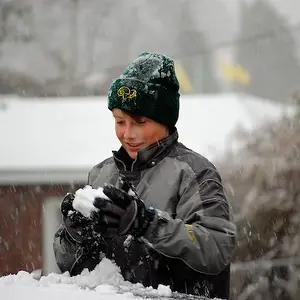
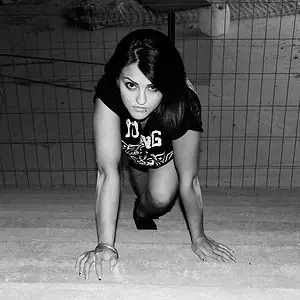
Considering you were using a simple compact those pictures are very good. You certainly have the eye. They have technical faults, especially with exposure, but all things considered you did excellent.
Thank you.

As for your camera, for film SLR's the actual 'body' of your camera doesn't matter too much. It's the choice of film and quality of the lens that really matters. For your shoot it would be nice if you could get a 35mm or 50mm prime lens as they tend to be a lot better for low light shots. BUT it's not critical and you should be able to be successful with your camera/lens for now.
I couldn't get one before saturday, but I know how important lenses are, so as long as they're not too much money (single parent, not much money) I'll be getting different sorts of lens that will work better in different situations. I don't know which ones yet, lol.
What I would invest in is a flashgun or two because what IS important for this kind of work is lighting. I use a pair of second hand Nikon SB20's for lighting and they do the job pretty well. Also get a remote shutter release.
How does a flash gun work? Would I have to take the shot and the flash at the same time or do they link up somehow? Sorry if that's a dumb question! lol
Read up a little on lighting too, find out what a reflecter and a softbox are and why you'd use them. (strobist is a good place to start) Both these devices can be home made. A piece of white card and/or card covered in foil will work as a cheap reflector and shooting through paper or fabric can soften light.
I've actually made a reflector but it's not much good without a flash really lol. I've looked at softboxs and will definitely make one of those. Would normal uplighters or bendy desk lamps do for lighting for now until I can get some decent ones? And will getting high powered bulbs help (I have energy saving ones!) or am I being daft? lol
Because your working on film, and it's your first time, bracket to hell and back.. what this means is say you think with the flashes you need F22@1/60th of a second ( probably quite typical starting setting ) then also shoot at 1/125th ( if your camera will synch that low ), F16, F11 and also play with the power of the flashes and/or move them to and from the target. The faster exposure gives less light on the subject, F16 and F11 more light. For tripod work you aren't worried about movement too much.
Write down your settings for each frame then you'll be able to learn when you get the films back. If your doing the idea about the candles the exposure will be longer. Because you'll be on a tripod your camera won't move but obviously the target COULD so you'd be shooting that at much wider aperture. F1.7 is wide, F22 narrow ( smaller number = bigger hole = more light ).
:er: lol I've read that a few times and I think I've got it. So many numbers and names!
So you mean if I want to make the most of the light I've got, I should set the aperture to the highest (highest number means less in focus and less light?) and the shutter speed at around 1/125?
I understand shutter speed completely so it's just aperture and all it's numbers and ISO I need to learn there. lol
What do you mean by faster/slower exposure? Do you mean shutter speed? 1/1 will expose the picture for a second?
Sorry, it's just a hell of a lot to learn, I'm still trying to get my head round it all. I will get there. If I'm anything it's determined and I tend to become slightly obsessed when I start something new lol.
After seeing photos on here though I feel, at the minute, that I'll never be that good. I can't afford expensive lenses or anything, but hopefully I'll get the best out of what I've got at the least!
Thank you everyone for your help. I can't wait to develop the photos so I can post them. Or not if they're crap lol.




![[No title]](/data/xfmg/thumbnail/34/34070-2a43e701f983f62ada1c66a54d00be4e.jpg?1734164507)
![[No title]](/data/xfmg/thumbnail/32/32005-d13a0bcc56327c42bd32dff4b0776658.jpg?1734160798)