Something else you might want to try is manual flash, in your left hand, camera in your right hand.
Pretty much the same as what Mike said, but a different way of saying it.
ISO is a constant in one photo, so you aren't going to change it.
Your first exposure is the camera, which you want slightly under exposed, for the background and the lights. If the shutter speed is too long, you'll get too much light and probably more blur than you want.
When you get that adjusted, your flash will always be the second exposure and the sharp image.
If you have the flash in the auto mode and it reads the light, no TTL, then you can get some measured results. Otherwise you can go manual and the light will always be the same, so you vary your distance from the subject or put a diffuser on it, to control the brightness.
What I'm trying to get at, is your first part of the exposure is the camera and available light, the second part of the same exposure is the momentary flash, which will be lighting your subject.
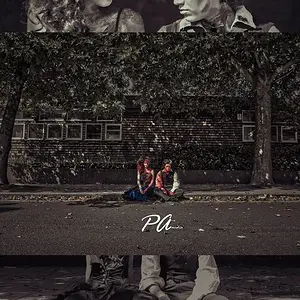
The way you are doing it and what Mike suggested, your camera is triggering the natural light exposure and the flash at pretty much the same time, and then if the shutter is open longer, you get the lighting effects. (after the flash) But the exposure of the subject is the flash. Anything else is background. The farther away it is, the less the flash, so that gave you the dark background with the lights being the only part that was recorded.
Digital is almost free. Great for experimenting. What you need to do is get some controlled situation with some friends and take some pictures with different settings, and TAKE NOTES. Vary the time, and vary your distance from the subjects, you'll fine that the further away the walls, the better separation you'll get, because they will be darker.



![[No title]](/data/xfmg/thumbnail/35/35264-5ade32b7036391926536661aeb7491c3.jpg?1734166921)