What's new

Olbers' paradox: why is the night sky dark?

What exactly is your question?

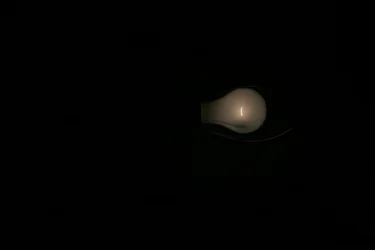
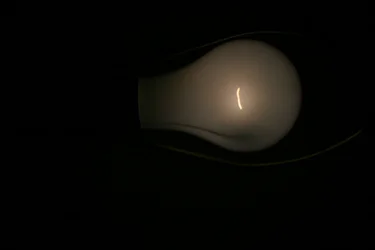
Please everyone forget the stars for a moment. My question right now is related to photography. All I am talking about right now is just about two light bulbs where one is at double the distance than the other, and how would they look on a photo.

bulbun.jpg
bulb2.jpg


It is either something like on the left picture, or like on the right picture, or something else. That's all I want to establish before I go on to say anything about stars. So, the answer is it would look something like the right picture, correct?
 
Or a physics forum.

True.

Astronomy combines a few different scientific disciplines like physics and geometry. I'm kind of a physics nerd, which is probably what attracts me to astronomy and photography.

I think you guys know this stuff better than people on physics forums. In any case I'd rather trust experience and actual photos than theory and bare numbers. -- Would you mind taking a photo of two light bulbs for us, where one is at double the distance than the other, please?
 
The total amount of light does fall off as indicated. In our "flying away from the sun" scenario, when you get 8x as far from the sun as when you started, there will only be 1/64 as many pixels inside the image circle of the sun on the sensor, so there's 1/64 as much total light falling on the sensor. In fact, since we KNOW the circle of pixels is 1/8th the diameter (this is simple geometry), we then KNOW that there are only 1/64 as many pixels in it (again, simple geometry). Since we also know, from the inverse square law, that the total light is down by 1/64, we KNOW that each pixel MUST be just as bright as it was originally. Otherwise there would be missing light.

This is too important to me, so I'm afraid I can not settle without seeing an actual photo. I'll take two diodes to some photographer and ask them to take a photo. Would diodes be appropriate light source for this experiment?
 
By "diodes" do you mean LED's? Those should be fine, as long as both LED's are the same style (LED's come in a variety of brightnesses and light coverage, as well as color) and the current through both is the same (use current-limiting resistors!). EDIT: also make sure you take a picture of both LED's at the same angle. Some LED's change in apparent brightness depending on the angle at which you view them (ie, they're usually brighter straight-on than from the side).

You can come back here to let us know that they have the same brightness in the photo. :)
 
Olber's paradox (see: http://en.wikipedia.org/wiki/Olbers'_paradox) was formulated before we were aware that space itself is not static and the concept of the "big bang" was not known. IF you assume that space IS static AND the universe existed for an infinite length of time, then Olber's paradox makes sense. It essentially says if space is infinite (and static), that looking at any point in the sky will allow you to see a star (however far), and therefore you should see blazing light from all directions.

However, in an expanding universe, with a definite starting point, this is not what happens. According to current cosmological theory, the light that was present at the "big bang" has been red-shifted by the universe's expansion to the microwave wavelengths. Light emitted AFTER the big bang, say by the first stars, has also been red-shifted, but not as much as the light of the big bang. However, THAT light was most probably absorbed by the interstellar gas that exists between us and the source body. As the stars get closer to us, there is a higher probability that their light will be seen, partly due to less obscuration by interstellar gas, and partly due to less space that the light photon had to traverse. Astronomers use the position of known wavelengths of light to determine the degree of red-shift that an emitting object has at cosmological distances, and the amount of optical extinction due to scatter or absorption by interstellar medium, to arrive at an estimate of the distance of the light source from us at the time that it was emitted.
 
The other side of the issue that you're dealing with is the wave/particle duality of light. As a starting point, if the intensity of light never changes, moving a light further away causes less light to be seen because the apparent size becomes smaller. The intensity per unit area is constant, but there is less and less area. Keep moving the light away, and its size diminishes, following the inverse square rule. The torrent of photons diminishes to a stream, to a trickle, and eventually, to a few per minute or even days.Which is why for very distant objects, astronomers use as big a mirror as they can, and expose for as long as possible to accumulate enough photons to make an image.

It is interesting to note that while the absolute speed limit of the speed of light applies to particles travelling through space, the rulebook is thrown out when it comes to space itself. Apparently, space can expand at speeds much higher than the speed of light, and it continues to expand at an accelerating rate after slowing down around 6 billion years or so. The consequence of this appears to be that object at the "edge" of the visible universe will become invisible to us as the expansion of space over a long enough distance exceeds the speed of light (the ability of a photon to travers that distance). Billions of year in the future (I know, like we care...) the universe that we can see will be much less populated than what we see now, because the expansion of space will have carried those galaxies and other objects past our "horizon". The energy powering the expansion of space is known as "dark energy" (see http://en.wikipedia.org/wiki/Dark_energy) .
 
By "diodes" do you mean LED's? Those should be fine, as long as both LED's are the same style (LED's come in a variety of brightnesses and light coverage, as well as color) and the current through both is the same (use current-limiting resistors!). EDIT: also make sure you take a picture of both LED's at the same angle. Some LED's change in apparent brightness depending on the angle at which you view them (ie, they're usually brighter straight-on than from the side).

You can come back here to let us know that they have the same brightness in the photo. :)

Yes, I meant LED. Thank you. Can you think of anything better, more convenient? -- Yes, I will post the photo when I get back. I don't really care what the result will be, I think I can make my argument either way.
 
Olber's paradox (see: http://en.wikipedia.org/wiki/Olbers'_paradox) was formulated before we were aware that space itself is not static and the concept of the "big bang" was not known. IF you assume that space IS static AND the universe existed for an infinite length of time, then Olber's paradox makes sense. It essentially says if space is infinite (and static), that looking at any point in the sky will allow you to see a star (however far), and therefore you should see blazing light from all directions.

I'm surprised, but glad to see people here are in the mood to discuss more than photography. At least I will not get banned for saying stuff that is not in the text-books, I hope, like they banned me on every physics/astronomy forum. So if you don't mind let me tell you that in my theory the universe (space) existed forever and is infinite in size. Matter gets created in the centers of galaxies, so each galaxy is a little Big Bang on its own.


However, in an expanding universe, with a definite starting point, this is not what happens. According to current cosmological theory, the light that was present at the "big bang" has been red-shifted by the universe's expansion to the microwave wavelengths. Light emitted AFTER the big bang, say by the first stars, has also been red-shifted, but not as much as the light of the big bang. However, THAT light was most probably absorbed by the interstellar gas that exists between us and the source body. As the stars get closer to us, there is a higher probability that their light will be seen, partly due to less obscuration by interstellar gas, and partly due to less space that the light photon had to traverse. Astronomers use the position of known wavelengths of light to determine the degree of red-shift that an emitting object has at cosmological distances, and the amount of optical extinction due to scatter or absorption by interstellar medium, to arrive at an estimate of the distance of the light source from us at the time that it was emitted.

It's interesting that we can measure red shift just due to slower rate of incoming photons, that is just due to distance, even if there is no any relative velocity between an observer and the light source, or so some papers say.

The other side of the issue that you're dealing with is the wave/particle duality of light. As a starting point, if the intensity of light never changes, moving a light further away causes less light to be seen because the apparent size becomes smaller. The intensity per unit area is constant, but there is less and less area. Keep moving the light away, and its size diminishes, following the inverse square rule. The torrent of photons diminishes to a stream, to a trickle, and eventually, to a few per minute or even days.Which is why for very distant objects, astronomers use as big a mirror as they can, and expose for as long as possible to accumulate enough photons to make an image.

I simulated positron-electron interaction and it looks just like they draw diagrams of photons in text-books.

340px-Light-wave.svg.png

350px-Onde_electromagnetique.svg.png


Photon - Wikipedia, the free encyclopedia


When positron and electron interact initially they will try to stick together, orbit each other, but due to magnetic force acting perpendicularly to both velocity vector and magnetic field vector they will twist around and produce spiral trajectory, or more precisely said their paths will describe double-helix, which is transverse wave and particle-wave duality in the most literal sense. Interesting, isn't it?

This is based on actual equations, Lorentz force and Biot-Savart law. I did not fiddle with any parameters or invent any new equations, it just came up like that by itself. Try it in Matlab and you should get the same thing. Text-books will tell ya when positron and electron collide they annihilate and emit a photon, but I'm pretty sure they simply just combine into a photon, and that's what photon is. Does that not make more sense than some "annihilation"? And if you consider it some more you can see then that light polarization is simply geometrical plane of charge oscillation, while EM superposition principle would explain why photons do not have net electric charge despite their evident electromagnetism.


It is interesting to note that while the absolute speed limit of the speed of light applies to particles travelling through space, the rulebook is thrown out when it comes to space itself. Apparently, space can expand at speeds much higher than the speed of light, and it continues to expand at an accelerating rate after slowing down around 6 billion years or so. The consequence of this appears to be that object at the "edge" of the visible universe will become invisible to us as the expansion of space over a long enough distance exceeds the speed of light (the ability of a photon to travers that distance). Billions of year in the future (I know, like we care...) the universe that we can see will be much less populated than what we see now, because the expansion of space will have carried those galaxies and other objects past our "horizon". The energy powering the expansion of space is known as "dark energy" (see http://en.wikipedia.org/wiki/Dark_energy) .

Speed of light in my theory is terminal velocity of EM fields. Just like free-falling object reaches terminal velocity due to air drag, so does the photon or any EM radiation have its terminal velocity due to resistance of Aether. And gravity, it's due to density gradients or pressure differences of the aether. These density gradients define propagation speed of EM waves, so everything is relative to gravity and it's what defines reference frames for electromagnetic interaction, kind of like in General Relativity, only more true. Heh!

Of course I'm crazy, but unlike other crackpots that only have lots of assumptions and abstract mathematics, I can actually simulate the things I'm talking about and those simulations resemble what we see in reality, so I guess I can't be that far away from the true mechanics of how the things work. Anyhow, I just told you guys this stuff for the purpose of entertainment, something to muse about, but I don't mean to argue any of this as we have plenty to talk about as it is, unless someone would insist, of course, then it will be my pleasure.

 
Last edited by a moderator:
What exactly is your question?

Please everyone forget the stars for a moment. My question right now is related to photography. All I am talking about right now is just about two light bulbs where one is at double the distance than the other, and how would they look on a photo.

bulbun.jpg
bulb2.jpg


It is either something like on the left picture, or like on the right picture, or something else. That's all I want to establish before I go on to say anything about stars. So, the answer is it would look something like the right picture, correct?

Something sort of like the right picture, more so than the left, yes.
 
Sorry, tris, I didn't realize that you're a kook.

If you've got a theory about.. something or other to do with EM theory, but can't figure out how the inverse square law works, you're just a kook. Of course they booted you out of the science forums. They get kooks all the time, gumming up the works. You're no Archimedes Plutonium, but you're in the same clan, aren't ya?
 
how did we go from a misunderstanding of the inverse square law to a theory where matter is created in the center of galaxies?
 
in my theory the universe (space) existed forever and is infinite in size

There have been many theorists who have had these ideas, but the theories have to have some kind of predictive value which can then be tested. If a theory cannot be tested, then its value as a means to better understanding is doubtful. When tests have been devised, they seem to point to definite beginning that is known colloquially as the "big bang", and there are discussions of an infinite universe in the thory of multiverses, but it is difficult to formulate a test that sense a space outside of our current horizon.

Matter gets created in the centers of galaxies, so each galaxy is a little Big Bang on its own.
That was a key component of the steady-state universe model (see: Steady State theory - Wikipedia, the free encyclopedia) but the predictions of that model failed observational tests and alternate models were felt to be better fits for the data.

It's interesting that we can measure red shift just due to slower rate of incoming photons, that is just due to distance, even if there is no any relative velocity between an observer and the light source, or so some papers say.
I don't understand what "slower rate of incoming photons" actually means. Red shifts have been linked to the relative motions of emitters from the observers, the stretching out of space due to expansion, and I think gravity effects such as at the black hole horizon, although the latter is still speculative. It has been proven time and again that the speed of a photon through empty space is always constant, and the relative motions of emitter and receiver influence the energy (frequency) of the received photon but not the speed. There was a discussion that reddening could be due to "tired light" (see:Tired light - Wikipedia, the free encyclopedia), but this hypothesus has been disproved.

Speed of light in my theory is terminal velocity of EM fields. Just like free-falling object reaches terminal velocity due to air drag, so does the photon or any EM radiation have its terminal velocity due to resistance of Aether. And gravity, it's due to density gradients or pressure differences of the aether. These density gradients define propagation speed of EM waves, so everything is relative to gravity and it's what defines reference frames for electromagnetic interaction, kind of like in General Relativity, only more true.
Prior hypothesis of "ether" as a medium for transmitting light waves were disproved by the Michaelson-Morley experiments. There are a number of people who still believe that "Aether" is a useful concept, but so far we have not seem much in terms of testable predictions. And until there is a set of predictions that can be tested and verified, the theory is just that - a theory. The linkage of gravity and quantum physics remains an unsolved problem, although the recent probable observation of the Higgs boson (the theorized particle that carries the gravitational force) could start to unravel that problem.

I'm sorry, Tris_D, I cannot intelligently debate the merits of your theories as my math skills are not adequate to the task, nor am I current in terms of the discussions in this field. I do enjoy reading about the various directions being pursued in cosmology, observational astronomy and particle physics, but that is pretty much at the level of semi-intelligent observer in the peanut gallery.

And as for your earlier question, if you do the tests, you'll find that the picture on the right is more correct.
 
Last edited:
Sorry, tris, I didn't realize that you're a kook.

If you've got a theory about.. something or other to do with EM theory, but can't figure out how the inverse square law works, you're just a kook. Of course they booted you out of the science forums. They get kooks all the time, gumming up the works. You're no Archimedes Plutonium, but you're in the same clan, aren't ya?

Don't hate me just because I'm crazy. I could be arrogant and assume that I know, repeat like a parrot things other people came up with as if it was my own understanding, but instead I prefer to work things out myself and I am not ashamed about the things that I do not know. That's why I'm here, I just hope that you know, so can you point some reference that confirms what you said about inverse square law? Where is it I could have learned about it? -- By the way, I have a storm going on here, ice-cubes falling from the sky, I will not be going to see a photographer today. Why don't you take a minute and snap that photo of two bulbs for us, please?


fjrabon said:
how did we go from a misunderstanding of the inverse square law to a theory where matter is created in the center of galaxies?

I was bored waiting to see if the storm here will stop. Just ignore it if you don't care. But let me say positron-electron stuff is serious thing, everything just fits. And perhaps I'm lousy physicist, terrible astronomer and stupid photographer, but when it comes to programming I know my stuff. You will not see anywhere else in the world n-body simulation of EM fields. I challenge anyone to try and find anything like that in the whole world. And since you guys seem to be into astronomy and physic I thought I would share some of my craziness with you, it was kind of way to introduce myself, so you know I'm crazy. That's my gift, my curse. Who am I? I'm your friendly neighborhood Driver-Man!
 
There have been many theorists who have had these ideas, but the theories have to have some kind of predictive value which can then be tested. If a theory cannot be tested, then its value as a means to better understanding is doubtful. When tests have been devised, they seem to point to definite beginning that is known colloquially as the "big bang", and there are discussions of an infinite universe in the thory of multiverses, but it is difficult to formulate a test that sense a space outside of our current horizon.

I'm not sure if it is appropriate for me to talk about it here. But while we are waiting for the photo to continue original discussion and if no one has any objections then great. So let me ask this straight, is it ok if we go on and blabber about this stuff unrelated to original topic?
 
Ok, here's a lightbulb at about 1 foot and about 2 feet, both taken at 1/4000s f/8 ISO 100 (the only variable is the camera-subject distance).
$IMG_6570.webp$IMG_6569.webp
The filament in the center is slightly overexposed, but you can take a sample from any of the rest of the bulb.

If you sample them properly you'll find the brightnesses to be close enough to each other. Any variations will be due to noise, inexact shutter speed, power fluctuations, etc (but still within 1% or so).
 
lighterj.jpg


Ok, since I had no way to control exposure time and aperture size I had to come up with some way to not over-expose. What you are looking at here is my LCD monitor turned off and reflection of a cigarette lighter. On the left photo the lighter is about 20 cm away, and on the right one about 40cm away from the screen. After I burned my fingers I converted the image to gray-scale in Photoshop and picked the brightest pixel in the middle. Left one has brightness 83 and the right one 57. I'm now 75% confident if this experiment is performed accurately we would get the result I was suggesting in my opening post.
 

Create an account or login to comment

You must be a member in order to leave a comment

Create account

Create an account on our community. It's easy!

Log in

Already have an account? Log in here.

Back
Top Bottom