What's new

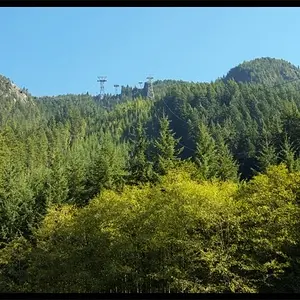
Olbers' paradox: why is the night sky dark?

Ok, here's a lightbulb at about 1 foot and about 2 feet, both taken at 1/4000s f/8 ISO 100 (the only variable is the camera-subject distance).
View attachment 25553View attachment 25552
The filament in the center is slightly overexposed, but you can take a sample from any of the rest of the bulb.

If you sample them properly you'll find the brightnesses to be close enough to each other. Any variations will be due to noise, inexact shutter speed, power fluctuations, etc (but still within 1% or so).

Awww. You'd have me convinced if I didn't do my experiment in the mean time. I surely appreciate that photo, thank you, but I'm not sure what to think now. Let me examine your photo more closely and think about it some more.
 
It's dark here in Minnesota right now.
 
Ok, here's a lightbulb at about 1 foot and about 2 feet, both taken at 1/4000s f/8 ISO 100 (the only variable is the camera-subject distance).
View attachment 25553View attachment 25552
The filament in the center is slightly overexposed, but you can take a sample from any of the rest of the bulb.

If you sample them properly you'll find the brightnesses to be close enough to each other. Any variations will be due to noise, inexact shutter speed, power fluctuations, etc (but still within 1% or so).

Awww. You'd have me convinced if I didn't do my experiment in the mean time. I surely appreciate that photo, thank you, but I'm not sure what to think now. Let me examine your photo more closely and think about it some more.

in the scientific method, christop contribution is called "falsification". You have a theory, someone does an empirical experiment and demonstrates that is not true. It was nice, but did not survive. This is also how other theories grew and died, letting survive one that until now has been able to explain phenomena and produce real devices that function.
Anyway, ask you old uncle how he used a lightmeter to calculate exposure for his photographs ;) .
 
Don't hate me just because I'm crazy. !

i don't hate you at all! I'm just not going to spend any more time teaching. I've given you a complete and accurate thought experiment which shows clearly that your picture is wrong, and the other one is right. You are not interested in learning, you are interested, really, in expounding your incoherent mass of words which you call your theory.

there's nothing really wrong with that, it does't hurt anyone except, perhaps, you. This probably isn't the right forum for it, and to be honest I don't know if there is a forum for it. I wish you well.
 
I believe the expand universe from the big band theory can explain the dark sky.

- Light were able to move freely after the big bang at one point.
- Light were able to move freely was part of the result of the big bang. (Expanding universe)
- At this point, those light that is far far away from earth are not arrive to earth as visible light. Due to the expanding universe, the wavelength of the light are stretch. We cannot see them with our eyes anymore.
- Instead of light, we see a lot of Cosmic Background Radiation. So I think if you treat the Cosmic Background Radiation as visible light, then the sky is bright.
 
Don't hate me just because I'm crazy. !

i don't hate you at all! I'm just not going to spend any more time teaching. I've given you a complete and accurate thought experiment which shows clearly that your picture is wrong, and the other one is right. You are not interested in learning, you are interested, really, in expounding your incoherent mass of words which you call your theory.

there's nothing really wrong with that, it does't hurt anyone except, perhaps, you. This probably isn't the right forum for it, and to be honest I don't know if there is a forum for it. I wish you well.

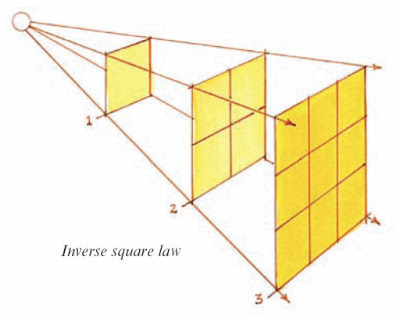
Aha. I note you failed to provide any reference to support your assumptions. And while those insults are cute, the topic here is not about me, but inverse square law.

Inverse-square law - Wikipedia, the free encyclopedia
420px-Inverse_square_law.svg.png
Inverse.Square.jpg


Cosmology | Stephen's Website
candles.jpg


Cosmic distance ladder - Wikipedia, the free encyclopedia
- By comparing the known luminosity of the latter to its observed brightness, the distance to the object can be computed using the inverse square law.

Apparent magnitude - Wikipedia, the free encyclopedia
- Note that brightness varies with distance; an extremely bright object may appear quite dim, if it is far away. Brightness varies inversely with the square of the distance.
 
in the scientific method, christop contribution is called "falsification". You have a theory, someone does an empirical experiment and demonstrates that is not true. It was nice, but did not survive. This is also how other theories grew and died, letting survive one that until now has been able to explain phenomena and produce real devices that function.
Anyway, ask you old uncle how he used a lightmeter to calculate exposure for his photographs ;) .

I'm afraid those photos were overexposed, and I said several times it is very important they must not be, so I'm afraid I can not accept that. Instead of me asking my uncle, why can you not simply point some reference that confirms what you guys are saying? Why is it every single article on the internet only confirms what I said? How is it easier to write all these posts over two days and four pages than simply take a camera and snap a few photos?
 
Ok, what the heck, one more try!

----

Let's set the camera up for a good exposure of the sun, at such a distance from the sun that the camera will render the sun as a circle on the sensor 1000 pixels wide. Let us suppose that the sensor reads the pixels inside that circle at a value of something intermediate, say 2048 on a 12 bit sensor (an exactly middle value). We have about 78,500 pixels in the on-sensor image, each giving a reading of 2048 out of a range of values from 0 to 4095.

Now leave the camera settings exactly alone. Move away from the sun, double your distance from the sun.

How large is the image circle on the sensor? 500 pixels, one half of the original value.
How many pixels are included in this circle? 19,600 more or less, one quarter the original value.

You claim that the values read out by the pixels are much less than 2048 (less than in the first case), I claim that the are 2048 (same as the first case).

Since the intensity of the sun seen from the new position is 1/4 as much as it was originally, and there are 1/4 as many pixels available, how can the value at each pixel be less? Your model has missing light? Where is it?

----

And now a prediction. Tris will respond with something that has the general shape and tenor of a rebuttal, but which nobody except Tris can quite make sense of. Tris will dismiss my discussion above, and go back to demanding that someone take a picture.
 
I just opened both of my lightbulb pictures in Gimp. After desaturating both images (using luminosity) I used the color picker to find the brightness of each image.

Averaged sample near the filament (4px radius):
far: 57% (pixel value 145)
near: 57% (pixel value 145)

Both bulbs are the same brightness.

Averaged sample for almost the whole bulb (300px radius):
far: 8% (pixel value 20)
near: 37% (pixel value 94)

The far bulb has about 21% of the total light as the near bulb. The far bulb was in reality slightly more than twice as far from the camera than the near bulb (roughly 250% as far), so it should have only about 16% of the total light as the near bulb, but note that these pixel values have unknown in-camera curves applied, which scales pixel values non-linearly. If I cared more about the actual values I would have captured the pictures in RAW format and processed them with linear response curves. Regardless, these results agree with what I've been saying all this time.

EDIT: you (tris_d) said my pictures were overexposed. Only the filaments were (barely) overexposed. I should have stopped down some more to ensure that they were not overexposed. Either way, I sampled pixels near the filament which clearly were not overexposed (yes, my "whole bulb" average values are slightly affected by the overexposure, but the conclusion is the same).
 
Last edited:
The problem with your logic is that when you have infinite light sources, you will still have an infinite steam of a very small number of photons hitting the sensor.

the problem is that if ANY number of photons are reaching the viewer from the source, the fact that there are infinite source stars would equal pure brightness.

If every line of sight ends at some star, well that's where that line of sight ENDS, and if every line of sight ends at some point then there is nothing infinite about it.


But, when you have an infinite number of point light surfaces, the inverse square law no longer holds, because then you no longer have a point surface of light, but a flat plane.

The fact that every star is immediately adjacent to another in the visual plane means that the sky should act like a complete plane of light that completely envelops the universe.

There is no plane, stars are not adjacent. Distribution of stars is 3-dimensional, you are forgetting about the "depth". They might appear to be one next to another, but when you see two stars are close you can be sure their distance from us is different.
 
I just opened both of my lightbulb pictures in Gimp. After desaturating both images (using luminosity) I used the color picker to find the brightness of each image.

Averaged sample near the filament (4px radius):
far: 57% (pixel value 145)
near: 57% (pixel value 145)

Both bulbs are the same brightness.

Averaged sample for almost the whole bulb (300px radius):
far: 8% (pixel value 20)
near: 37% (pixel value 94)

The far bulb has about 21% of the total light as the near bulb. The far bulb was in reality slightly more than twice as far from the camera than the near bulb (roughly 250% as far), so it should have only about 16% of the total light as the near bulb, but note that these pixel values have unknown in-camera curves applied, which scales pixel values non-linearly. If I cared more about the actual values I would have captured the pictures in RAW format and processed them with linear response curves. Regardless, these results agree with what I've been saying all this time.

EDIT: you (tris_d) said my pictures were overexposed. Only the filaments were (barely) overexposed. I should have stopped down some more to ensure that they were not overexposed. Either way, I sampled pixels near the filament which clearly were not overexposed (yes, my "whole bulb" average values are slightly affected by the overexposure, but the conclusion is the same).

How do you explain my experiment then? You can confirm that in few seconds. How do you explain all the articles on the internet are saying intensity is supposed to drop with the square of the distance? No one is mentioning any apparent size when talking about inverse square law, everyone just says intensity falls off. -- Look, I really do not know, I just hate to assume. I think there is something fishy about this whole thing because I searched internet for days and I could not find any conclusive answer to my satisfaction. Theory says one thing but photos show something different. So please take some more faint source of light, like a candle or LED, and take two more photos, ok? Please?
 

Create an account or login to comment

You must be a member in order to leave a comment

Create account

Create an account on our community. It's easy!

Log in

Already have an account? Log in here.

Back
Top Bottom