What's new

proper night exposure

both pictures are blurry. Try a F 8 plus. As you go higher in number it should help keep things in focus.
 
Thanks vip. I'm noticing that now that I can view the photos through my computer.

Does night time photography make the depth of field appear more shallow than it would during day light?

It seems like the depth appears much more shallow during night time than it does the same f/stop during day light.
 
It shouldn't, I have never noticed it. One thing with night photography is that you need a tripod and a GOOD one not a cheap one because the slightest movement can give you that blur. Use a timer or a remote if possible.

Also keep in mind in night photography if you are using autofocus and its dark you may not hit focus on what you really want. I usually shoot F8-F11 usually by F8 mostly everything is in focus..

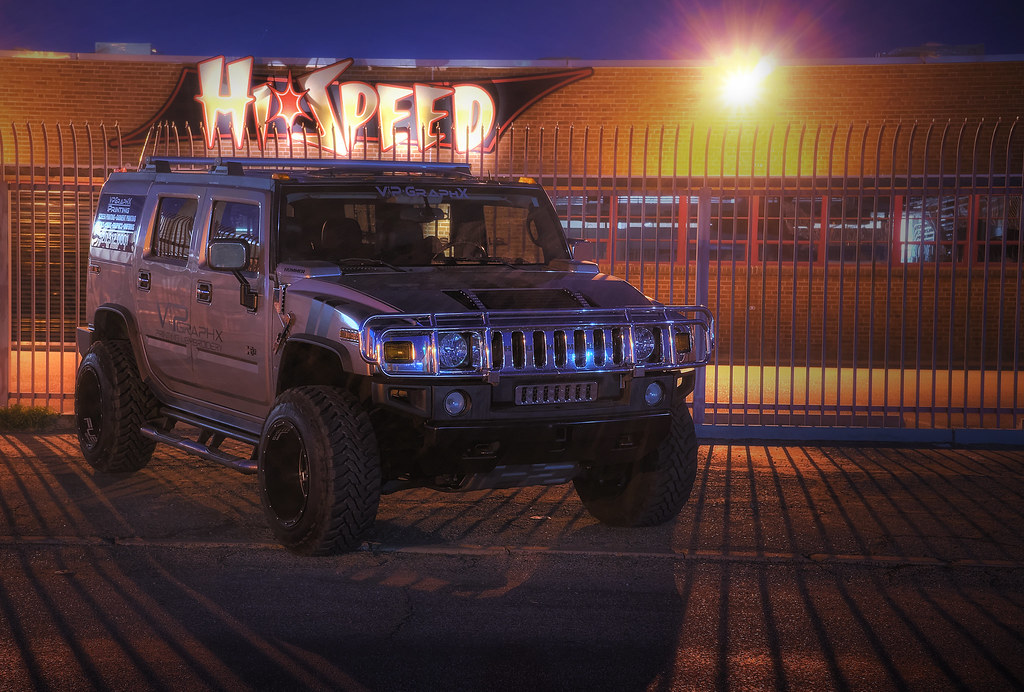
Here is an image I shot last night...

There was only those two lights in the background on and Another across the street. IT was not completely dark but it was not well lighted either.

I used f10 and ISO 1000


H2HighSpeed by VIPGraphX, on Flickr
 
Does night time photography make the depth of field appear more shallow than it would during day light?

It seems like the depth appears much more shallow during night time than it does the same f/stop during day light.

Absolutely nothing has changed simply because the sun went down...or dim lighting inside. The exposure triangle must still be followed, the DOF is not altered, nor has needing to set white balance been changed. Just remember that in darker venues, you still need just as much 'total exposure' as in daylight. The difference is that the shutter has to be slowed down, and/or the aperture opened up, and/or the ISO speed raised, all to compensate for less available light.

One of my 'tricks' when shooting in dark environments is to take a shot on full Auto, just to see what the camera wants. Then I'll first adjust for what I want (wide aperture for thin DOF, slower ISO speed for less noise, etc) and then make the other two settings of the exposure triangle to get the desired exposure. In the film days, after making a mental calculation of settings to use, nearly all photographers would 'bracket' their exposures one or more stops each way to ensure they got what was wanted. I recall one cold night in Washington DC perhaps 30 years ago where I set my camera on a garbage can next to the reflecting pool in front of the US Capitol building. I took perhaps 10 shots from that spot, adjusting my exposure time up and down from where I started. I had some shots that were horribly dark (underexposed), and some way too bright (overexposed). What was interesting is the amount of detail that became visible as the exposure time was increased from about 1/10th to 10 seconds with ASA(ISO) 200 slide film. For what it's worth, I still bracket sometimes, even after looking at the pictures in the LCD. Why? Because I may see something on my computer that a slightly different exposure brings out better.
 
One thing with night photography is that you need a tripod and a GOOD one not a cheap one because the slightest movement can give you that blur.

By good he means.. you need to spend $100+. Remember even if you have everything else right in the camera, if you have a crappy tripod it really won't matter.
 
Why is everyone saying to turn off vibration reduction?
 
You want to turn off VR IF your camera is tripod mounted because it does "bad things". (that's a technical term)

Since most night shooters will be using a tripod...
 
i'm not sure exactly how it works, but the VR attempts to compensate for movement that isn't happening... in doing so, the lens shakes and you get a motion blur on long exposures.

do a few test shots, and see for yourself.

vr is for handheld shooting only. a good tripod, and stable ground should render the camera motionless. so there no need for vr.
 
Using IS with a tripod

When using early IS lenses with a tripod it was necessary to turn off IS because of 'Shake Return’, where the IS tries to correct tiny vibrations it is making itself, by the tripod being knocked, or camera used. This ‘feedback loop’ can continue endlessly, resulting in the addition of unwanted blur to images that would be sharper if the IS function was switched off.

From Canon Website·
 
I appreciate the conversation.

Help me out here real quick. VIP posted a picture where he used an ISO of 1000. When I took my shots last night I opted for a longer shutter speed and tried to keep my ISO low. I kept my ISO under 400 for the pictures, with exception to a couple where I wanted to try to get the lights to look like stars as suggested in manaheim's guide.

Is it often better to run a higher ISO and a smaller aperture or is it more to what suits the composition?
 
I appreciate the conversation.

Help me out here real quick. VIP posted a picture where he used an ISO of 1000. When I took my shots last night I opted for a longer shutter speed and tried to keep my ISO low. I kept my ISO under 400 for the pictures, with exception to a couple where I wanted to try to get the lights to look like stars as suggested in manaheim's guide.

Is it often better to run a higher ISO and a smaller aperture or is it more to what suits the composition?

the higher the iso the softer the image gets.

you'd have to ask him why he used the higher iso... personal preference?
 

Create an account or login to comment

You must be a member in order to leave a comment

Create account

Create an account on our community. It's easy!

Log in

Already have an account? Log in here.

Back
Top Bottom