What's new

reversed.macro.is.STRESSFUL!!!!!!!

swiftparkour94

TPF Noob!
Joined
Sep 14, 2012
Messages
632
Reaction score
16
Can others edit my Photos
Photos NOT OK to edit
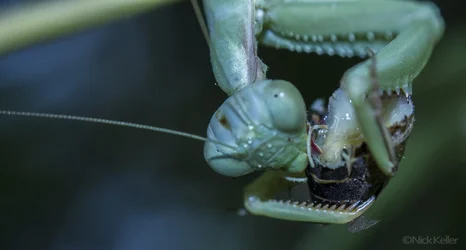
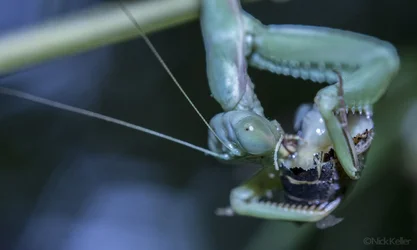
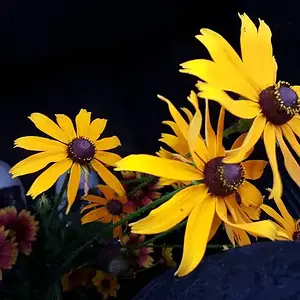
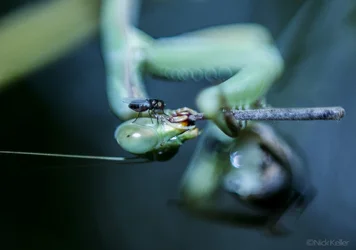
30 minutes with a Canon T3i, reversed 50mm f/1.8 shot RAW at sunset, and built in flash (yea, I'm poor), then hours of tampering and heavily editing, fixing both colors, noise, and motion blur, (patch tools, clone stamp, etc.). These are my keepers out of the over 60 i took. I really want a good macro lens and I'm not cheaping out on it. This mantis was dismembering some sort of weird bug i find on my bushes often, eating it's legs as well as it's insides. It was brutally amazing, i watched the whole thing happen. Big thanks to my cat Shadow for spotting him in a little tree! CC?
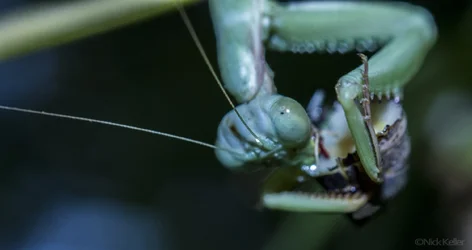
$IMG_3635.webp$IMG_3654.webp$IMG_3658.webp$IMG_3659.webp
 
Last edited:
Trying to think of a good time to bump this thread....
 
I guess you found that time. :P

I'm getting the feeling your white balance is a bit off, you might want to look into that.

The built-in flash is actually not completely useless in macro photography, you just need to get a diffuser... And by get I mean make.
Even being a little creative with cardboard and paper can be enough to get a nice diffuser to make your light nice and soft.
You should be able to find a lot of stories and how-tos through google on this matter, loads of people have done similar things.

I haven't yet tried revering a lens although I'd really like to try sometime. Looks like you can get some pretty nice results off of it.
Your framing is a bit weird and your focus is a bit off here and there, but then again you're working with crazy thin DoF (something I'm not sure how to fix with a reversed lens).
A bit of practice should enable to get very nice shots. :D

Keep it up. ;)

That fly in nr. 1 is one heck of a daredevil btw!
 
Judobreaker said:
I guess you found that time. :P

I'm getting the feeling your white balance is a bit off, you might want to look into that.

The built-in flash is actually not completely useless in macro photography, you just need to get a diffuser... And by get I mean make.
Even being a little creative with cardboard and paper can be enough to get a nice diffuser to make your light nice and soft.
You should be able to find a lot of stories and how-tos through google on this matter, loads of people have done similar things.

I haven't yet tried revering a lens although I'd really like to try sometime. Looks like you can get some pretty nice results off of it.
Your framing is a bit weird and your focus is a bit off here and there, but then again you're working with crazy thin DoF (something I'm not sure how to fix with a reversed lens).
A bit of practice should enable to get very nice shots. :D

Keep it up. ;)

That fly in nr. 1 is one heck of a daredevil btw!

Thanks for the feedback! I've heard of the diffuser idea before, thanks so much for reminding me! I'll have to try it when I get the chance. My white balance was as best as I could possibly get it, even in post and was especially hard with the flash. I tampered with it a lot and took out all of the highlights (very harsh glares on the subject), made it a bit more green, and upped the contrast. I also played with another particular tool, I forgot the name but it is so much fun to play around with! If I could describe it, I'd have to say that the higher it goes, it makes edges of things appear a bit thicker and shadows seem to shift and blend nicely. Really gives it that pop, unless you turn it down into the negatives and it'll become a blurry softer looking image the lower you go. I was at f/2.2, then I bumped it to 5.6 (I think, or close to it) and it was still super shallow. I was cockeyed using my Vfinder on liveview to help keep it steady. It was a difficult neck breaking task, but hey, I'd bleed for my photography if I'd have to :)
 
Oh and yes, I deleted a potential out of focus keeper that showed the flies covering nearly everything! I was sad :(
 
Yeah I know that tool. Can't remember the name right now too but I know exactly what you mean. :P
With macro a low aperture really means thin DoF. When working really close I usually use something between f/11 and f/18, occasionally even higher.
These apertures will give you a better DoF, however they usually require extra lighting to make sure you get a good sharp shot.
 
A few thoughts/tips:

1) Don't delete in the field - ever. Seriously if you find that you run out of card space too fast buy another memory card - plus learn to shoot a little slower. You really can't review shots on teh LCD very well at all and its always best to do any deleting back on a proper computer with a proper view.

2) White balance- what were you setting for your white balance and were you shooting in RAW? In general with this kind of photography you shouldn't be having much trouble with the white balance esp if you shoot in RAW.

3) Apertures - now you can close down the aperture more to get more depth of field, but remember that the more you close it down the closer to the diffraction limit you'll get. Do some test shots on a static subject (45degrees to a coin works well) and see how the sharpness varies and at what point the softness from reducing the aperture (using bigger f numbers) starts to soften your photos too much.

4) For your popup flash what you need isn't really a diffuser, what you need is a snoot and diffuser setup. That is a long cone shaped construction that carries the light from the popup closer to the end of the lens and the subject, at the end of the channel you can widen out the snoot which will provide the diffusion on the light (larger source area = softer light).
 
Judobreaker said:
Yeah I know that tool. Can't remember the name right now too but I know exactly what you mean. :P
With macro a low aperture really means thin DoF. When working really close I usually use something between f/11 and f/18, occasionally even higher.
These apertures will give you a better DoF, however they usually require extra lighting to make sure you get a good sharp shot.

Yea the lighting was awful so I didn't even consider those options, plus myself and the subject kept moving. I was almost hopeless and about ready to give up til I was like, "Hey, I have a crappy poppy uppy flash and Photoshop to work with!" :D
 
Overread said:
A few thoughts/tips:

1) Don't delete in the field - ever. Seriously if you find that you run out of card space too fast buy another memory card - plus learn to shoot a little slower. You really can't review shots on teh LCD very well at all and its always best to do any deleting back on a proper computer with a proper view.

2) White balance- what were you setting for your white balance and were you shooting in RAW? In general with this kind of photography you shouldn't be having much trouble with the white balance esp if you shoot in RAW.

3) Apertures - now you can close down the aperture more to get more depth of field, but remember that the more you close it down the closer to the diffraction limit you'll get. Do some test shots on a static subject (45degrees to a coin works well) and see how the sharpness varies and at what point the softness from reducing the aperture (using bigger f numbers) starts to soften your photos too much.

4) For your popup flash what you need isn't really a diffuser, what you need is a snoot and diffuser setup. That is a long cone shaped construction that carries the light from the popup closer to the end of the lens and the subject, at the end of the channel you can widen out the snoot which will provide the diffusion on the light (larger source area = softer light).

I only delete the obviously blurred photos while reviewing them. I like to take several shots then review them to see how I'm doing. If I come across blurry/out of focus ones then I'll quickly delete a couple. If it's too close to call then I'll check on my pc.

I forgot what my white balance was, I was using magic lantern preset Kelvin numbers. I think it was 3500

I know all that about the aperture. The thing that sucks with lens reversal is that you have to have the lens mounted on the camera body normally, set your aperture, then hold the DOF preview button as you take it off the lens otherwise it will go right back to wide open once taking it off. It even sucks more that you can't see what f-stop it was in the properties :/

I'll check out that diffuser you talked about. It sounds somewhat familiar. Can you give me a link, I have no name to go off of. Thanks :)
 
I review when shooting, but never delete in the field. My view is that when you're out shooting you should be shooting - checking your shots, but mostly shooting. Taking time to delete and clean is what you do when you get back to base camp and the computer.

As for the white balance, honestly I think if you're not using a white card in the field and setting it based on the actual lighting then its best to leave it in auto. Auto does a pretty good job most of the time when you've one dominant light source - and if you shoot in RAW any corrections are very easy to make (JPEG can be corrected but its generally harder and more time consuming to adjust and get a good result).

As for the snoot and diffuser I can't link you to a product as I'm not aware of there being one. There are regular snoots, but chances are you'll have to make something up yourself to fit into the space and distances that you've got. A simple white card cone with some tape would be a starting point.
 
Overread said:
I review when shooting, but never delete in the field. My view is that when you're out shooting you should be shooting - checking your shots, but mostly shooting. Taking time to delete and clean is what you do when you get back to base camp and the computer.

As for the white balance, honestly I think if you're not using a white card in the field and setting it based on the actual lighting then its best to leave it in auto. Auto does a pretty good job most of the time when you've one dominant light source - and if you shoot in RAW any corrections are very easy to make (JPEG can be corrected but its generally harder and more time consuming to adjust and get a good result).

As for the snoot and diffuser I can't link you to a product as I'm not aware of there being one. There are regular snoots, but chances are you'll have to make something up yourself to fit into the space and distances that you've got. A simple white card cone with some tape would be a starting point.

Yes I absolutely agree, I guess it's a bad habit of mine. The main reason as to why I do it is because I can get to each better looking photo faster when scrolling. I'll work with a new method though next time :)

I don't even fuss with white cards, it takes longer than using magic lanterns WB settings and so far for me it's been 95% accurate in the scenes I've been in and is a life saver! I shot these in RAW and toyed with the WB a tad because the flash ruined lots of the colors.

I'll google the diffuser stuff, go off of pictures, and experiment. Thanks!
 
Nice. All the same angle. Would like to see some variation. I know a eating mantis will remain relatively in the same position while feeding. As long as you move slow and don't make abrupt sudden movements getting a different angle shouldn't be a problem.
 
TheFantasticG said:
Nice. All the same angle. Would like to see some variation. I know a eating mantis will remain relatively in the same position while feeding. As long as you move slow and don't make abrupt sudden movements getting a different angle shouldn't be a problem.

I tried other angles which were the slightest, the way the branches and leaves draped I only had access to one side. The ones I took from another side I deleted because it's face wasn't in view, just the top of it's head. I was in a really weird angle sitting in dirt looking up and slanted to the right, it killed my neck
 
I would say skip the diffuser and the snoot........ just use a piece of white cardboard over your subject in front of the camera to reflect the light "down". On a macro shot almost all light from your on camera flash is going to pass high over your subject and miss lighting it. The little lens in the reflector is set up to spread out at a range of about 4 feet to 12 feet from the camera to be effective. A snoot will most likely do the same except concentrate it into a smaller spot. You need a way to direct that light down to the front of the lens and a reflector of some type would work better.
 

Create an account or login to comment

You must be a member in order to leave a comment

Create account

Create an account on our community. It's easy!

Log in

Already have an account? Log in here.

Back
Top Bottom