Let's say you want a photo of a bug mostly all in focus. You will most likely be very close. You'll want a bigger aperture to have a deep enough depth of field. Around f/8 seems to work most of the time for me. If something in a landscape is a ways off and you want it in focus and the extraneous material softer, you won't need a big aperture, you may be able to get away with f/5.6 or f/4. Now, you'll want to learn the relationship between aperture and shutter speed for correct exposures.
This is one of the trickiest topics that we have to teach at our school. The aperture topic borders on the 'insanely geeky' and we have to walk a tightrope trying to give enough information without going overboard.
One of the problems has to do with terminology; big, small, wide, shallow, greater etc. This is how we describe it at the school:
Regarding Relative Aperture Numbers; big number (e.g. 22) = small hole, small number (e.g. 2) = big hole.
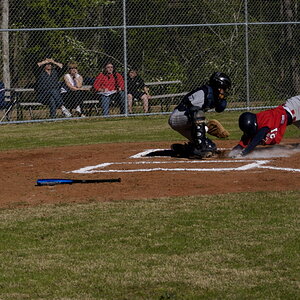
Regarding Depth of Field; The primary subject is in focus because of the glass in the lens. What appears to be in focus in front of and behind the primary subject is controlled by two things; the effective diameter of the aperture and the distance from the camera to the subject.
Put simply: The further the camera is from the subject, the more the background and foreground will appear to be in focus (a greater depth of field). The closer the camera is to the subject, the less the background and foreground will appear to be in focus (a shallower depth of field).
The bigger the relative aperture number (smaller hole) the more the background and foreground will appear to be in focus (a greater depth of field). The smaller the relative aperture number (wider hole) the less the background and foreground will appear to be in focus (a shallower depth of field)
Whilst it is very tempting to get more technical than this, I can confirm from years of experience that it is very unwise to do so