What's new

Small jewelry help

What happens when you reverse the lens and the extension tubes together?
Or can you only reverse the lens on it's own?
There's no reason you can't combine the reversing ring and extension tubes, but you render it useless as the focusing point would be so close to the front element and the DoF so narrow, you'd never get anything in focus.
 
What happens when you reverse the lens and the extension tubes together?
Or can you only reverse the lens on it's own?

You get even closer focus with even worse image performance. Reversed lenses, extension tubes and screw on closeup filters are all serious compromises compared to a real macro lens. None of them except for the macro lens will provide a reasonably flat field. Don't compromise. Shop for a used macro lens. Here is an example for you. it will work on any Nikon DSLR except for 3000 and 5000 seriels
 
As an eBay Associate we earn from qualifying purchases.
The most-useful extension tube will be a 23mm or so model, on a longer lens, like a 135 to 200mm. Short length do not work well, or at all in some cases. You want a longer lens,for magnification, and around the 20 to 25 mm extension to bring the focus point up close. The cheapest tube sets are for ancient Nikon bodies: for a DSLR Nikon, you want at least ProOptic brand AF tubes, from Adorama. You want AF capable tubes for metering and communication with a Nikon DSLR camera. I would like a 90mm Tamron AF-SP macro lens, or a 100 to 105mm true macro in your situation.

Sent from my Z833 using ThePhotoForum.com mobile app
 
So,
I tried the extension tubes with 32mm extension. I am so surprised as to how close the lens has to be from the subject...so close it's nearly awkward.
I also tried a reverse ring on my normal 35mm lens and found it impossible to focus because lack of light. It was near pitch black, I wonder why there is loss of light when a lens is reversed?
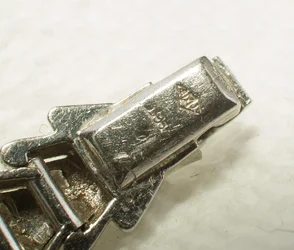
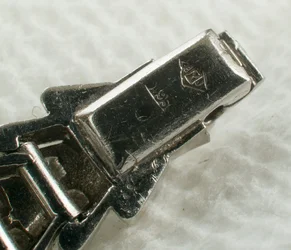
I am trying to decipher some old jewelers marks, so the extension tubes really help. It's just weird being so close. The magnification is quite incredible though.
 

Attachments

  • mark.webp
    mark.webp
    288.1 KB · Views: 147
  • mark2.webp
    mark2.webp
    292.6 KB · Views: 120
YES...a reverse-mounted, short focal length lens like the 35mm lens, will make you be very,very CLOSE in order to achieve proper focus. But- on the other hand, just look at the degree of magnification you have when you are sooooo close!

When a NIKON F-mount lens from the new G-seres is un-mounted from the camera, the iris diaphragm closes down to minimum f/stop, so, that makes things look very dark to look through, unless the aperture actuating mechanism is held, blocked, or taped to open, to maximum aperture. Canon does the opposite.

Yes, 32 or 36mm extension tubes: that is a LOT of extension. With short focal length lenses, too much extension will actually bring the point of focus to INSIDE of the lens barrel (weird, but true!)

The best lens lengths for using 20,24,32,or 36mm extension tubes will be rather long lenses, with rather long MFD or minimum focus distance. Due to the way tubes work with different focal length lenses, they are typically sold in sets, which are generally like 12mm, 24mm, and 36mm, each one a part of a 3-tube set. Actual lengths vary from maker to make, but are usually close to these three lengths. Try different lenses with whatever you happen to have.

 
YES...a reverse-mounted, short focal length lens like the 35mm lens, will make you be very,very CLOSE in order to achieve proper focus. But- on the other hand, just look at the degree of magnification you have when you are sooooo close!

When a NIKON F-mount lens from the new G-seres is un-mounted from the camera, the iris diaphragm closes down to minimum f/stop, so, that makes things look very dark to look through, unless the aperture actuating mechanism is held, blocked, or taped to open, to maximum aperture. Canon does the opposite.

Yes, 32 or 36mm extension tubes: that is a LOT of extension. With short focal length lenses, too much extension will actually bring the point of focus to INSIDE of the lens barrel (weird, but true!)

The best lens lengths for using 20,24,32,or 36mm extension tubes will be rather long lenses, with rather long MFD or minimum focus distance. Due to the way tubes work with different focal length lenses, they are typically sold in sets, which are generally like 12mm, 24mm, and 36mm, each one a part of a 3-tube set. Actual lengths vary from maker to make, but are usually close to these three lengths. Try different lenses with whatever you happen to have.
Great advice!
I don´t know how if this works with other models, but with Canon DSLRs, when you put them into video mode, the aperture closes to the set value. If you then unscrew the lens, aperture will stay as is. This is a trick sometimes used for timelapse photography in order to keep the aperture absolutely constant (otherwise there could be slight variations with each image even though you set the same aperture, resulting in flicker).
 

Create an account or login to comment

You must be a member in order to leave a comment

Create account

Create an account on our community. It's easy!

Log in

Already have an account? Log in here.

New Topics

Back
Top Bottom