What's new

Snow & Sunlight Practice

Cortian

No longer a newbie, moving up!
Joined
Jan 1, 2018
Messages
503
Reaction score
209
Location
S.E. Michigan, USA
Can others edit my Photos
Photos OK to edit
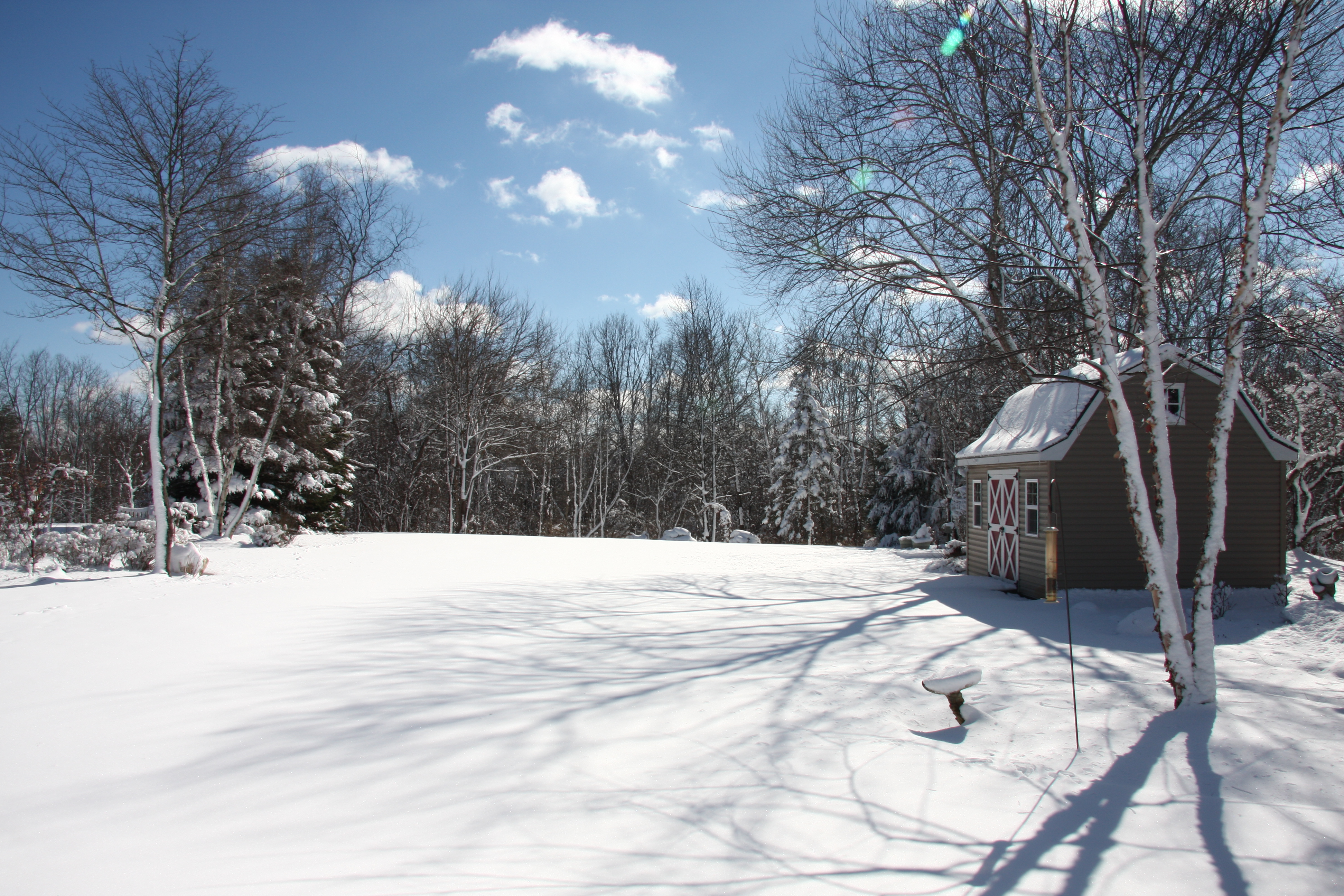
I've been struggling with sunlit snow. Well, snow, period. But saw this scene in the backyard, this afternoon, and had to try to capture it. So I went out and shot several times, varying the exposure, via aperture, between -2/3 stop and 0.

This one was the winner, I think

IMG_5859.JPG


Ran the series by my wife, and she identified the same one as being closest to reality.

C&C, please?

And, yes: I see the artefacts from, I assume, the UV filter.
 
do you have a filter on your lens?

shot at f/16 could be part of the problem, but man that lens is soft and color fringing all over.
 
do you have a filter on your lens?
I do. A ProMaster HGX UV filter.

shot at f/16 could be part of the problem, but man that lens is soft and color fringing all over.
Now that you mention it: Yeah, it is :(

I didn't look at it at 100%. I was just looking at exposure levels.
 
remove it!!!!!!!!!!!!!!!!!!!!!!!!!!!!!!!!!!!! there's absolutely no reason a DLSR should need a UV filter on the lens. it's doing nothing but destroying your IQ.
 
I'd hate to think I spent all that money on filters and they suck, but it wouldn't be the first time I took a wrong turn in a new endeavor.
 
How about this: For what exact purpose did you buy a uv filter?
 
They make them so they must be good for something, especially those really expensive ones, right?

The sales person recommended it.

It protects the front element of my lens.

Isn’t that why most people buy them? I have one but like you braineak I never use it and never recommend them to others.


Sent from my iPhone using ThePhotoForum.com mobile app
 
How about this: For what exact purpose did you buy a uv filter?
For starters: One of the smartest people I know, the friend of mine that gifted me the 20D and 17-85mm lens (which had a Hoya filter on it) that started all this believes in them. Mind you: This guy is so precise in his research and actions he makes me look sloppy, by comparison, and I'm regarded by those who know me as being insanely rigorous. He's got telescopes with eyepieces, alone, that cost thousands of dollars. He has one telescope that has a custom, hand-made optical element that was thousands of dollars--just for the one element. He just doesn't fool around. And he understands the physics of light. This guy could easily discuss the subject with Steven Hawking.

Secondly: I researched the arguments pro-and-con on my own. Near as I could tell, from the half-dozen to dozen or so articles I read: Some people believe them to be a benefit. Some do not. Some tests revealed a negative impact on IQ, others did not. Still others had mixed results.

I use them for several reasons:

1. To protect the lens. The filters I use, ProMaster HGX, are claimed by ProMaster to be much harder than lens glass. And if I should somehow bolix-up the threads I can simply replace the filter.

2. The filters I use have a surface that is remarkably slippery. Dust is not inclined to stick to it.

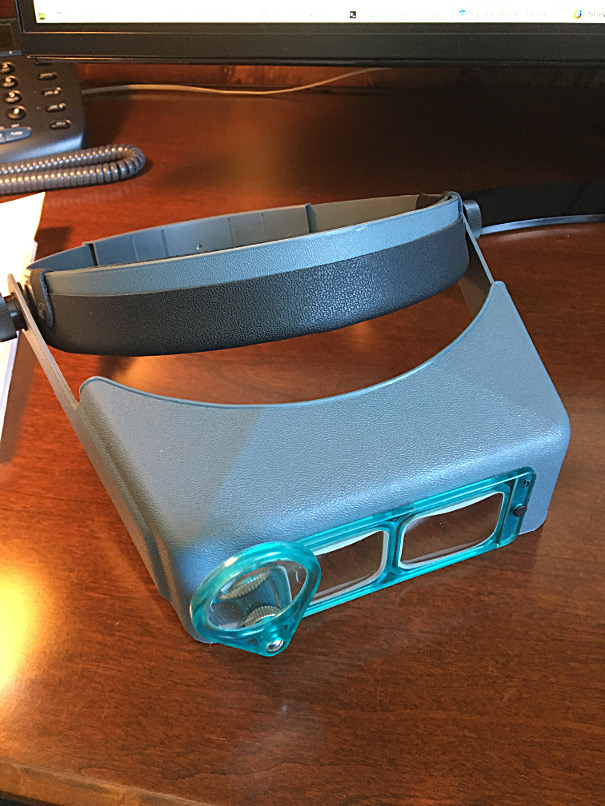
I just examined each of my three filters, which have been on their respective lenses for anywhere from a couple weeks to over a month. Found three (3) specks of dust on the one that had been on a lens the longest, and I had to use these

Magnifier_Headset.jpeg


even to see that.

The filter on my Tamron macro lens had a couple specks of dust, which blew off with just blowing on it. The 67mm filter on the 17-85mm was dust-free.

3. In reviews, users claim that, in the field they clean these with the corner of a t-shirt, in a pinch, with no ill effects. I would never even briefly consider doing that to my lens glass. The couple smudges I've seen on the three I've installed wiped off effortlessly with breath-fogging and clean facial tissue with essentially no pressure. I've never seen glass clean up so easily, with so little effort.

And when I say "clean up," I mean unbelievably clear. So clear that, when I went to move the 58mm filter from the 100-300mm lens I had to the 70-300mm lens I was gifted I had to look twice, because, at first glance I could not see any glass.

All that being said: The light looks like it'll cooperate with my being able to roughly replicate yesterday's photos. My plan is to do them again with f-stops closer to what should be the sweet spot for that lens (should be f/9.5 to f/16, depending upon focal length) and a set w/o the filter.
 
I use them for several reasons:

1. To protect the lens. The filters I use, ProMaster HGX, are claimed by ProMaster to be much harder than lens glass. And if I should somehow bolix-up the threads I can simply replace the filter.

2. The filters I use have a surface that is remarkably slippery. Dust is not inclined to stick to it.

poppycock.

1. no. lie. sorry but no, the coatings on modern lenses are 100,000x times better/stronger than any screw on filter -- it's part of why lenses cost so much. I'm HIGHLY skeptical of ProMaster's claims here. here's a great test: take a hammer to your lens -- you will see nothing. take a hammer to your filter: it will shatter -- WHEN your UV filter shatters, it can cause actual damage to the lenses front element. I've never heard of ProMaster -- I bet they show up at those tourist trap camera shops in big cities.

2. who cares? dust doesn't show up on images. Got a spec of dust on your lens? Blow it off or ignore it.

3. again, the front element on the lens is strong. wiping it with a t-shirt is not an issue -- it wont damage the lens.

I own three lenses that each cost me over $1000 each. I have no filters on them, and wipe them clean with my breathe and a t-shirt...

4. Digital sensors aren't susceptible to UV rays like film as they are already coated/covered with a filter for them. You bought a REALLY expensive piece of cheap glass to protect your lens that doesn't need protection and to keep clean in order to do nothing more than to kill the IQ of your images.

5. all money and effort to keep your front element is moot -- this is how they advertise the filter: The ProMaster Digital HGX UV filter absorbs the ultraviolet rays which often makes outdoor photographs hazy and indistinct.

Guess what that filter is doing to your images?! Making them hazy and indistinct. It's also what's causing the green flare on the top of your image.


sweet spot on that lens at 17mm is closer to f/5.6: Canon EF-S 17-85mm f/4-5.6 USM IS - Review / Test Report - Analysis

also google: diffraction.

also reading: Good Times with Bad Filters

from a quick google search, promaster is just re-branded Chinese low-end stuff. like Neewer and alike. they aren't B+W filters.
 
poppycock.

1. no. lie. sorry but no, the coatings on modern lenses are 100,000x times better/stronger than any screw on filter -- it's part of why lenses cost so much.
If manufacturers can put such coatings on modern lenses, then what's to stop manufacturers from putting such coatings on filters?

Btw: You do your argument no favours by over-stating your case. 100,000 times? Hardly possible unless lens-makers have found a way to defeat the laws of physics as we currently understand them.

I'm HIGHLY skeptical of ProMaster's claims here. here's a great test: take a hammer to your lens -- you will see nothing. take a hammer to your filter: it will shatter -- WHEN your UV filter shatters, it can cause actual damage to the lenses front element.
I think I'll pass on that experiment ;)

I've never heard of ProMaster -- I bet they show up at those tourist trap camera shops in big cities.
ProMaster makes (or brands) a bunch of stuff. Both my tripod and camera cases are ProMaster, for example. Seem to be quite well-made, too.

2. who cares? dust doesn't show up on images. Got a spec of dust on your lens? Blow it off or ignore it.
Fair enough, but...

3. again, the front element on the lens is strong. wiping it with a t-shirt is not an issue -- it wont damage the lens.
My eyeglasses have impact- and scratch-resistant coatings, too. I don't clean them with a t-shirt. I don't do that because they cost ±$700 and I know of what "dust" can be comprised.

I own three lenses that each cost me over $1000 each. I have no filters on them, and wipe them clean with my breathe and a t-shirt...
You are free to do that with your lenses. I, OTOH, know that much dust is highly abrasive. Particularly the stuff blowing around out-of-doors.

Ordinary glass has a hardness of only ±5 Mohs. Even current Corning Gorilla Glass is only around 7 Mohs. Dust can be anything, including mineral dust that is much, much harder than 7 Mohs. If lens-makers were using sapphire glass (9 Mohs) front elements that'd be one thing, but I highly doubt they're doing that, or we'd certainly hear about it.

Micro-scratches on a filter? Toss it and buy another. Micro-scratches on the front element of your lens? Well...

4. Digital sensors aren't susceptible to UV rays like film as they are already coated/covered with a filter for them.
Knew that, but thanks for the info.

5. all money and effort to keep your front element is moot -- this is how they advertise the filter: The ProMaster Digital HGX UV filter absorbs the ultraviolet rays which often makes outdoor photographs hazy and indistinct.
They also claim:

• REPELLAMAX™ Element Resistant Coating – This EXCLUSIVE ProMaster coating repels moisture, fingerprints, dust, dirt, and grime to ensure the sharpest images possible • Hardened Optical Glass – Ultra hardened optical glass resists surface scratching and stands up to the most intensive use.
I haven't seen anybody test the hardness of their HGX glass, but I have seen many people speak highly of its moisture, fingerprint, dust, dirt and grime-resistant properties in use.

Guess what that filter is doing to your images?! Making them hazy and indistinct.
I've seen no evidence of that so far. All this started because you observed colour fringing in my photo. It turns out that lens is known to be highly-susceptible to colour-fringing at its minimum focal length. (That's what I get for not reading the tests on the lenses I use!)

I tried to replicate the photo I posted yesterday. I came close, but not to quite as high an exposure level. I tested in aperture priority at apertures of 8, 11 and 16, with and without the filter, at everything from -1/3 stop to +1-1/3 stop under/over exposure. The colour-fringing appeared to be evident, to a greater-or-lesser degree, in every photo--filter or no filter.

It's also what's causing the green flare on the top of your image.
I know they can cause flare, but the filter was not the culprit in this instance after all. The non-filter shots I took yesterday had identical flare with and without the filter.

That was a guess based on the common wisdom that, for most lenses, the sweet spot is 2 to 2-1/2 stops above wide open. Wide open is f/4 on that lens at 17mm. It looks like with this lens the sweet spot is closer to one stop at all focal lengths. (Once again: Pays to read the results of the tests people have done
shake.gif
)

also google: diffraction.
Thanks for the info, but I knew about it already.

Was experimenting with my new Tamron 90mm macro a couple weeks ago and clearly saw the effect, first hand. Became very evident at f/16, if memory serves.

from a quick google search, promaster is just re-branded Chinese low-end stuff. like Neewer and alike. they aren't B+W filters.
The less-expensive ProMaster filters are not highly-regarded. ProMaster's HGX filters are believed to be relabelled Hoya HD filters. Whether they are, or not, it is Hoya's HD filters to which they're compared.

They claim "Made in Japan" on them. (Though, as we all know, "Made in..." doesn't necessarily mean what it says.)

 
For what its worth the only thing I would ever consider using a UV filter for is to protect my lens from a lot of liquid or debris flying directly toward the front element, which at least for me is a situation i'm not likely going to be in. Otherwise a lens hood is all the protection you need. Just my opinion.

On a side note when I started into digital photography I was duped into buying the some of the pro master HGX UV filters too. After about a year I started buying very high-end glass and realized not only are they pointless but they do in fact degrade IQ. They have sat in a box collecting dust ever since and I in good conscience could not bring myself to sell them to anyone else.

Now there are many screw on filters that do serve good purpose like CPLs and NDs and those too degrade IQ but at least offer some other more important trade off. If you start using these types of filters too you are going to quickly find that stacking glass over you lens isn't good and removing your UV filter every time you want to use one of these filters is just way more hassle than its worth.

The statement above they must be good for something? Yep making more money for the camera shops selling them.
 
Over time I may find, as you did, kalgra, that UV filters don't bring anything to the game. So far, though, I remain unconvinced. May be partly due to the fact I don't own any high-end glass ;)
 
Cortian,
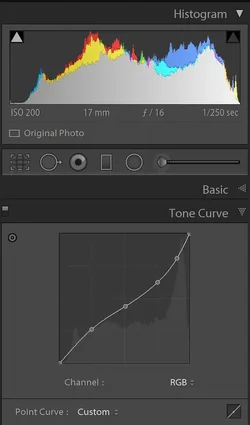
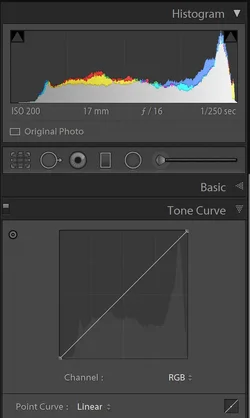
Lately I've been shooting a lot of snow and discovered that I get a lot more detail out of the snow applying a "reverse" S-curve to the tone map in Lightroom.

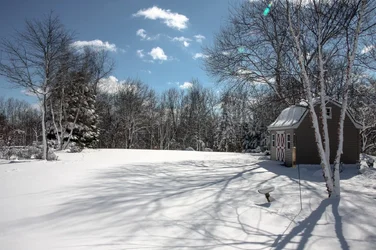
I took a quick stab at editing your photo. Here's what I came up with. I did a little work on the basic panel, but most of the change came from the tone map. The histogram for my edit is a lot more balanced.
 

Attachments

  • Cortian snow edited.webp
    Cortian snow edited.webp
    381.2 KB · Views: 139
  • Cortian snow LR panel - edit.webp
    Cortian snow LR panel - edit.webp
    19.8 KB · Views: 118
  • Cortian snow LR panel - original.webp
    Cortian snow LR panel - original.webp
    17.8 KB · Views: 99
At least some of the issue with the exposure is the angle you're facing the sun. There's lens flare upper right and I can tell the way the shadows are going... if you're facing that much toward the sun, try standing where you can get the sun behind a tree trunk, sometimes that works. Or wait til the sun is at a different angle, or move around to get it from a different angle.

The long shadows on the snow are interesting but could have worked better in the composition if they were in the frame more and not so cut off. This may have worked shooting it vertically, or there could be more than one way to shoot this. The more you practice and get good with the camera the less you have to think about the settings and the more you can think about framing the shot and composing the image. I think it's necessary to learn basics to enable a photographer to later on be able to do more well with the camera.

I remember Promaster being around for a long time. They've always sold somewhat lower quality run of the mill inexpensive equipment. I'd think about the purpose for something; usually a UV filter isn't necessary unless someone's going to be out in a lot of wind, around sand, etc. I use a polarizer sometimes out on a sunny day, near water (which doesn't happen often) and I have red and yellow filters for B&W film photography (but don't necessarily need those often).

I do periodically clean lenses with a spritz or squirt of lens cleaner on a microfiber cloth, or use the Rocket air blaster (it doesn't really blast of course, it just blows a puff of air). But I do breathe on a lens and wipe it with a microfiber cloth - or the edge of a t shirt. They're not that fragile.

The first SLR I bought I used off and on for I don't know, 30 years. Dragged it around summer camp to hockey rinks, yeah it looked like it. But the only reason the lens is busted is because it got dropped on a concrete floor twice; I used it for a few more months then one day went to focus, felt something give, and everything went out of focus! lol it just kind of twirled loosely both ways and that was the end of it. But it withstood a hockey puck bouncing off it, although hardly at full speed; the puck was coming at a angle and flipped up and over the glass, and it just left a wet splat of melted ice on it. And you can shoot thru scratches, try a local rink with old crappy glass, it's possible to shoot beyond those. Not that it's a good idea to trash a lens, but they're not that dainty that they can't withstand a little dust, or hockey splatters.
 
Thanks, Low_Sky. That's interesting. I'll have to see if I can replicate what you did in the Gimp.

I tried again today to more-or-less replicate Friday's shots. Unfortunately Mother Nature declined to cooperate, as sunlight strength was highly variable. I took multiple photos at 17mm and ±24mm, with some at 85mm thrown in for good measure, both with and without the filter. There appeared to both my wife's and my eyes to be absolutely no difference between them, even under close examination at up to nearly 300% magnification.

There was a significant reduction in colour fringing going from 17mm to 24mm. At 85mm there was none detectable at all.

All shots taken at f/5.6, 1-2/3 to 2 stops over-exposed.

None of them are worth saving. Once I finish this research I'll dump them. What made Friday's photos interesting was everything being coated in snow--even many vertical surfaces. That's all gone, now.
 

Create an account or login to comment

You must be a member in order to leave a comment

Create account

Create an account on our community. It's easy!

Log in

Already have an account? Log in here.

Back
Top Bottom