Sarah,
There is no such thing as a "dumb question". We all had to learn this stuff at one time or another.
While there are plenty of web sites that explain photography much better than I can, perhaps the following will help. It's part of a "photography 101" guide I wrote for another web site.
LEARNING YOUR WAY AROUND YOUR CAMERA
The infinity symbol (sideways figure 8) is found on the lens and it refers to the maximum focus point (distance) of your lens. There are usually other numbers on the lens that are the focus distance in meters or feet. These numbers can be useful especially when figuring depth of field, which will be discussed later.
The other markings on your lens (or that appear in your viewfinder) are the ones that confuse people the most. These are the aperture settings or F/stops. They often look like this:
1.2 - 2.8 - 4 - 5.6 - 8 - 11 - 16 - 22.
The F/stop markings on your lens may be slightly different but they all do the same thing and that is control how much light passes thru your lens to the film or pixals. Each setting is double the amount of light. For example, f/4 allows twice as much light as f/5.6 even though the numerical values don’t add up to double. Confusing? Yes. F/stops work in conjunction with shutter speeds to control how much of the ambient light hits the film or pixals to make a proper exposure.
Note that f/stops may not be displayed on the lenses of modern Digital cameras, rather they are shown in the viewfinder or on the LCD screen. Also, the markings may be slightly different, by that I mean, instead of an f/stop of 5.6 as shown in the example above, your DSLR may display 5.2, 5.5, 5.8 or another similar number.
F/stops also play a role in controlling depth of field. Depth of field refers to how much of your subject is in focus from near to far. The smaller the aperture (f/16 is smaller than f/8 for example) the more the DOF in your picture.
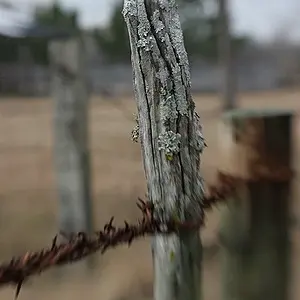
Where you focus the camera also plays a role in DOF. The closer your subject is to the camera, the less DOF you’ll have. This is why macro shots have very shallow DOF.
Lens selection is also crucial in determing how much depth of field you'll have in a given picture. The longer the lens (telephoto) the less DOF you’ll have. Conversely, the wider the lens, the more DOF in your picture.
Your camera also has a shutter speed knob or dial. Most cameras double the shutter speed as you move up or down the scale. For instance, my camera's settings in seconds are:1 -/1/2-/1/4 -/1/8/-1/15/-1/30/-1/60/-1/125-1/250-1/500-1/1000. Most professional photographers can hand hold a camera at 1/30 sec with a wide angle lens and get a sharp picture but going any slower or using a longer lens requires a tripod or some other sort of camera support.
Remember, most of the newer DLR cameras have the shutter speed/ aperture settings displayed on a menu or in the viewfinder and not on the lens or camera body. These "electronic" settings may vary from what I've listed but they do the same job, i.e. control how much light enters the lens to make the proper exposure.
An "X" by the 60 or 125 shutter speed knob on older film cameras means that's the shutter speed at which your flash will sync with your camera. If you use a faster shutter speed the shutter itself will close before the flash has fully fired leaving part of your picture dark. You can always sync a flash at a slower speed. Some cameras like the Hassleblad use a different type shutter and will flash sync at any speed. Also, most of the newer DSLR cameras will flash sync at higher shutter speeds up to 1/250 sec.
EXPOSURE
Your camera has to have the right combination of light + exposure time to = proper exposure. Your shutter speed and your lens aperture work together to give you the correct exposure as determined by either you or your camera. (more on how to determine best exposure later). This means that if you change shutter speed you must also change f/stop (aperture) in order to keep the same exposure value.
Lets assume that your camera's light meter tells you that 1/60 second exposure time @ f/11 will give you the correct exposure. If you were to place the shutter speeds and the f/stops (aperture) on a scale the following combinations would also give you exactly the same exposure value.
1/15 - 1/30 - 1/60 - 1/125 - 1/250 - 1/500 - 1/1000
f/22 - f/16 -- f/11 - - f/8 --- f/5.6 -- - f/4 - -- f/2.8
Deciding which combination to use depends primarily on which is more important to the photographer, shutter speed or depth of field for this particular picture. Remember however, if you change shutter speed setting (or aperture) you must change the corresponding aperture (or shutter speed) setting to keep the same exposure value. Also, an important fact to remember is that most lenses are at their sharpest when "stopped down" 3 or 4 stops from their widest settings.
For example. If your camera light meter tells you that 1/60 second at f/11 will give you the correct exposure and you want to increase your shutter speed to 1/250 sec you must open your lens aperture to f/5.6 in order to keep the same exposure value. You have to let in more light to compensate for the fact that you're now cutting the amount of time that the light will be exposed on the film or pixals.
Remember, f/5.6 is two stops wider than f/11 and 1/250 sec is two shutter speed settings from 1/60. This is the easiest way to remember this as opposed to thinking; "hmm...1/250 is four times faster than 1/60 so I need four times as much light...." The math is much easier if you simply remember if you change your shutter speed by x number of clicks you must change the aperature the same number. And vice versa obviously.
Faster shutter speeds means you need more light. Less light means you need slower shutter speeds.



 Im very much a visual, hands type person when it comes with learning something new!