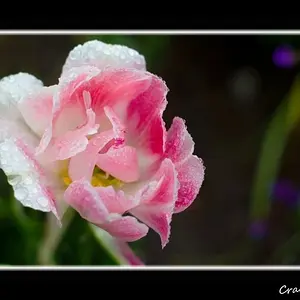
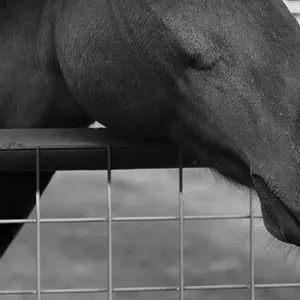
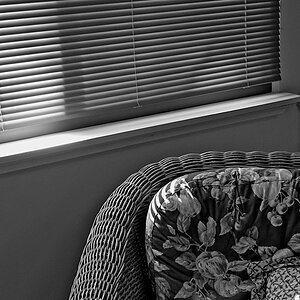
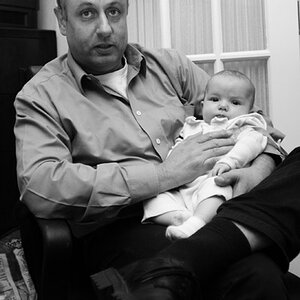
Nice set. Sometimes when I've been at my monitor for too long I take a little "eye adjustment break" and when I come back my vision is usually better.
Sometimes if I drink alcohol on that break my vision is worse. Don't drink and edit.

Nah, these are just snap shots. You know, facebook junk.
Since I'm limited on editing software, I had a problem finding something that will read Olympus .orf raw files.
I had used one called fastStone, but when you looked at the preview the file looked under exposed. And then when you opened the file the image was wayyy over exposed and I know that I nailed my exposure. So then I started thinking something was wrong with the camera.
So I suspected it was software related. I then Downloaded Olympus Workspace and sure enough, that was the problem. So then I had to go back and re-adjust all the cameras settings so I could figure out how the camera exposes-s.
So now I'm in the midst of figuring the camera. I need to figure out how it renders an image and its particular optimum settings.
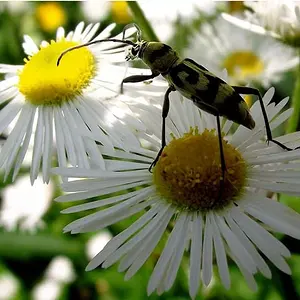
I haven't posted anything here lately that wasn't just testing.......tho,,,,,,,the dragonflies, look pretty nice.
You can get Bokeh with a micro 4/3's easily. That complaint is overrated. The depth of field issue that full frame users like to squawk about, is misinterpreted.
The Micro 4/3's camera does indeed have a more extended depth of field........but they say that because it's a small sensor the f-stop is double that of a full frame.
In other words ; a micro 4/3's camera lens set to F/2.8 is equivalent to F/5.6. Compared to its big brother the larger full frame sensor which would be a true f/2.8, due to dimensions of sensor sizes.
That is not the case. While the full frame image sensor does indeed have a depth of field relative to F-stop 2.8, the Micro 4/3's sensor's depth of field is F-stop 5.6.
The Micro 4/3's camera is indeed running at f/2.8, with twice the depth of filed as the larger sensor.
The only thing that changes is the depth of field, which I have shown , can be easily compensated for. ( dragonfly pics)
I'm not, in any way , suggesting that Micro 4/3's is better or more efficient than all the nice camera's with full frame sensors.
I am well aware that the full frame sensor excels in low light due to its ability to capture more photons, with larger pixels/photosites.
Pixels density: The Pentax K1-MkII is a fantastic 36MP full frame camera. It would have to have over double the pixels to equal a Micro 4/3's pixel density.
What the Micro 4/3's gives up is low light , high ISO performance and a little dynamic range( which seems to be not that much) in exchange for detail, and in some cases sharpness.
Anytime you pack many pixels into a smaller sensor, the density increases dramatically
The larger sensor certainly gives the ability for larger prints.
So far, I'm impressed with this m43 system, even though I don't know how to use it to its capabilities.
Oh......yeah, you're right about editing. I'll drink to that! After a few drinks, I'll drink to anything!
LS6