What's new

Taking photos of artificial lights at night

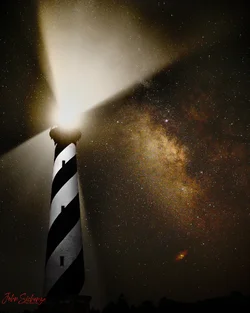
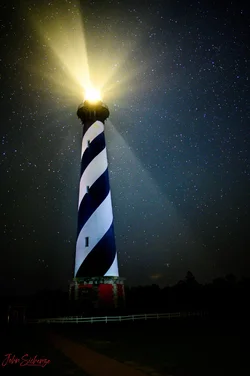
Inshoot at night all the time. At that distance you can shoot about f5.6 and it should be in focus. Set up the camera on iso 2000 or so. Depends on your body how it deals with noise. I now can go up to 6400 easily with low noise but if you did 200 and a tripod you can make the exposure 8 secs and you have it. Also if you have something closer you can use a flashlight and paint it this shot was iso 6400 and 2 seconds as I wanted the lighthouse to have the right light pattern the second shot was ISO 2000 8 secs
 

Attachments

  • 51406506824_9cfba63c83_o.webp
    51406506824_9cfba63c83_o.webp
    538.1 KB · Views: 12
  • 51405046576_0b4661e027_o.webp
    51405046576_0b4661e027_o.webp
    381.6 KB · Views: 15
When shooting with extremes in contrast brighter areas can bleed into dark areas giving the area a "blur." If you want a balanced exposure there's not much one can do about that. I believe you may be expecting a bit too much from your images. They look good to me.

Are you using a tripod? When shooting night shots I like to use a tripod and make use of the shutter timer (~10 seconds) to allow things to settle down before release. If your tripod allows it hanging the camera bag or other weight from the tripod helps dampen vibrations.

IMHO today there's too much expectation of perfection and technical excellence.
 
Hello,
thanks for the answers. It is just that when I can see those lights to me they look "strange". I have also other photos about the bridge with different f/value and shutter speed but the best to me is when the f is close but not too much as I am not a real fan of the "stars" (do you know what I mean?)
I've put the camera on the handrail of the opposite bridge. Anyway, during the shooting I. tried to magnify the scene and look into the viewfinder: the scene looked better. So why do happen this? I wonder if the photo improve if I use a full-frame.
By the way, do you have any suggestion to improve the exposure? I did the things more or less by chance......also where should I focus?

Kind regards.
 
1024x683 is the maximun size I can select on Flickr. Why?
You need a flickr Pro account in order to gain access to sharing larger image sizes from flickr. Without having the Pro subscription you will be limited to 1024x683 as your largest sharing option.
 
Inshoot at night all the time. At that distance you can shoot about f5.6 and it should be in focus. Set up the camera on iso 2000 or so. Depends on your body how it deals with noise. I now can go up to 6400 easily with low noise but if you did 200 and a tripod you can make the exposure 8 secs and you have it. Also if you have something closer you can use a flashlight and paint it this shot was iso 6400 and 2 seconds as I wanted the lighthouse to have the right light pattern the second shot was ISO 2000 8 secs
Hello,
did you do any post-processing on these photos? To me they look amazing, surreals....
 
Hello,
did you do any post-processing on these photos? To me they look amazing, surreals....
It depends on what you want the picture to look like. I had to adjust uso and shutter speed to get the light from the lighthouse to look right. Then noise reduction and using a body that does well at higher iso.
 
If I'm understanding your point correctly, you are stating that the lights themselves are seemingly blurred. If by lights you mean the streetlamps, then yes, they are blurred. This is a result of the fact that they are so bright compared to the rest of the image. The camera has a limited dynamic range that it can capture, and you either lose dark areas into invisible blackness or you lose bright areas into blown-out whiteness, or a significant amount of both. The blown-out lights overwhelm the sensor and bleed into neighboring pixels, creating the blur that you're seeing.

The images are, in my mind, pretty much all you could expect from single images without going to the effort of stacking multiple shots of the same scene in the computer in an HDR process. That's a whole 'nother can of worms, because in my opinion (and it is just an opinion,) most night-time HDR shots that I see are completely overprocessed and look like paintings, or even cartoons, rather than photographs.
 
I don’t think these look badly focused. What you’re seeing is probably a mix of bright artificial lights clipping, diffraction from very small apertures, and the normal starburst character of the lens. At night, you usually can’t expose perfectly for everything at once. If you expose for the buildings/sky, the streetlights may blow out. If you expose for the streetlights, the rest of the scene may go very dark. That’s normal because the dynamic range is huge.

Also, f/16–f/22 is very small. That can make starbursts more pronounced, but it can also reduce overall sharpness because of diffraction. I would try f/8 or f/11 instead, ISO 100–400, and adjust shutter speed from there. Use a tripod or very stable support, a 2-second timer, and turn off stabilization if the camera is completely fixed.

The lights may look “blurred” partly because the very bright center is overexposed, so it blooms into the surrounding pixels. Stopping down more gives longer, sharper rays from the aperture blades; opening up a little makes the lights less spiky and more diffused.

I’d also shoot RAW if possible. More room to pull highlights down, lift shadows.....

So I don’t think this is mainly an entry-level camera limitation. The a6100 can absolutely do good night city shots. I’d experiment with f/8–f/11, expose a little darker to protect the lights, and then brighten the midtones in post.
 
Hello,
I am new here and also newbie in photography. But I found out that I really like taking photos at night of which I was told that it is not easy at all. ...
Anyway, I am looking for any suggestion about this as I don't really understand if what I don't like of my photo depends on my technique (which is clearly poor) or depends also on limitations of my gears. I need help here to understand this because I have no idea what my camera can do or not.

Down below are 3 shots. To me, the lights look blurry or out of focus. (Apologies for the dirty sensor.) At the moment I don't do any post-processing. Can I do something to improve those photos during the shooting? Or maybe is post-processing really necessary for this kind of photos, also considering my camera? Resources such as the journal gazette customer service can also be useful when looking for general photography advice and feedback.
These jpg are produced on camera. I have also a raw file but as I told before I am not using it at the moment.

Thanks in advance.


sony a6100 - apsc
DUB1
ISO100 f/18 15" (85mm->127mm f1.8-22) D-R off

DUB3
ISO100 f/22 30" (85mm->127mm. f1.8-22) D-R off

LON_2025
ISO125 f/16 6" (35mm->52mm. f1.8-22) D-R off
Your camera is more than capable of good night photography. I’d start by changing the settings because f/16 to f/22 is unnecessarily narrow and can introduce diffraction, making bright lights look softer. Try around f/5.6 to f/8, ISO 100, and adjust the shutter speed for the exposure. Use a tripod, manual focus on the distant subject, and a 2-second timer to avoid camera shake. I’d also start shooting RAW rather than relying only on JPEG. Night scenes usually benefit from some post-processing for exposure, highlights, white balance, and sharpening. Your gear probably isn’t the main limitation here; the settings are.
 
I don’t think these look badly focused. What you’re seeing is probably a mix of bright artificial lights clipping, diffraction from very small apertures, and the normal starburst character of the lens. At night, you usually can’t expose perfectly for everything at once. If you expose for the buildings/sky, the streetlights may blow out. If you expose for the streetlights, the rest of the scene may go very dark. That’s normal because the dynamic range is huge.

Also, f/16–f/22 is very small. That can make starbursts more pronounced, but it can also reduce overall sharpness because of diffraction. I would try f/8 or f/11 instead, ISO 100–400, and adjust shutter speed from there. Use a tripod or very stable support, a 2-second timer, and turn off stabilization if the camera is completely fixed.

The lights may look “blurred” partly because the very bright center is overexposed, so it blooms into the surrounding pixels. Stopping down more gives longer, sharper rays from the aperture blades; opening up a little makes the lights less spiky and more diffused.

I’d also shoot RAW if possible. More room to pull highlights down, lift shadows.....

So I don’t think this is mainly an entry-level camera limitation. The a6100 can absolutely do good night city shots. I’d experiment with f/8–f/11, expose a little darker to protect the lights, and then brighten the midtones in post.
I must admit I like the diffraction stars produced by small apertures. Viewing them full size on Flickr show them better.
Nothing wrong with these shots Michele
 
Last edited:

Create an account or login to comment

You must be a member in order to leave a comment

Create account

Create an account on our community. It's easy!

Log in

Already have an account? Log in here.

Back
Top Bottom