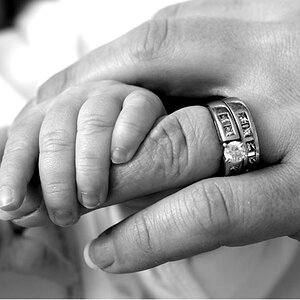
Is it really as simple as choosing the double exposure in the camera? Seems "complex" looking for such a seemingly simple process.
I was surprised at how simple it was. I started by taking her portrait, using the bright sky as a background (you need something close to a complete silhouette). Essentially everything that is underexposed in the first frame will pick up the details from the second frame. Since we don't want other distracting elements around them, we our the subject in front of the bright, featureless sky. In the case of this photo, where some hair, sweater, and facial detail is still visible, I had her turn her face so
some ambient light fell on the front of it, so the silhouette wasn't completely black. These somewhat brighter areas will pick up most all the detail from the second frame, but retain some from the first frame.
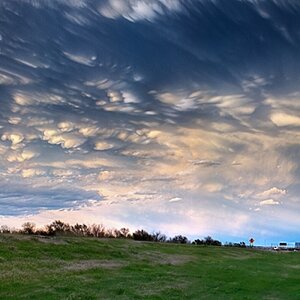
Next, on the 6D or 5dmkIII, you just go into "Multiple Exposure" mode, set it to additive, pick out the portrait image you already took to be your "Base Image" and then go find a suitable background texture which matches the first frame's composition. Shooting in live view makes it really fun, as it actually shows you the overlay of the two images (so you can like everything up), albeit deciding on an exposure for the second image can be a bit tricky. The nice thing about using the 6D or 5DmkIII is that function about picking your base image. I could take the first image weeks ago, and utilize it as many times as I want, whenever I find an interesting background. It's important to note that for other cameras, you'll need to blend the two images in photoshop. Or you could just go back to the old days and use film.
All in all, it's really easy with the right camera body, and produces surprisingly dramatic results if you pick the right second frame and have a solid first frame to build off of.



![[No title]](/data/xfmg/thumbnail/36/36643-92fe0dd9e247722bfefe299cd8a549f5.jpg?1734169157)
![[No title]](/data/xfmg/thumbnail/36/36644-d48bde7a35945a119c05c18e8c748c27.jpg?1734169161)