What's new

tilt/shift photography!!!!!!!

I tried the method referred to earlier in the thread where you take the lens off the camera and shoot everything manually. Getting use to it was difficult but with a few minute's patience i started seeing results. It seemed that the focus ring on the lens was essentially useless and i found that the most effective way to focus was simply by messing with the tilt, or the angle at which you hold the lens. Doing this in any slightly demanding shooting situation seems to me highly impractical though, plus the only way i could get a clear view of what the camera was seeing without sprouting a third arm was to shoot in live view, this leaves the cameras sensor completely exposed with not even a lens to protect it; a big no no if you ask me.

Sort of a fun little process though! id encourage trying it out.

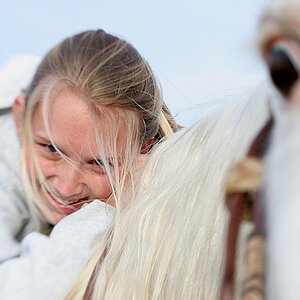
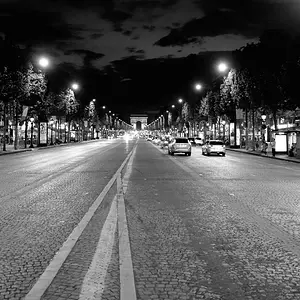
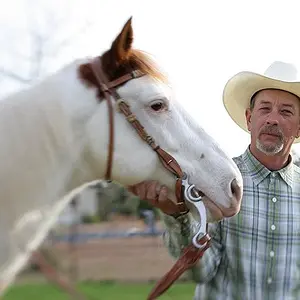
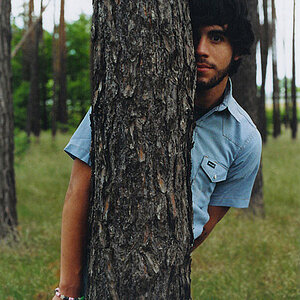
heres some of the photos that sorta turned out
An obscure progression of time: Not really tilt shift

ps if it helps i was using a canon 50D and a canon 28-135mm USM IS lens
 
View cameras are great for landscape photography, not for their TS ability though, more the resolution possible with the large format, with product shots the movements were ideal for creativity/isolation/inclusion, with bellows extensions/multiple flashes for exposure correction they were also the tool of choice for true macro photography. A little on the heavy side for lugging around plus the heavy duty tripod for stability would have a weight lifter puffing like a train after thirty yards, but the end results were worth the effort, beautiful. H
 
I suspect that tilt (and sometimes swing, the horizontal equivalent of tilt) is not uncommon in large format landscape photography. I use tilt quite regularly. There are times when it could be useful with 35 mm landscape photography, but the increased DoF of the smaller format generally makes it unnecessary. (I'm not referring to tilt and swing used for pictorial effect) Having said that, I usually carry my D3 with the 45 mm TS lens mounted because it happens to be an excellent lens, and shift is useful at times. Remember that focus confirmation and exposure do not work properly when tilt and/or shift are used. It is, therefore, useful to have a decent optical or electronic viewfinder and/or live view. A gridded screen, such as the Nikon E screen, can also be helpful.

I do use TS lenses with 'full frame' digital for product photography, for which the combination is near ideal.

Remember that TS, or plain shift lenses, need a greater image circle (the area they project an image onto) than fixed lenses. This may not bother you if you are using lens movements for effect rather than perspective correction or focus plane control.

If you are interested in focus plane control, Google 'scheimpflug principle'.

Despite what one of the previous posters wrote, all the tilt-shift and shift lenses I know of move the entire lens rather than only one group of elements or a single element. The optical properties of the lens are unchanged by the lens movement and nothing magic or arcane happens or needs to happen.

Best,
Helen
 
OMG ... Welcome Back Helen!! We miss you here!
 
And here's me thinking that you would all be glad to be rid of me!

Thanks Dao.

Best,
Helen
 
Let me echo Dao's comment -- Welcome Back!
 
Here is a tilt shift how to video

[ame]http://www.youtube.com/watch?v=FwYIl3SF6vY[/ame]
 
Helen, great to see you again!!!!


Pete, regarding your comment on application in landscape work, I use slight tilt a great deal, predominantly with either a 65mm or 90mm(on 4x5) or a 120 (on 8x10), a slight tilt forward moves the focal plane closer to the ground (as you are aware, I'm sure), so when I emphasize the near/far juxatposition I am able to maintain focus on a plane reasonably coincident with the ground.

It's a technique that has been in use for over a decade, when done right, you don't notice it. When done wrong (excessive rear tilt causing geometric distortions, etc.) it's screams at you.

erie

 
Helen, great to see you again!!!!


Pete, regarding your comment on application in landscape work, I use slight tilt a great deal, predominantly with either a 65mm or 90mm(on 4x5) or a 120 (on 8x10), a slight tilt forward moves the focal plane closer to the ground (as you are aware, I'm sure), so when I emphasize the near/far juxatposition I am able to maintain focus on a plane reasonably coincident with the ground.

It's a technique that has been in use for over a decade, when done right, you don't notice it. When done wrong (excessive rear tilt causing geometric distortions, etc.) it's screams at you.

erie

Interesting. Can you post a sample?
 
Are these examples of the sort of images you referred to? Tilt being used to keep the ground in focus beyond what would be possible with 'normal' use of depth of field? Both 5x4 images.

4916924-lg.jpg


4921836-lg.jpg


Best,
Helen
 
Call me dumb if you will but I don't see what in those photos cannot be done with a regular wide angle.

Maybe I need to try it to get it...
 
Neither of them are wide angle photos. Using a wide angle lens would affect the perspective, of course. At web magnification it is not possible to see the resolution that is visible when they are printed large - the idea is that when printed large you can immerse yourself in the image with as little as possible detracting from the detail that was in the original scene. Stopping down to achieve sufficient DoF would result in unacceptable (to me) loss of definition in the case of the snow image and unacceptably long shutter speeds in the case of the pool image - I wanted to freeze the subtle light dancing on the water.

Does that make sense to you?

Best,
Helen
 

Create an account or login to comment

You must be a member in order to leave a comment

Create account

Create an account on our community. It's easy!

Log in

Already have an account? Log in here.

Back
Top Bottom