Judi, until I saw your images of the daisies blowing in the wind, I had not really considered using wind-blown subjects as suitable for photography. You changed my mind, or rather, you opened a window for me on using this technique to interpret the subject better. I've tried it a number of times since and it definitely has promise, although I don't have anything yet that I'm happy with enough to share.
I find number 3 to be quite evocative, although #2 is prettier. As Derryl has noted, I'd call these misses, although I really do like what I'm seeing.
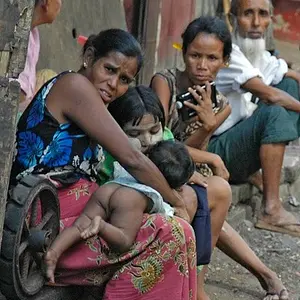
As for not looking at other photographers' work, I feel that is a missed learning opportunity. From this forum alone, I have admired Mishele's flowers and her recent foray into prison interiors, Bitter's work with jewellery and the numerous abstracts, Frederico's landscapes and tasteful selections of decreptitude, Nandakumar's depiction of life in a land far from mine, thereyougo's urban and country landscapes, Charlie's bugs, aphoto's cloud and sky images, Lew's street shots... I'm sure I've missed a number of others who deserve mention, but who I don't follow on a regular basis. Images that make you stop and look. These images grab our (well, mine in any case) attention because they they present some aspect in a very clear and straightforward way, that cuts through the visual clutter, and lead to the "Oh! .... Wow." reaction. After the emotional trigger was pulled, I go into an analytic mode - what works, what adds, what diminishes, and if I were to try to do the same, what actions/steps/planning would I do. In fact, there's probably more to be learned from near misses than from finished, gallery-ready works - for they reveal part of the creative process behind the image. An image that is too "finished" feels unsatisfying to me (with exceptions, of course), because it presents me with a fait-accompli, and I have no option but to see it in the way presented. More ambiguous images work in that I can create different interpretations of what I'm seeing, and that added expenditure of mental energy on my part makes the work more intimate, or at least more "open".



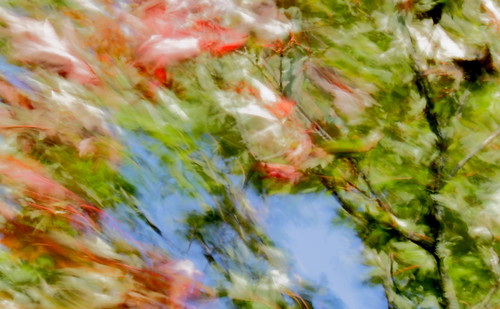


 I'm definitely going to continue with them.


![[No title]](/data/xfmg/thumbnail/42/42471-71fb529e01fae8170cc2a98655bd05e7.jpg?1734177001)