What's new

untitled

n camera or in post process. And I am still not quite smart enough to know when to use what when. Pretty good at choosing bw or color in camera and sometimes the type of bw often I still fail on the filter I don't always grasp which I want until I play with it.

To some degree this is like learning to fly a plane by arbitrarily pressing buttons and hoping that you will eventually come across the correct combination.

You are reinventing the wheel.
Knowing how and when to do things is well known and can be learned.
In fact, it should be learned because, instead of wasting your time trying different combinations and mostly getting disastrous results, you could apply your efforts to actually making pictures.
Filters were used with film because the final results with film were, to a good degree, fixed by the chemicals. Filters, along with specific developer and developing techniques, were a relatively crude attempt to alter the standard response.
Digital sensors and editing are an incredibly more effective way of making the image you want.
By converting to B&W in camera or using a yellow filter, you are throwing away information irretrievably.

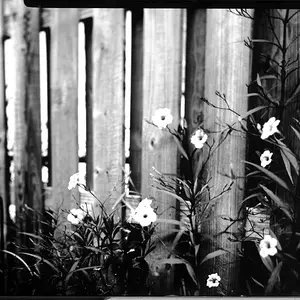
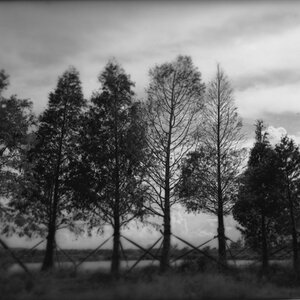
I don't know if the image above would ever have been good but it is clear you didn't have a clear idea what you wanted to show.
Second, winter shots with a flat sky and a lack of middle tones are difficult enough to work with.
By using a filter you've removed information that might have been useful to work with - and for no positive result.

Stop thinking that there is some magic technique or button that you can use to get good pictures.
What you need is actually to learn what you are doing so you are in control of how things come out.

.
 
n camera or in post process. And I am still not quite smart enough to know when to use what when. Pretty good at choosing bw or color in camera and sometimes the type of bw often I still fail on the filter I don't always grasp which I want until I play with it.

To some degree this is like learning to fly a plane by arbitrarily pressing buttons and hoping that you will eventually come across the correct combination.

You are reinventing the wheel.
Knowing how and when to do things is well known and can be learned.
In fact, it should be learned because, instead of wasting your time trying different combinations and mostly getting disastrous results, you could apply your efforts to actually making pictures.
Filters were used with film because the final results with film were, to a good degree, fixed by the chemicals. Filters, along with specific developer and developing techniques, were a relatively crude attempt to alter the standard response.
Digital sensors and editing are an incredibly more effective way of making the image you want.
By converting to B&W in camera or using a yellow filter, you are throwing away information irretrievably.

I don't know if the image above would ever have been good but it is clear you didn't have a clear idea what you wanted to show.
Second, winter shots with a flat sky and a lack of middle tones are difficult enough to work with.
By using a filter you've removed information that might have been useful to work with - and for no positive result.

Stop thinking that there is some magic technique or button that you can use to get good pictures.
What you need is actually to learn what you are doing so you are in control of how things come out.

.
it is methodology. I want to be a shooter first and a processer second. My primary goal is to walk up to any scene choose my shutter iso exposure white balance color or bw filter contrast, sharpness, whatever all in camera, pop it off and have it good sooc. I want to know enough to be able to do that and be that good of a shooter. My secondary goal is to develop good photos via the end result and post. I don't want to be reliant on post though I want to be a shooter first. Pretty much anything, any time anywhere, I want to be able to walk up to a scene and know what I want and where I need to be. I am not there yet, but that is my primary goal. Keep in mind i started this in 1991 or so on film. I didn't keep involved in photography long enough to learn a whole lot but i think some of that first teaching i still have planted in the back of my head somewhere. My natural tendency is actually to shoot bw jpeg i seem to lean that way? But those in processing (like you) have opened my eyes to a extent of how i really need to learn and do at least some basic processing. My in camera skills really aren't that good either, i am no where near as good in camera as i want or think i should be. Even back with film i screwed the pooch on tons of film shots never quite got it down then.
 
but no when i screw up, it is digital. Doesn't cost me anything... lol
 
it is methodology. I want to be a shooter first and a processer second. My primary goal is to walk up to any scene choose my shutter iso exposure white balance color or bw filter contrast, sharpness, whatever all in camera, pop it off and have it good sooc. I want to know enough to be able to do that and be that good of a shooter. My secondary goal is to develop good photos via the end result and post. I don't want to be reliant on post though I want to be a shooter first. Pretty much anything, any time anywhere, I want to be able to walk up to a scene and know what I want and where I need to be..

This is like saying one wants to be a painter without knowing how oils interact or a cabinet maker without learning how to finish wood.

Dividing the process into shooting and editing like this as if they had no reliance on each other makes no sense.
The vast proportion of the time, a random scene will not present the best results SOOC because Mother Nature doesn't give a crap about what you want the light to be.

I'm fairly confident that I can walk up to any scene and shoot an exposure that will give me the best final outcome.
That's because I know how the sensor works and I know how light can be altered and so I'm not dependent on the scene as presented.

That's what Ansel Adams and all the other film photographers did.

They got the best exposure for the film and light combination they had and then went to the darkroom to make the final image.
The more I knew about editing, the more I could actually see the scenes and their possibility.
 
it is methodology. I want to be a shooter first and a processer second. My primary goal is to walk up to any scene choose my shutter iso exposure white balance color or bw filter contrast, sharpness, whatever all in camera, pop it off and have it good sooc. I want to know enough to be able to do that and be that good of a shooter. My secondary goal is to develop good photos via the end result and post. I don't want to be reliant on post though I want to be a shooter first. Pretty much anything, any time anywhere, I want to be able to walk up to a scene and know what I want and where I need to be..

This is like saying one wants to be a painter without knowing how oils interact or a cabinet maker without learning how to finish wood.

Dividing the process into shooting and editing like this as if they had no reliance on each other makes no sense.
The vast proportion of the time, a random scene will not present the best results SOOC because Mother Nature doesn't give a crap about what you want the light to be.

I'm fairly confident that I can walk up to any scene and shoot an exposure that will give me the best final outcome.
That's because I know how the sensor works and I know how light can be altered and so I'm not dependent on the scene as presented.

That's what Ansel Adams and all the other film photographers did.

They got the best exposure for the film and light combination they had and then went to the darkroom to make the final image.
The more I knew about editing, the more I could actually see the scenes and their possibility.
I am not ansel adams or a ansel adams fan. But it is comments like this that has made me understand the need for me to learn processing more. I am shooting raw and processing more than I was. I cant change how I shoot though too much I will get "off track". If my natural inclination is a certain way and I follow it I will eventually turn out images according to who I am. If I go against that inclination I will turn out something else. I have seen lots of images on 1x for example heavily processed that are amazing images. I appreciate the higher level of processing. Yes, I wouldn't mind turning out such images myself. But the reality of it is, that isn't the type of photography I am inclined to and my heart wouldn't be in it.. Now walking down the street and shooting a straight jpeg, that is me. Need to learn more though as I want to shoot how I do just because I do. Not because I am one of those "ignorant" people. At some point I will probably end up back to shooting film. There is a chance I am romanticizing it to a extent it has been a number of years. But shooting a Nikon dslr and editing raw images I don't feel particularly artful. I think I actually had more pride in shooting 35mm and dropping them off at the drugstore to get developed. The quality was lower but the photos held more meaning to me.

I still have much of the same thinking to. Remember when you picked up your photos and trashed five or six right off the bat because they didn't come out? For quite some time I had been doing the same in digital with the delete button even if they could be fixed in post."i screwed up I don't deserve the photo". I am getting better about that though. I was kind of like "if I didn't shoot it I don't deserve it" and now I am doing more post and not tossing as many. could be good or bad not sure. Back on point, I want the ability to turn out at least semi good processed images, or at least good ones with more knowledge. But I don't want to actually shoot that way just know how to if I need to or desire to for a particular instance. The above image, if this were film I would be thrilled to turn out that image. i dont even think i turned out much better than that on film. Digital is easier so that shot really isnt that great.. The majority of every thing I ever shot on film I did not control the processing it went through whatever the shop had for standard. Only time I was in a darkroom was photography class. so other than that whatever i shot on film it either made it or it didn't. And most shops didn't give a rats azz how your photos came out. There was no tweaking. There is a certain love for such simplicity. " it either makes it or it doesn't". Huge difference in quality, dynamic range and ease with a newer dslr though. I still cant get over how they all go to a little sd card. shows you how basic and simple I am.
 

Create an account or login to comment

You must be a member in order to leave a comment

Create account

Create an account on our community. It's easy!

Log in

Already have an account? Log in here.

New Topics

Back
Top Bottom