pgriz
Been spending a lot of time on here!
- Joined
- Jul 30, 2010
- Messages
- 6,734
- Reaction score
- 3,221
- Location
- Canada
- Can others edit my Photos
- Photos OK to edit
For those who want a bit of celestial presence in their imagery, a few events may be of interest.
First, there is a large sun-spot group on the sun that is rotating towards Earth, and has had some flare activity. There is a potential for large flares and CME (coronal mass ejection) events that give rise to Aurora Borealis seen more southward than usual. My go-to web site for this information is SpaceWeather.com -- News and information about meteor showers, solar flares, auroras, and near-Earth asteroids.
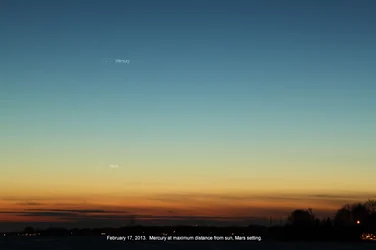
The new moon of Feb. 11 will be about 3% illuminated and will be about 10 degrees above the horizon 1/2 hour after sunset. A bit to the left of it and about 4 degrees below, you can catch a relatively rare good appearance by Mercury. For those that want a planetarium program (free) that allows you to see what it out there at any point of Earth, and at any time, download from here: Stellarium.
There are two comets that are entering the inner solar system, and should (maybe) provide a good show. Comet PanSTARRs is expected to be visible from about March, and "may" give an interesting combination with the new moon on March 12 (again, just after sunset, looking west). Some interesting info on this comet is here: Comet PANSTARRS possibly visible to eye in March 2013 | Space | EarthSky and here: Bright Comet PANSTARRS Promises Skywatching Treat in 2013 | Comet Photos | Space.com
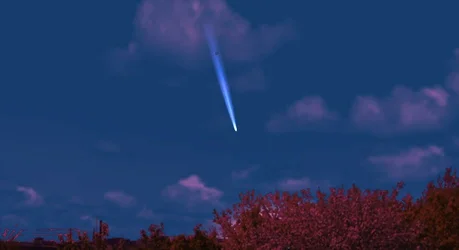
Another comet that "may" be spectacular, is comet ISON, which will make its show in December. more info on it here: Big sun-diving Comet ISON might be spectacular in late 2013 | Space | EarthSky.
Hope you can get some of these into your images!
EDIT (March 12): tonight and tomorrow nights are your opportunity to shoot Pan-Starrs together with the new moon if you have a clear western horizon at sunset.
First, there is a large sun-spot group on the sun that is rotating towards Earth, and has had some flare activity. There is a potential for large flares and CME (coronal mass ejection) events that give rise to Aurora Borealis seen more southward than usual. My go-to web site for this information is SpaceWeather.com -- News and information about meteor showers, solar flares, auroras, and near-Earth asteroids.
The new moon of Feb. 11 will be about 3% illuminated and will be about 10 degrees above the horizon 1/2 hour after sunset. A bit to the left of it and about 4 degrees below, you can catch a relatively rare good appearance by Mercury. For those that want a planetarium program (free) that allows you to see what it out there at any point of Earth, and at any time, download from here: Stellarium.
There are two comets that are entering the inner solar system, and should (maybe) provide a good show. Comet PanSTARRs is expected to be visible from about March, and "may" give an interesting combination with the new moon on March 12 (again, just after sunset, looking west). Some interesting info on this comet is here: Comet PANSTARRS possibly visible to eye in March 2013 | Space | EarthSky and here: Bright Comet PANSTARRS Promises Skywatching Treat in 2013 | Comet Photos | Space.com
Another comet that "may" be spectacular, is comet ISON, which will make its show in December. more info on it here: Big sun-diving Comet ISON might be spectacular in late 2013 | Space | EarthSky.
Hope you can get some of these into your images!
EDIT (March 12): tonight and tomorrow nights are your opportunity to shoot Pan-Starrs together with the new moon if you have a clear western horizon at sunset.
Last edited:













![[No title]](/data/xfmg/thumbnail/35/35962-c0d3c2e7c3fd7f9bd7e12c21f955f4f0.jpg?1734167808)