No feathers on them birds but plenty of detail.Excellent shots.
Nope, no feathers but they definitely fly very well

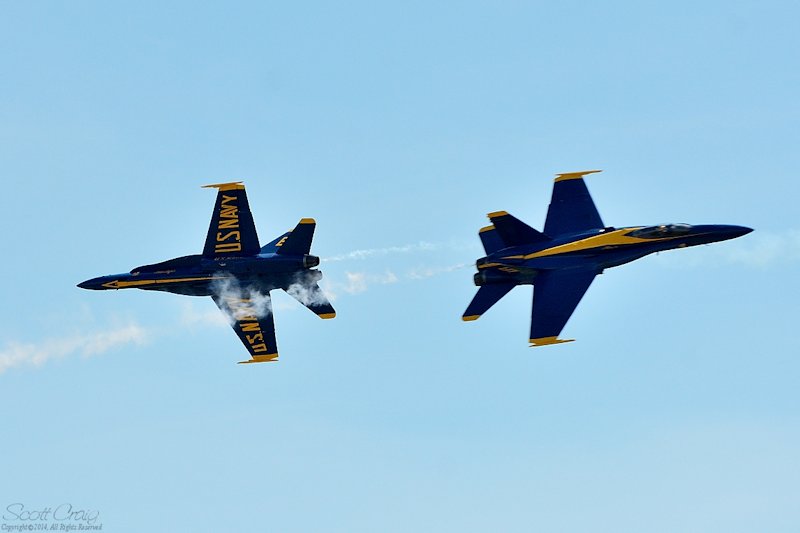
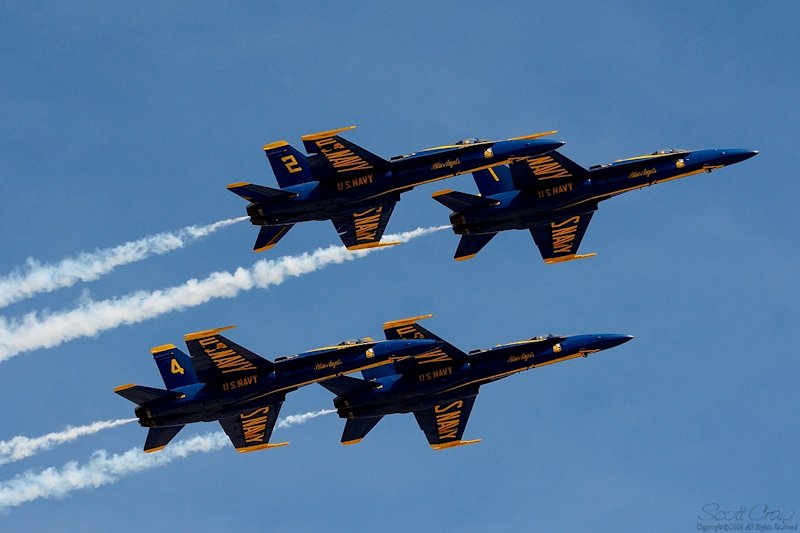
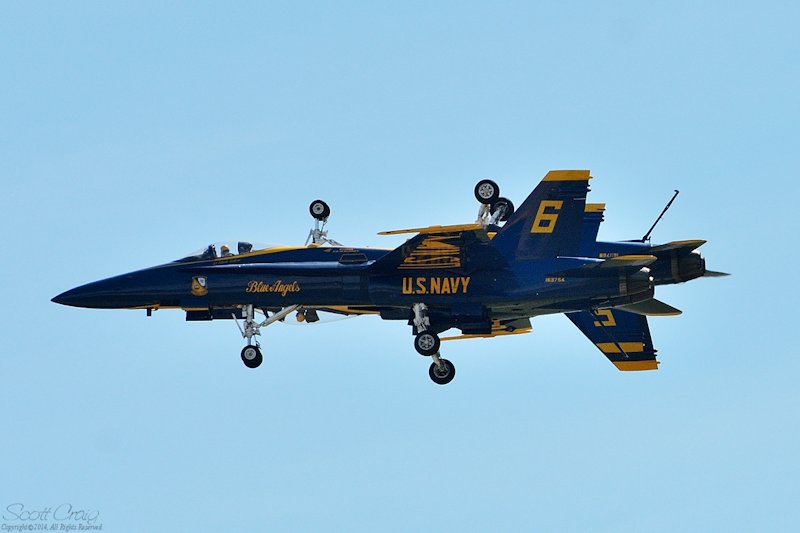
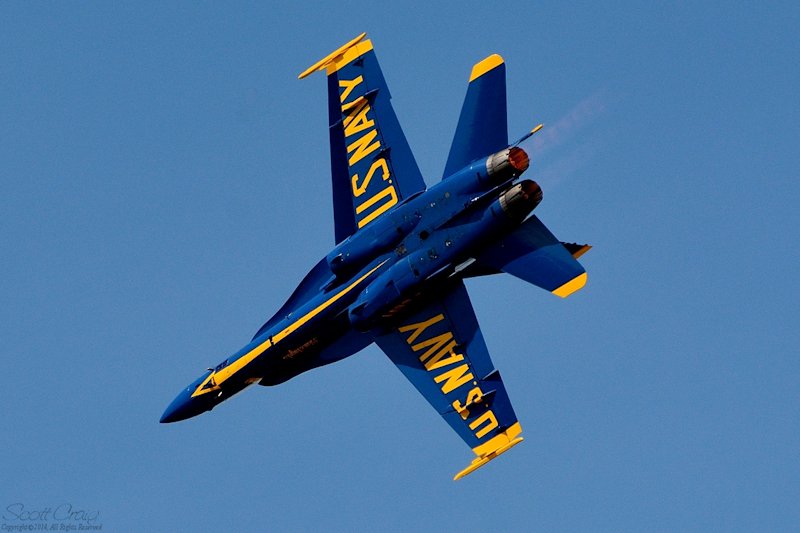
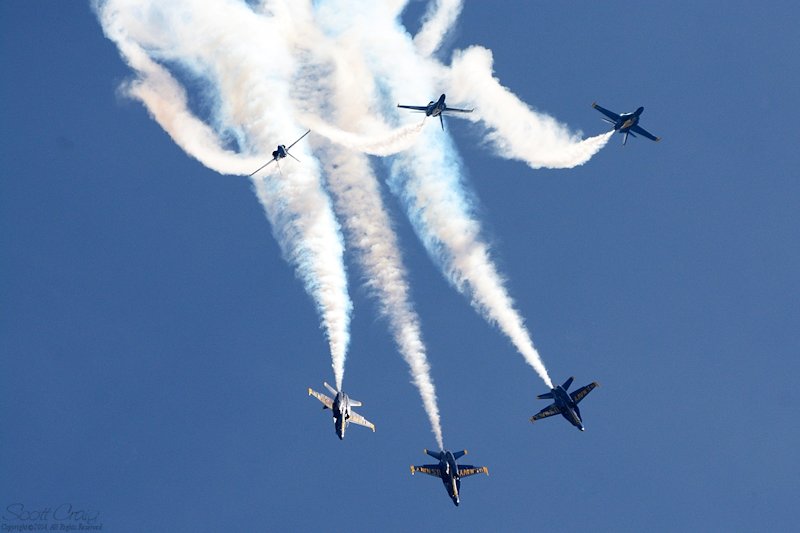
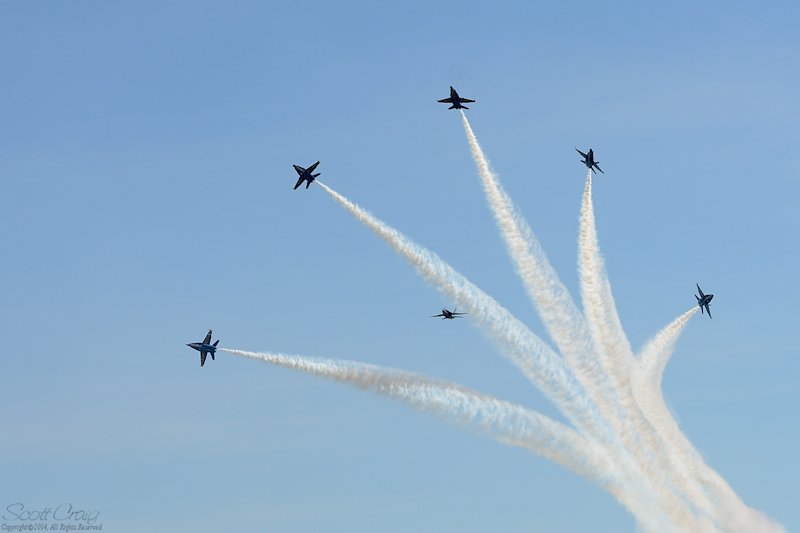
I Love this set. Although they are all spectacular, #6 is my favorite of the "Delta Breakout"
I'm attending an airshow in a couple months, Can I ask some tips? I can see you shot at 400iso, 1/2500, f/8. What else... Was this manual mode? Continuous servo focus? Matrix Metering?
Thanks, much appreciated. I grew up in an aviation family, both my parents were pilots, so it's in my blood
I don't fly anymore but I can still admire precision.
They were all shot in manual mode. I metered on the apron in front of me using center-weighted metering and, since the sun was high and to my right, I added about a stop to keep from underexposing the bottoms. At times it wasn't enough and I had to kick the exposure up on some of them in post processing. Check the histogram regularly since light changes and LCD's can't be trusted.
They were all shot with my 70-300. I couldn't decided whether or not to take my 150-500 and in the end it wasn't needed. Two years ago I took two cameras, one with my 70-300 and one with my 150-500, and that was just too much to deal with. This time I simplified everything and it was much more enjoyable.
They were all shot using continuous-servo (AF-C) autofocus.
Pan with the airplane. A fast shutter speed alone won't freeze the motion so you need to pan with them.
When shooting prop-planes slow the shutter speed way down and pan smoothly. That allows the prop to blur and impart a sense of motion as opposed to just a frozen image. I was really annoyed with myself over that. I knew the Blue Angels were about to start so I kicked the shutter speed up from 1/500 to 1/2500. Fat Albert, the Blue Angel's C-130 transport airplane, flew a routine first and I forgot to lower the shutter speed back down so I got frozen prop blades.
Keep your eyes and ears open. Both the Blue Angels and Thunderbirds use solo aircraft and they love to come blistering up from behind at low altitude while the rest of the team has everyone's attention looking elsewhere.
Shoot a LOT. It's easier to have a bunch of junk shots you don't want than miss the one that you do want. The first shot, for example, an opposing pass at 450 knots (900 knots closure between the two aircraft). There is no way to time that to get the shot when they pass. I followed the right side aircraft with the viewfinder, and kept my left eye open. As soon as I saw an aircraft enter my field of view on the left I hit the shutter release and held it. That shot was the second of 5 that I shot in a burst.
All in all I shot 1100 images that day. Some of the static airplanes, some of the other performers, and a BUNCH of the Blue Angels. It costs nothing, other than disk space to store them, so there is no reason not to.
Edit ... Forgot a couple of things.
Don't forget sunblock, and don't forget to put it on your ears! I know that last part from recent experience ;(
Shoot a little bit wider than normal. Don't worry about filling the frame as tightly as normal and crop during post processing. By that I don't mean make everything dots in the sky but give yourself a little more room than normal. You never know what will come screaming in from the side, plus reflexes and shutter lag can put part of a fast-moving jet out of the frame.




![[No title]](/data/xfmg/thumbnail/41/41906-b9041eb5a3fa48eb5d5084ac2198a75c.jpg?1734176271)
![[No title]](/data/xfmg/thumbnail/41/41490-6af71315284539e04ae1878cda0d613f.jpg?1734175883)


![[No title]](/data/xfmg/thumbnail/41/41903-5ec48c22a1b66968c94f056b8ad647f2.jpg?1734176268)