What's new

Washed out skies..

thestereoeffect

TPF Noob!
Joined
Nov 12, 2011
Messages
37
Reaction score
2
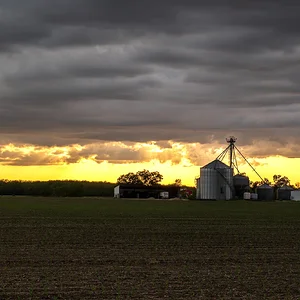
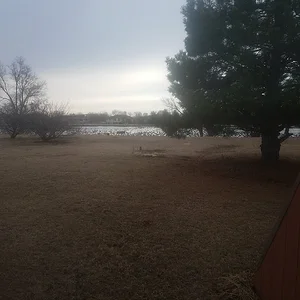
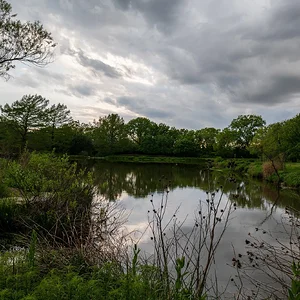
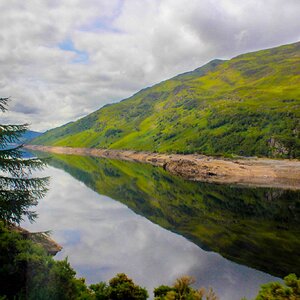
I've been on the road in the southwest for a few days, and figured it'd be a great chance to give my new DSLR (Canon T3i) a good workout and put some lessons to the test. I'm just having a hard time not getting overexposed skies when the landscape isn't the subject matter (i.e: metering off the sky). I'm assuming this is when I should use Exposure Compensation? I'm using the kit lens (18-55) stopped down to f16. As soon as I touch down to a hotel, I'll upload a couple of examples. Any thoughts right off though?
 
I believe I was in evaluative- should I try spot?

I was thinking of throwing on my CP. Will definitely try it tomorrow while the sun is up.
 
Yes, you should use Spot.

Evaluative looks at and averages the light in the entire scene.

From your T3i specifications - Spot metering (center, approx. 4% of viewfinder at center)

Partial metering (center, approx. 9% of viewfinder at center)
 
Thanks KmH, I'll give it a shot tomorrow and post what I come up with!
 
Spot
Partial
Center-weighted
Evaluative

See page 102 of your T3i user's manual.
 
You have to expose for the subject - the sky emits a huge amount of light, if you expose for it, the land will be underexposed. Either use a CP or a split ND. Or shoot an HDR.
 
Depending on the time of day (which means also which direction the sun is shining, as well as how high the sun stands) you may face situations where you technically cannot achieve satisfactory results in one shot.

Assuming for example that you have a beautiful sunny day with very few fluffy clouds and a blue sky but your subject is a dark forest on a mountain range you have to make a compromise and choose which one (sky or forest) you want to expose properly. In either case the sky will be blown out (when metering the forest correctly) or the forest is very dark (metering the sky).

You have to train your eye over time to look at the weather/lighting conditions on a scene and looking at your subject to get an idea if it's going to work or not. You're dealing with mother nature here and she's not always playing by our rules.

You can use some tricks such as HDR by taking a series of images with different exposure times and blend them together later. With the help of HDR software you can achieve photos with dark blue skies but also properly exposed subjects that were pretty dark.
 

Create an account or login to comment

You must be a member in order to leave a comment

Create account

Create an account on our community. It's easy!

Log in

Already have an account? Log in here.

Back
Top Bottom