What's new

"When Will Street Photography Grow Up?"

The thing that I've noticed about some street photography is that people break rules for the sake of breaking rules. Or maybe it's laziness.

"My photo is out of focus, has poor composition, and is underexposed because I was in the moment. Who are you to make judgments about my art."

I like somewhat specific kinds of street photography: good composition, geometric, ironic, sarcastic, well balanced, making the mundane interesting. I'm not a big fan of the look at how weird/fat/homeless/dirty/crazy/sad/creepy/downtrodden this person is type of street photography.

Bruce Gilden should be the only Bruce Gilden in photography.
 
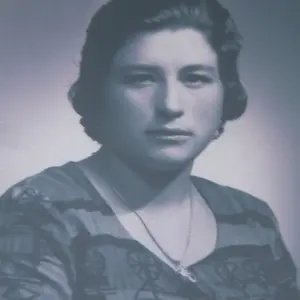
i prefer a mix. Otherwise you end up with a greatly composed neat photo that isn't worth much. This is where i believe street photography really started. Just since then we added better composition and more interest. (1800's photo). View attachment 98453

Then you can say that Picasso isn't worth much because it is a pure excercise in lines and forms. HCB isn't worth much because it has no factual narrative. Poetry has no value, because it documents nothing.
I am not even trying to compare good street shots with Picasso &Co, but I see pure aestetic value in many street images that is worth enough to look at it more than once.
And I work with documentary images on a daily basis, editing it and very rarely want to look at it again after the job is done. Most of the time a documentary shot that is even brilliantly done by a top pro has very little lasting value precisely because it depicts facts. Facts are dying quickly because they are replaced by other facts. Street photography that has risen to an art form has a much much more lasting value in me eyes. But I am talking about, in your words, the REAL stuff.
 
Last edited:
i prefer a mix. Otherwise you end up with a greatly composed neat photo that isn't worth much. This is where i believe street photography really started. Just since then we added better composition and more interest. (1800's photo). View attachment 98453

Then you can say that Picasso isn't worth much because it is a pure excercise in lines and forms. HCB isn't worth much because it has no factual narrative. Poetry has no value, because it documents nothing.
I am not even trying to compare good street shots with Picasso &Co, but I see pure aestetic value in many street images that is worth enough to look at it more than once.
And I work with documentary images on a daily basis, editing it and very rarely want to look at it again after the job is done. Most of the time a documentary shot that is even brilliantly done by a top pro has very little lasting value precisely because it depicts facts. Facts are dying quickly because they are replaced by other facts. Street photography that has risen to an art form has a much much more lasting value in me eyes. But I am talking about, in your words, the REAL stuff.
where did you even get this from what i typed? It appears you missed the "better composition and more interest". The roots of street photography are in doc. There is no way around that. They went from taking a photo, literally, of a street. To narrowing that down to finding something of interest within that larger photo. Party because the cameras became more portable they could move them easier. street "portraits" were being taken over a hundred years ago. None of this is new or some huge revelation.
 
I thought the photographer the OP referenced to be actually pretty good even though he has less than two years experience. He's got a good eye for street photography. I enjoyed looking at all his photos. I also understood his piece about promoting each photographer's creativity - that we didn't have to copy the past masters "rules" or "styles" although there's nothing wrong with showing them respect. But what he said was to let your creativity soar. I don;t think many of the people who commented here even read it. There's nothing controversial in what he said.
I did actually like some of his photos which is what drew me to the article in the first place. Regardless of whether or not it's lumped in with the street photography subgenre or another genre entirely.
 
The thing that I've noticed about some street photography is that people break rules for the sake of breaking rules. Or maybe it's laziness.

"My photo is out of focus, has poor composition, and is underexposed because I was in the moment. Who are you to make judgments about my art."

I like somewhat specific kinds of street photography: good composition, geometric, ironic, sarcastic, well balanced, making the mundane interesting. I'm not a big fan of the look at how weird/fat/homeless/dirty/crazy/sad/creepy/downtrodden this person is type of street photography.

Bruce Gilden should be the only Bruce Gilden in photography.

I can not agree more. People break the rules before they have learned to implement them properly. That is not the laziness though, that is the lack of understanding of what they are doing and why these rules are there in the first place. I, for instance can not even pretend that I know how to break the rules, because I do not have an eye that the likes of Alex Webb have.
And btw this is not a coincident that the potentially best photographers start following these rules not even knowing it, because for them it is just natural. They just see it. They see the balance of the picture, they associate it with feelings and emotions. In other word they can talk this language. Probably it is what we call talent.
 
Write Lighting said:
Adding on to that, what if the artist freely admits to using some of the more unconventional methods that wouldn't be associated with the genre, like cloning and compositing? Can they then still use the term street photography if they're being upfront about it or can they no longer be allowed to use the term and have to describe it as something else entirely?

Cloning and compositing? If you're talking about cloning out a few sensor dust spots, that's one thing. But I am pretty sure you mean cloning and compositing in the sense of cloning out (or "in"!) elements that one wants to remove from the scene or significantly alter, and of course compositing means combining elements and or parts of two or more images into one image...

Sorry, but performing either of those post-capture acts immediately moves the resulting image away from the veracity of street, and shifts the origins of the image and its impact to the software. So, let's give credit where credit is due, and we shall henceforth proclaim that type of work keyboard, to show where the magic comes from.

"Hey Paul, wassup? Whaddaya' say we head downtown today at lunch and shoot some keyboard? Click off a few hundred frames, hopefully maybe find a good, clean background with some homeless guys standing around in front of a plain wall, begging for change, then I have some awesome street shots of Paris with the Eiffel Tower in the distance that we could drop in behind them, make it look super-bitchin'! Man, I love shootin' keyboard!"

And the article the OP referred to thinks that street needs to "grow up" and welcome the above kind of it-shay? Sorry....no.
 
I think it's a weird line in terms of photo manipulation. In photojournalism there is a code of ethics that can guide PJs. Tell the story as comprehensively and effectively as possible.

You won't see as many silhouettes in photojournalism unless the focus of the focus of the photo is something other than the people or the scene is too much for the camera's DR, because it can sometimes give a false representation of the scene. Recently there has been somewhat of an uproar because photojournalists are beginning to worry more about making a photo with powerful aesthetics than telling a powerful story. The abuse of post-processing is, I think, a statement on the mentality of many photographers today.

However, in street photography there are street photographers converting to black and white and applying heavy contrast. Crushed blacks are common. There is no code and there is no established goal, so how much manipulation really is too much?

What's the difference between cloning out that pole and just bringing the shadows down so far it melts into blackness?
 
Write Lighting said:
Adding on to that, what if the artist freely admits to using some of the more unconventional methods that wouldn't be associated with the genre, like cloning and compositing? Can they then still use the term street photography if they're being upfront about it or can they no longer be allowed to use the term and have to describe it as something else entirely?

Cloning and compositing? If you're talking about cloning out a few sensor dust spots, that's one thing. But I am pretty sure you mean cloning and compositing in the sense of cloning out (or "in"!) elements that one wants to remove from the scene or significantly alter, and of course compositing means combining elements and or parts of two or more images into one image...

Sorry, but performing either of those post-capture acts immediately moves the resulting image away from the veracity of street, and shifts the origins of the image and its impact to the software. So, let's give credit where credit is due, and we shall henceforth proclaim that type of work keyboard, to show where the magic comes from.

"Hey Paul, wassup? Whaddaya' say we head downtown today at lunch and shoot some keyboard? Click off a few hundred frames, hopefully maybe find a good, clean background with some homeless guys standing around in front of a plain wall, begging for change, then I have some awesome street shots of Paris with the Eiffel Tower in the distance that we could drop in behind them, make it look super-bitchin'! Man, I love shootin' keyboard!"

And the article the OP referred to thinks that street needs to "grow up" and welcome the above kind of it-shay? Sorry....no.
bingo. Street is rooted in doc. Different standards. street is for shooters. (but i think i already said that). jmo
 
i prefer a mix. Otherwise you end up with a greatly composed neat photo that isn't worth much. This is where i believe street photography really started. Just since then we added better composition and more interest. (1800's photo). View attachment 98453

Then you can say that Picasso isn't worth much because it is a pure excercise in lines and forms. HCB isn't worth much because it has no factual narrative. Poetry has no value, because it documents nothing.
I am not even trying to compare good street shots with Picasso &Co, but I see pure aestetic value in many street images that is worth enough to look at it more than once.
And I work with documentary images on a daily basis, editing it and very rarely want to look at it again after the job is done. Most of the time a documentary shot that is even brilliantly done by a top pro has very little lasting value precisely because it depicts facts. Facts are dying quickly because they are replaced by other facts. Street photography that has risen to an art form has a much much more lasting value in me eyes. But I am talking about, in your words, the REAL stuff.
where did you even get this from what i typed? It appears you missed the "better composition and more interest". The roots of street photography are in doc. There is no way around that. They went from taking a photo, literally, of a street. To narrowing that down to finding something of interest within that larger photo. Party because the cameras became more portable they could move them easier. street "portraits" were being taken over a hundred years ago. None of this is new or some huge revelation.

I got it from your very first line. Correct me if I am wrong but you say you prefer the mix, i.e. a street photography that has a documentary side in it. All I am saying is it does not have to have any factual side to be of some lasting value. As for the new stuff and revelation, I think there were many, as with any fast developing genre. The way modern street photographers started to use color, the space, the objects, the way they start cutting the frame - I think the language is evolving, and some recent stuff was a revelatuon to me personally, especially composition wise. I would say there some true innovators there. It may seem something small and insignificant to you, because it is all street and square pictures of stuff by the end of the day, but those who work in this genre, I guess, know that small steps are often difficult to make.
 
"Hey Paul, wassup? Whaddaya' say we head downtown today at lunch and shoot some keyboard? Click off a few hundred frames, hopefully maybe find a good, clean background with some homeless guys standing around in front of a plain wall, begging for change, then I have some awesome street shots of Paris with the Eiffel Tower in the distance that we could drop in behind them, make it look super-bitchin'! Man, I love shootin' keyboard!"

That's rather hyperbolic.
 
How is this different from any other genre? I've seen plenty of wannabe commercial photographers do the same, and attack the credentials of anybody who suggests their work isn't perfect.

Because for most of the other genres a bad photo is much more apparent and less easily defended. I could go to a crowded city, spin around and shoot at random and make a case for 99.9% of the photo taken being masterful street photography.

This isn't to say there isn't good example of the genre, several have been posted here so far, it's just to say that there is a lot more BS in the street world.
 
Recently there has been somewhat of an uproar because photojournalists are beginning to worry more about making a photo with powerful aesthetics than telling a powerful story.

There is definitely a trend in this direction, even war photographers are trying to shoot aestetically powerful shots these days, and the reason is not street photography, but just a pure competiton, which is increasing. I look at the image and instantly see it is a AFP/Getty reporter, even if i do not know the name. They are a bit ahead in this game. And guess which image I will choose? Pure competiton.
 
I think it's a weird line in terms of photo manipulation. In photojournalism there is a code of ethics that can guide PJs. Tell the story as comprehensively and effectively as possible.

You won't see as many silhouettes in photojournalism unless the focus of the focus of the photo is something other than the people or the scene is too much for the camera's DR, because it can sometimes give a false representation of the scene. Recently there has been somewhat of an uproar because photojournalists are beginning to worry more about making a photo with powerful aesthetics than telling a powerful story. The abuse of post-processing is, I think, a statement on the mentality of many photographers today.

However, in street photography there are street photographers converting to black and white and applying heavy contrast. Crushed blacks are common. There is no code and there is no established goal, so how much manipulation really is too much?

What's the difference between cloning out that pole and just bringing the shadows down so far it melts into blackness?
Ah-ha! That's another thing I was curious about. Wouldn't such heavy contrast or dodging and burning create too unrealistic of a scene if you're losing key elements in the frame in the shadows? Or is what was lost not an important part of documenting the scene so then it wouldn't matter? Then if that's the case, I wouldn't see much of a difference between cloning it out and losing an unimportant aspect of the photo through burning or contrast.
 
If I see another shot of someone walking in front of some ad, sign or graffiti I am going to go crazy.
 
I thought the photo runnah referenced to, this shot at the start of a gallery Alex Webb Rebecca Norris Webb Photographs

was VERY much reminiscent of a couple of famous HCB photos...what runnah referred to as "blurry" was motion blur, designed to make the boy appear, well, moving. The scene-as-seen-through-doorways, another famous HCB trope...the figures across the frame, in motion yet stopped due to distance from the camera, simple camera work basics...I thought they lead off with this, specific photo simply because it has sooooooooo much of the HCB ethos in it...it almost feels like an homage. Go to some &hi+hole third-world place, like Haiti, and walk around snapping the locals...when things align, click! The rest of that portfolio is all ultra-traditional street stuff...what I think of as the 28mm school of street that developed in the 1950's among a wide group of street shooters. And in that organic, authentic type of street, there is absolutely no place for compositing things.
 

Create an account or login to comment

You must be a member in order to leave a comment

Create account

Create an account on our community. It's easy!

Log in

Already have an account? Log in here.

New Topics

Back
Top Bottom