What's new

6-stop ND vs 9-stop ND

batmura

No longer a newbie, moving up!
Joined
Sep 19, 2012
Messages
649
Reaction score
240
Location
Istanbul, Turkey
Can others edit my Photos
Photos OK to edit
I am thinking of buying my first ND filter because I want to take some pictures of the seaside around sunset or a bit earlier. I was wondering if a 9-stop filter is a must in order to get that beautiful blurry effect or if I can achieve similar results with a 6-stop filter?

The reason I am asking is in the event that I want to shoot waterfalls in the shade, would a 9-stop filter be too dark or is it always the darker the better?
 
Your best bet is to get a series. Nine stops is a lot of reduction (1/250 -> 1 sec) in a single filter. I have a series of 1, 2 and 3 stop filters that I use which allows me to tailor exactly what what I want. The best bet is one of the variable ND filters from Singh-Ray, but they're pricey (~$350+ in 77mm). Cokin gel-style filters are cheap and cheerful, and while they can produce a slight magenta cast when shooting toward the sun, that's easily controlled and at an average cost of $20 - 35/each, you can buy a LOT for the cost of one variable.
 
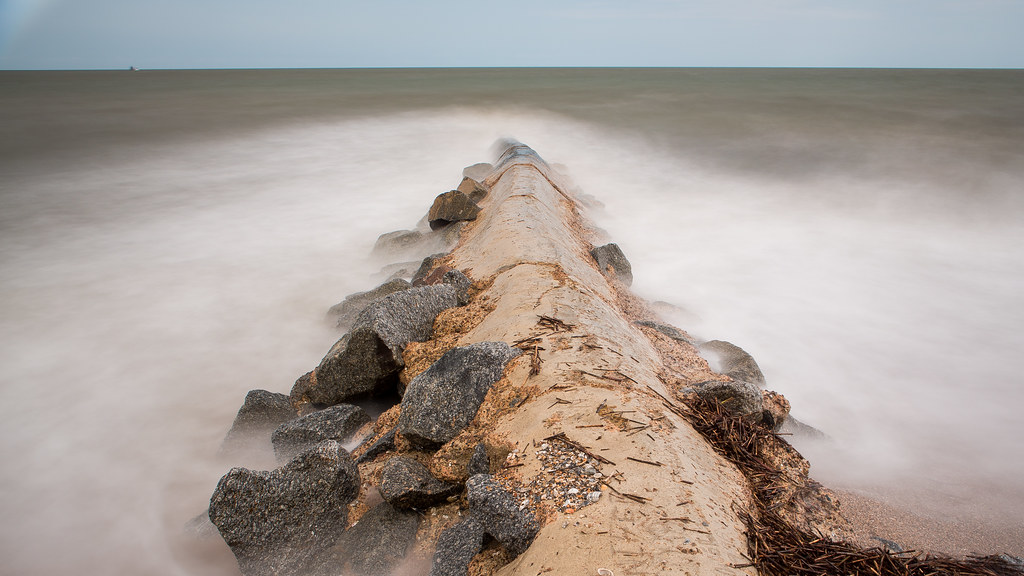
You really only need 9-10 stops if you're shooting in broad daylight and want a long exposure. Here's an example using a 10-stop filter at 3 in the afternoon on a sunny day:


5D3_3275enhanced by Quentin Biles, on Flickr

If you're shooting around sunset, you most likely won't need any ND filter because just stopping down the lens will give you exposures in the seconds-range. You really don't want to deal with several minute exposure times that a 10-stop would give you at sunset. I say to try it out with no filter first, and then look into how much longer you want your exposure to be.
 
That is the type of picture I want to shoot someday. All the YouTube videos on long exposures during sunset suggest I get an ND filter. If I use a 9-stop 52mm ND at sunset would the outcome differ a lot from that of a 6-stop based on your experience? There is no way I can afford a lens worth hundreds of dollars, by the way.
 
By the way, I have the kit lens for D3100 which is 52 mm. Would there be a difference if I got a 52mm or bigger lens? If so, can anyone post pictures? Also, how would attach the bigger filter to my lens? Would I have to pay a lot for that sort of "adapter"?
 
That is the type of picture I want to shoot someday. All the YouTube videos on long exposures during sunset suggest I get an ND filter. If I use a 9-stop 52mm ND at sunset would the outcome differ a lot from that of a 6-stop based on your experience? There is no way I can afford a lens worth hundreds of dollars, by the way.

The only difference is that your exposure time will be 8 times longer.
 
Last edited by a moderator:
Your best bet is to get a series. Nine stops is a lot of reduction (1/250 -> 1 sec) in a single filter. I have a series of 1, 2 and 3 stop filters that I use which allows me to tailor exactly what what I want.
Would it be a better idea to get 2 3-stop filters instead of one 9-stop? I'm looking to take long exposure shots both during daylight and sunset. Does have a lens with more stops enhance the quality of pictures or would 2 3-stop filters be enough?

Also, I have a UV filter mounted on my lens already. If get the ND filters, should I put them on top of the UV or should the UV be removed? It's a Tiffen 52 mm UV.
 
Your best bet is to get a series. Nine stops is a lot of reduction (1/250 -> 1 sec) in a single filter. I have a series of 1, 2 and 3 stop filters that I use which allows me to tailor exactly what what I want.
Would it be a better idea to get 2 3-stop filters instead of one 9-stop? I'm looking to take long exposure shots both during daylight and sunset. Does have a lens with more stops enhance the quality of pictures or would 2 3-stop filters be enough?

Also, I have a UV filter mounted on my lens already. If get the ND filters, should I put them on top of the UV or should the UV be removed? It's a Tiffen 52 mm UV.

First, take off the UV filter. They're useless. A lens hood provides all the protection you need, and filters only degrade image quality. Second, more filters equals more image degradation. Fewer filters will give you a better image. 9 and 10 stop filters are really only useful in direct sunlight unless you like several minute exposures. As I said before, you may not even need a filter at sunset due to the decreased light, but 3 stops should be plenty at that time.
 
I carry a 3 stop and 10 stop... never needed any other ND filter.

I go with 60mm filters and a set of adapters to make sure that they can be used with a variety of my lenses (which mine are all small filter sizes). For most DSLR owners, 77mm is probably a safe bet.
 
If you're planning to shoot a lot at sunset, you should probably consider an ND Grad to negate the need for multiple exposures.

Near sunset, at base ISO, you're going to find it fairly easy do longer exposures, increasingly as the light goes away. You're going to find it hard to contain the dynamic range of the bright sky and dark foreground: hence the utility of the ND Grad.

10 stops is nice, but not easy to use and not practical in some situations.
 

Create an account or login to comment

You must be a member in order to leave a comment

Create account

Create an account on our community. It's easy!

Log in

Already have an account? Log in here.

New Topics

Back
Top Bottom