What's new

Advice on camera setting

KJ_North

Been spending a lot of time on here!
Joined
Dec 20, 2011
Messages
2,211
Reaction score
2,558
Location
left the site
Can others edit my Photos
Photos NOT OK to edit
Guys,
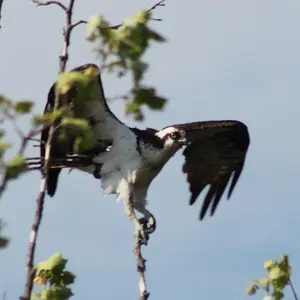
I have attached an unedited RAW just saved as a Jpeg to post and would like to know what you would have done differently.

The day was overcast and i was shooting towards the sky/lake. I was in TV priority, With the aperture set as open as possible with the lens.. With the bird in flight I shot at 1/2000

I was thinking maybe I should have upper the exposure maybe 1-1.5 ? But would that have blown out the sky?

The shots all contained a considerable amount of noise even with the ISO values not overly high. So just wondering what you would have done? Problem is of course you have to set up the camera prior to the scene as no time to adjust on the fly.. literally LOL.
Eagle-RAW-1.webp
 
  • Like
Reactions: LWW
If you have a raw file, you'll be able to adjust the curve or set the black and white points in post.
 
  • Like
Reactions: LWW
If you have a raw file, you'll be able to adjust the curve or set the black and white points in post.
Fully understand that. I am asking more about how I could have set the camera prior to the shots to come out with a better RAW image from the get go.
 
Biggest thing I would do is find a way to bring out the bird which is the subject. In PS you could select the bird and bring up the shadows and overall exposure of just the bird to make it POP. Then I would work on the overall contrast and color balance of the entire shot. (jmho)
 
I'm okay with post processing. But I'm asking about how I could have set the camera differently PRIOR to snappish shots. Like manually upping the exposure etc.
 
Fully understand that. I am asking more about how I could have set the camera prior to the shots to come out with a better RAW image from the get go.

In this situation, you don't have time to change any settings on the camera. By the time you do, the scene is gone.

I doubt there's any setting you could change that would have improved the SOOC file any. Edit the raw file properly and you'll have a much better shot.
 
In this situation, you don't have time to change any settings on the camera. By the time you do, the scene is gone.

I doubt there's any setting you could change that would have improved the SOOC file any. Edit the raw file properly and you'll have a much better shot.
Thanks
 
I don't shoot birds or wildlife or use monster teles. I will say, though, the contrast range in this shot is huge. Problem is--what gets exposed properly? Sky? Water? Eagle? Your composition appears to be the issue. I'd propose some toying around with spot metering to see how it can deliver in dicey light. I shoot subjects with primes. Any of them, if able, could hit me with a rock.
Still, I do find spot metering sometimes saves me.YMMV, as always.
 
Some shots just aren't meant to be taken if the expectation is that it will be good without post processing. Not sure there is much you could have done differently.
 
I don't shoot birds or wildlife or use monster teles. I will say, though, the contrast range in this shot is huge. Problem is--what gets exposed properly? Sky? Water? Eagle? Your composition appears to be the issue. I'd propose some toying around with spot metering to see how it can deliver in dicey light. I shoot subjects with primes. Any of them, if able, could hit me with a rock.
Still, I do find spot metering sometimes saves me.YMMV, as always.
Great thanks
 
I used to do a lot of airshow photography, same situation trying to correctly expose an object against a predominately light background. The camera's metering would try and make it all 18% grey (or is that 15%) so I would overexpose by 1/2 to 1 stop.

Your exposure looks close to the mark, there is still detail in the dark bird apart from just behind the head. A slight overexposure would lift this detail without sacrificing sky detail and help in bringing out the bird in post processing.
 
it looks very good. better than mine. the exposure is fine. it is fixable even if it was jpeg. the noise is good. looks grainy. bad noise is when it is very colourful.

i am a jpeg shooter so i cant afford mistakes. i am always on manual. i use partial metering. when i expect light conditions to change i use a limited min max auto iso range + - 1 stop. your aperture and iso are in auto in tv mode. it is not wide open. the extender is pushing you over f/8 to diffraction softness.
 
I used to do a lot of airshow photography, same situation trying to correctly expose an object against a predominately light background. The camera's metering would try and make it all 18% grey (or is that 15%) so I would overexpose by 1/2 to 1 stop.

Your exposure looks close to the mark, there is still detail in the dark bird apart from just behind the head. A slight overexposure would lift this detail without sacrificing sky detail and help in bringing out the bird in post processing.
I was thinking I should have up the exposure 1-1.5 stops as well, although I admit I always think of these things after the shots. LOL
 
it looks very good. better than mine. the exposure is fine. it is fixable even if it was jpeg. the noise is good. looks grainy. bad noise is when it is very colourful.

i am a jpeg shooter so i cant afford mistakes. i am always on manual. i use partial metering. when i expect light conditions to change i use a limited min max auto iso range + - 1 stop. your aperture and iso are in auto in tv mode. it is not wide open. the extender is pushing you over f/8 to diffraction softness.
Agreed thank you
 
The shots all contained a considerable amount of noise even with the ISO values not overly high.
There are two major types of noise in a Shot, (random photons), which is in every scene, and Digital (amplification). If your SNR is to low, (underexpose) the camera sensor records more Shot. Any gain applied (ISO or boost post), will amplify and increase "all recorded noise. Your scene is much like shooting a snow scene where the camera is fooled into reading the sky as 18% and adjusting accordingly. As mentioned overexposed by 1-1 1/2 stops can help. The other problem that comes in is the scene DR, if it exceeds the camera capability then something will suffer (sky or bird). In this scenario ideally you're best option would be to bracket. In worst case you could combine the best exposure on the bird with the best sky/water exposure post.
 
Last edited:

Create an account or login to comment

You must be a member in order to leave a comment

Create account

Create an account on our community. It's easy!

Log in

Already have an account? Log in here.

New Topics

Back
Top Bottom