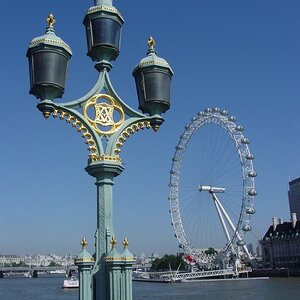
Over-processed, as in looks awful on-screen. I tried tactfully describing what the images looked like, then another poster said it more-boldly, and now I'm giving you the unvarnished opinion, since you keep trying to defend your newly-developed idea, and to explain away our opinions on the appearance of the photos. Over-processed as in badly-processed. Looks un-pleasing. Super-contrasty. Detail-less blacks. Heavy green pollution in the water on #1. Harsh contrast, yet mid-tones that lack nuance and lack presence. One can recover highlights, but the tone curve needs midtones that stand up, that show up, that have some presence, within an image that possess a wide dynamic range, and these have poor mid-tone presence in the presence of deep,detail-free blacks, and very bright highlight tones. I do not care that they are single files, and that these are not composites: the rendering of the lighting was what I mentioned earlier; specifically, I do not like the way the lighting has been "rendered", and that's what the photographer must do: he needs to take the exposure data, and manipulate the tonal values from light to dark, and "render" the lighting, in other words, represent the light, show the light, show us a rendering of the lighting and what it was like. That's where these fall short, IMHO. For me.
As Gary mentioned above, "For my tastes, on #3 and #4 ... just seems to be on the edge of looking purposely over-processed ... an edge where nobody wins"....
Earlier, I was saying the same thing as he said, and here in this post, I'm actually taking the time to explain, in great detail, what I meant by the term over-processed...too much processing theory, not enough results that please...images that looked to me, perhaps purposely over-done. Regardless of whether the processing was of single files, or done in Lightroom, or done in Photoshop or any other image processing application, the end result, the rendering of natural light in a woods scene, looked contrived to me, with too much artifice, and as a result, the rendering of natural light and a woods scene looked...less-than-appealing to me. I cannot state it any more plainly or honestly.
I fully "get" your point when you write, "The K1 was rated at 14.6 stops EV, the K1 ii appears even higher. I've heard claims of 16 stops, but I haven't verified it, which might also be some of the "over processing" look you seem to be seeing as the location I was shooting in, was a perfect spot for it to show off."
Wide DR is one thing, and I have a couple cameras that have wide DR,and I am familiar with shooting wide-SR single exposures, but my issue was with the way the data within the exposures was rendered...all that DY has to be manipulated. What I see are detail-less blacks, brilliant highlights, and mid-tones that do not stand up, and an overall, total image "look" that looks...not-pleasing. You state that you're working on a new processing system; as a viewer, I'm telling you, Gary's telling you, that the look is being perceived as over-processed...perhaps that's not the right word. I do not really like the way the scenes have been rendered; there's wide dynamic range, yes, but the "feel" to the light is un-pleasing, to me. A picture is more than the brightest point and the darkest point,.and how widely they are separated; the scenes need to have some level of verisimilitude,m and these look the opposite, filled with artifice, which is why both of us fell back to the word over-processed.
I hope I've explained my thoughts more completely. As mentioned, I loved the shutter speed choices; water blur degree is a tricky thing, and I think you handles several water scenes fantastically, and like the compositions (#2 is an especially lovely composition), but did not like the way the lighting was rendered during the software-phase. I thought that the processing was the least-compelling aspect of these otherwise very solid photographs.



 Helen trip07092018_691.jpg