What's new

Bed Headboard

joel28

TPF Noob!
Joined
Apr 23, 2012
Messages
146
Reaction score
0
Location
Brooklyn, NY
Can others edit my Photos
Photos OK to edit
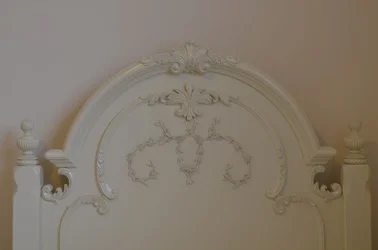
How can i improve this bed headboard image?

The camera meter says that the exposure is correct...
$DSC_0006.webp
 
Well... I pretty much don't have much experience with lightning, but this is a white-on-white image and that's a tricky one to do it right... So be patient if it takes several tries to get it right.
Wait for someone more experienced to tell you what you can do in this particular scene, but other than that try to do a Google search on white-on-white lightning and you'll find lots of great options to work with this kind of situations.
 
I think it needed MORE light...a longer, more-generous exposure would probably have helped.
 
I think it needed MORE light...a longer, more-generous exposure would probably have helped.

1) What do u do when your image is way underexposed and the meter tells you the exposure is correct?

2) If you try to photograph your bed headboard in your bedroom, would u bring in extra lighting for the shot? or would u be able to take the image like the room was bright if u played with aperture, shutter speed, ISO?
 
The camera meter is calibrated to middle gray. When presented with a mostly white scene the camera meter reduces the exposure to match it's calibration.
 
The camera meter is calibrated to middle gray. When presented with a mostly white scene the camera meter reduces the exposure to match it's calibration.

So what would you do in such situation?

To be honest, i felt stupid posting this question, but I do think its an important question and learning foundation for newbies.
 
Definitely underexposed. Also, you can see the shadows of the headboard, so you have some light coming in from an angle, which you don't want. If this is in a bedroom with nice light coming in from a window, I would take the picture in the early morning when the sun is coming up, or in the evening when the sun is going down (depending on what direction that window is facing of course). This will give you some nice light to shoot with. I assume you have only one window in that room on one side of the bed, so you will need a reflector on the other side so you get even light. If you don't have one, you can simply use a large piece of white board as a reflector. Since you are taking a picture of white on white, I would change your camera from auto white balance to daylight. Also your ISO should be around 100/200 and probably around f/8 so you get everything in focus.
 
The camera meter is calibrated to middle gray. When presented with a mostly white scene the camera meter reduces the exposure to match it's calibration.

So what would you do in such situation?
You have to increase the exposure to compensate.

Most scenes we photograph do average out to a middle gray, exposure wise, which is why the camera light meter is calibrated the way it is.
 
Edit...I must of been typing as Kmh was typing
 
The histogram is showing all the data crammed into the middle, with just a little at the black end. Bring the white point down, maybe to 150 or 160.
 
This is where the EC (exposure compensation) button can come into play if you are shooting a semi-auto mode like A or S priority. A positive compensation for mostly white scenes or negative compensation for dark scenes. If in Manual mode just adjust accordingly.
 
To start with, don't worry about what the camera tells you is correct. If it looks wrong to the eye, it's wrong! White can be dificult to expose well; there's two ways that you could have improved this. One was by using an incident meter to determine an exposure based on the amount of light falling on the subject rather than the amount of light reflected from the subject (which is known as a reflectance reading, what all camera meters are). This would have probably been a long-ish exposure requiring a tripod and remote release. A better solution would have been to add more light. One or two well diffused off-camera speedlights and a few test shots would have solved the problem fairly quickly.
 
Here is a little memory device I have just come up with for you Joel. BTW, Joel and I spoke by telephone yesterday, and I have agreed to mentor him via PM, and via a photography instruction book we will have in common. As far as how to shift, or "compensate" exposure to get black or white subjects to render properly, and not as a middle-gray value, remember this simple rhyme:

Meter,meter, why do you lead me astray?
Why do not my pictures turn out the right way?
Oh, the fault is mine, for I forgot:
If you want it white, you must add more light!
And if you want it black, you need to dial it back
 
The meter makes recommendation, it isn't an absolute, and as you see it isn't correct. As others have already indicated how the meter works, you will need to open up a stop or maybe even two. You need to test your equipment to see what works best .
 

Create an account or login to comment

You must be a member in order to leave a comment

Create account

Create an account on our community. It's easy!

Log in

Already have an account? Log in here.

Back
Top Bottom