What's new

Birds of the Philippines

dolina

No longer a newbie, moving up!
Joined
Oct 6, 2010
Messages
545
Reaction score
411
Location
Islas Filipinas
Can others edit my Photos
Photos OK to edit

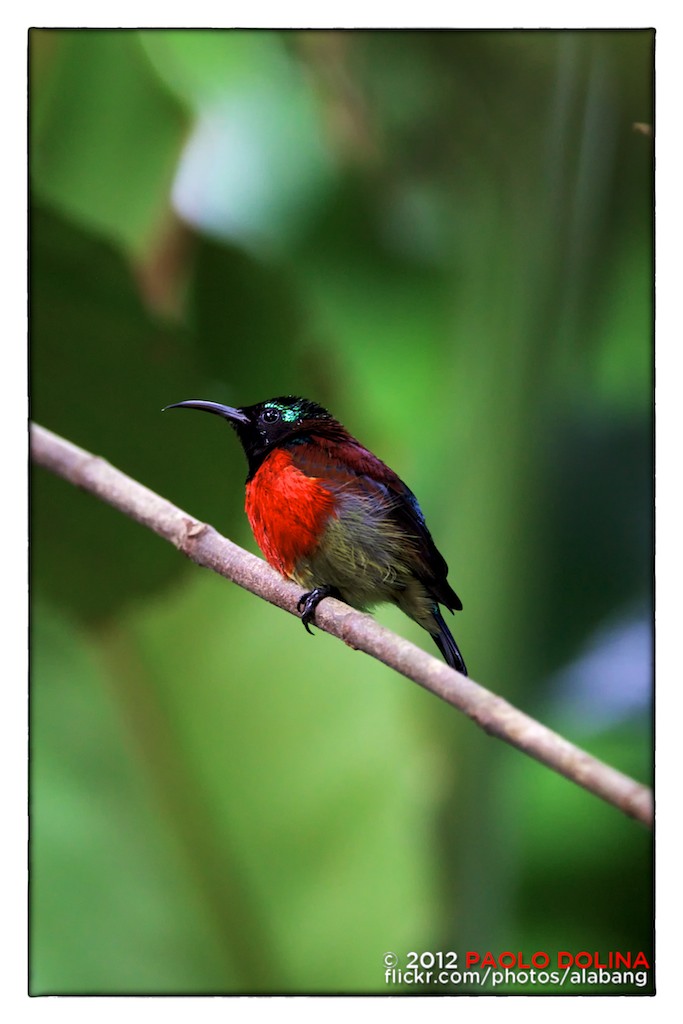
Purple-throated Sunbird (Leptocoma sperata) by alabang, on Flickr

Purple-throated Sunbird (Leptocoma sperata) has an extremely large range, and hence does not approach the thresholds for Vulnerable under the range size criterion (Extent of Occurrence <20,000 km2 combined with a declining or fluctuating range size, habitat extent/quality, or population size and a small number of locations or severe fragmentation). The population trend appears to be stable, and hence the species does not approach the thresholds for Vulnerable under the population trend criterion (>30% decline over ten years or three generations). The population size has not been quantified, but it is not believed to approach the thresholds for Vulnerable under the population size criterion (<10,000 mature individuals with a continuing decline estimated to be >10% in ten years or three generations, or with a specified population structure). For these reasons the species is evaluated as Least Concern.

Source: Purple-throated Sunbird (Nectarinia sperata) - BirdLife species factsheet

Taken at UP Los Banos, Philippines

Settings: 1/30 ƒ/5.6 ISO1600 800mm
 
Beautiful colors! Great details along with nice catch lights in the eye. Not much to pick on with this image with the exception of the white and blue spots in the background. Those spots draw my eye away a little bit. But, that's just me. ;)
 
THank you John.


Little Egret (Egretta garzetta) by alabang, on Flickr

The little egret is an opportunistic hunter (5), feeding mainly during the day whilst walking through shallow, open water, stabbing prey with its bill (5) (6). It is highly dependent on visual cues when hunting and therefore its feeding is highly affected if the water is not clear (5) (6). It feeds primarily on small fish, which are usually around 1.2 to 6 centimetres in length, but bivalves, crustaceans, and other invertebrates are also consumed (5).

Little egrets breed at different times of the year depending on location. Those populations based in Europe and Asia breed during spring and summer, whilst the breeding seasons of more tropical populations coincide with rainy seasons (5). Little egrets nest in mixed or single species colonies, and lay four to six eggs in single clutch, with the chicks hatching three weeks later and fledging at four weeks old. The chicks will spend a further month in their parents' care before leaving the nest and dispersing (7).

Source: Little egret videos, photos and facts - Egretta garzetta - ARKive

Taken at the International Rice Research Institute, Los Baños, Philippines

Settings: 1/2000 &#402;/6.3 ISO500 800mm
 
I like how you left a little room in front of the bird when/if you cropped this image. I will say that the image to me looks a little under exposed and there is an odd vignetting around the outside edges. That said, the photo is nice and sharp.
 
Thank you shelby and John.


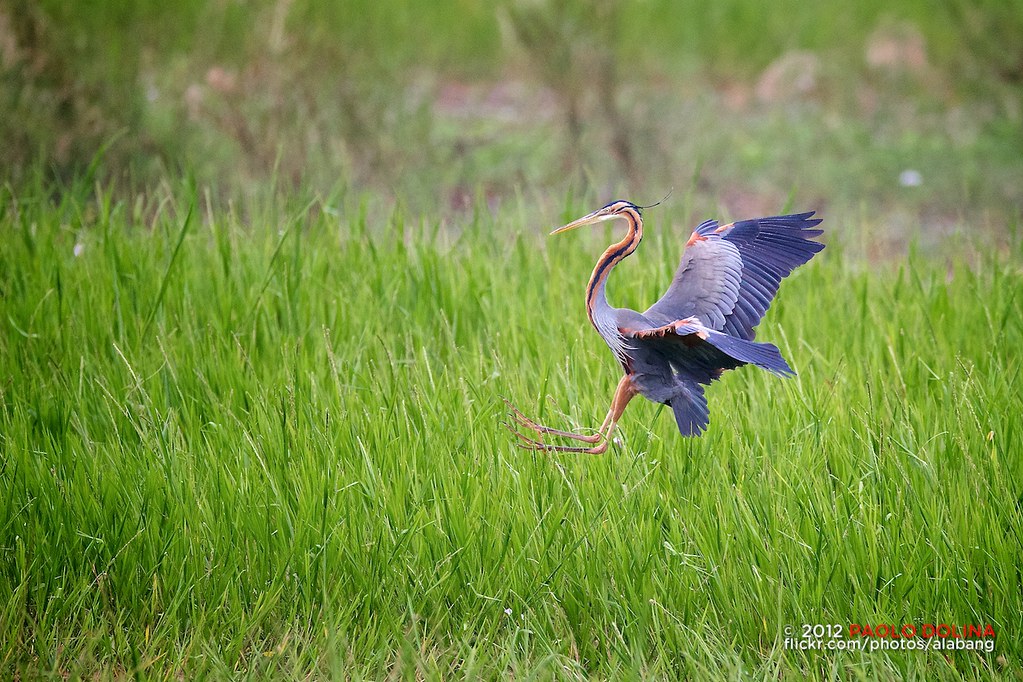
Purple Heron (Ardea purpurea) by alabang, on Flickr

The Purple Heron (Ardea purpurea) is breeds in colonies in reed beds or trees close to large lakes or other extensive wetlands. It builds a bulky stick nest.

It feeds in shallow water, spearing fish, frogs, insects and small mammals. It will often wait motionless for prey, or slowly stalk its victim. It tends to keep within reedbeds more than the Grey Heron, and is often inconspicuous, despite its size.

It has a slow flight, with its neck retracted. This is characteristic of herons and bitterns, and distinguishes them from storks, cranes and spoonbills, which extend their necks. The long neck of Purple Heron looks particularly snake-like, with more of an S-shape in flight. The call is a loud croaking "krek".

The Purple Heron is one of the species to which the Agreement on the Conservation of African-Eurasian Migratory Waterbirds (AEWA) applies.

Source: Purple Heron - Wikipedia, the free encyclopedia

Taken at Candaba Wetlands

Settings: 1/2000 &#402;/5.6 ISO2500 800mm
 
Beautiful photography and click.
 
Thank you ryan.


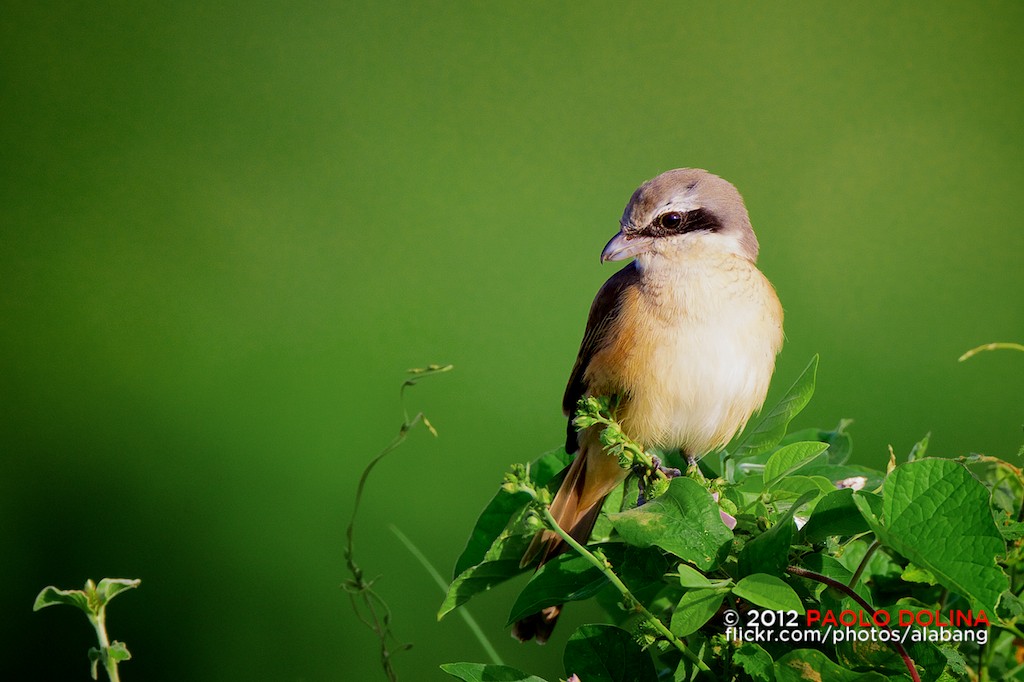
Brown Shrike (Lanius cristatus) by alabang, on Flickr

This shrike is mainly brown on the upper parts and the tail is rounded. The black mask can be paler in winter and has a white brow over it. The underside is creamy with rufous flanks and belly. The wings are brown and lack any white "mirror" patches. Females tend to have fine scalloping on the underside and the mask is dark brown and not as well marked as in the male. The distinction is not easy to use in the field but has been tested with breeding birds in Japan where the female can be identified from the presence of a brood patch. The use of multiple measurements allows discrimination of the sex of about 90% of the birds Subspecies lucionensis has a grey crown shading into the brown upperparts and the rump appears more rufous than the rest of the upperback. The tail is more brownish and not as reddish as in the Red-backed Shrike. Younger birds of lucionensis have brown crown and lacks the grey on the head. Supspecies superciliosus has a broad white supercilium and richer reddish crown. The tail is redder and tipped in white.

Source: en.wikipedia.org/wiki/Brown_Shrike

Taken at UP Los Banos

Settings: 1/2000 &#402;/5.6 ISO1600 800mm
 
Thanks baturn.


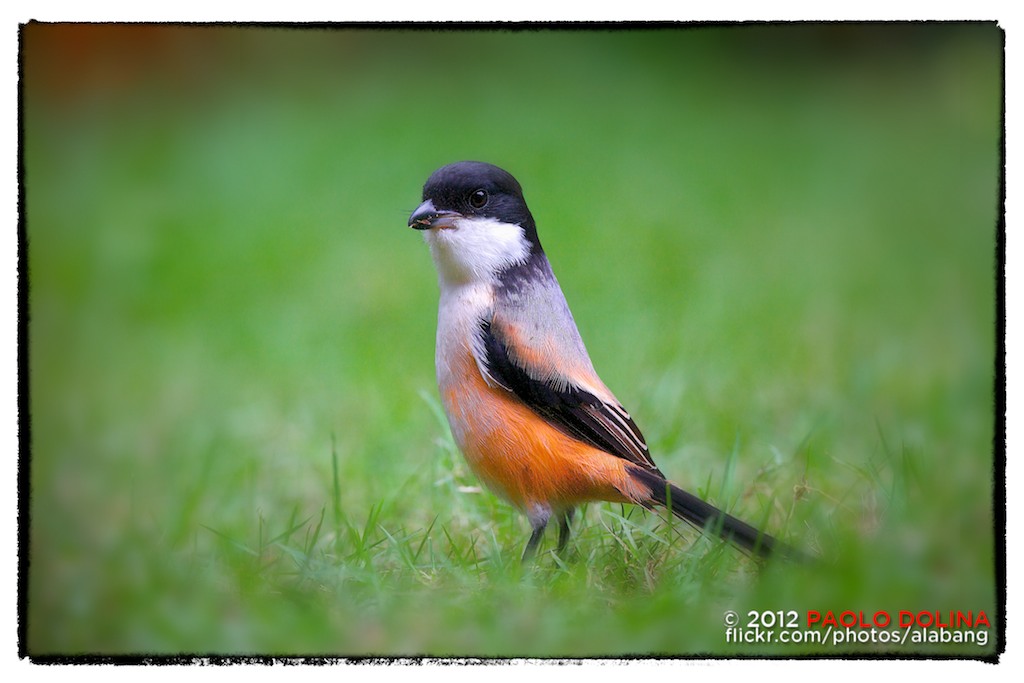
Long-tailed Shrike (Lanius schach) by alabang, on Flickr

This species has an extremely large range, and hence does not approach the thresholds for Vulnerable under the range size criterion (Extent of Occurrence <20,000 km2 combined with a declining or fluctuating range size, habitat extent/quality, or population size and a small number of locations or severe fragmentation). The population trend is not known, but the population is not believed to be decreasing sufficiently rapidly to approach the thresholds under the population trend criterion (>30% decline over ten years or three generations). The population size has not been quantified, but it is not believed to approach the thresholds for Vulnerable under the population size criterion (<10,000 mature individuals with a continuing decline estimated to be >10% in ten years or three generations, or with a specified population structure). For these reasons the species is evaluated as Least Concern.

Source: Megalurus palustris (Striated Grassbird)

Taken in Muntinlupa City

Settings: 1/160 &#402;/5.6 ISO400 800mm

 
I love it. Keep it coming.
 
Thank you mishele. :)


Black-crowned Night Heron (Nycticorax nycticorax) by alabang, on Flickr

Despite being fairly ubiquitous on a global level, the slightly unusual nocturnal habit of the black-crowned night heron renders it less conspicuous than most other herons [SUP](2)[/SUP] [SUP](3)[/SUP] [SUP](4)[/SUP]. Of moderate size for a heron, this stockily built species has short legs and a short neck, with the male, on average, being the slightly larger of the sexes [SUP](2)[/SUP] [SUP](5)[/SUP]. As its name suggests, the adult black-crowned night heron has a glossy, black cap that extends down the upper back, while the rest of the body plumage generally ranges from white to ashy grey [SUP](2)[/SUP] [SUP](5)[/SUP]. The nape is adorned with two to three long, white plumes reaching up to 25 cm in the breeding season [SUP](5)[/SUP]. The stout bill is black in colour, the eyes, a piercing crimson, and the legs, yellow-green for most of the year but becoming pink during the breeding season [SUP](2)[/SUP] [SUP](5)[/SUP]. Juveniles are mostly brown, with heavy striping and pale spots, but as they grow towards the adult plumage, become more solidly dark above and pale below [SUP](2)[/SUP]. Four subspecies that differ subtly in appearance and occupy different ranges are currently recognised: Nycticorax nycticorax nycticorax, N. n. hoactli, N. n. obscurus and N. n. falkandicus [SUP](2)[/SUP] [SUP](5)[/SUP].

Source: Black-crowned night-heron videos, photos and facts - Nycticorax nycticorax - ARKive

Taken in Valenzuela City, Philippines

Settings: 1/640 &#402;/4 ISO400 500mm
 

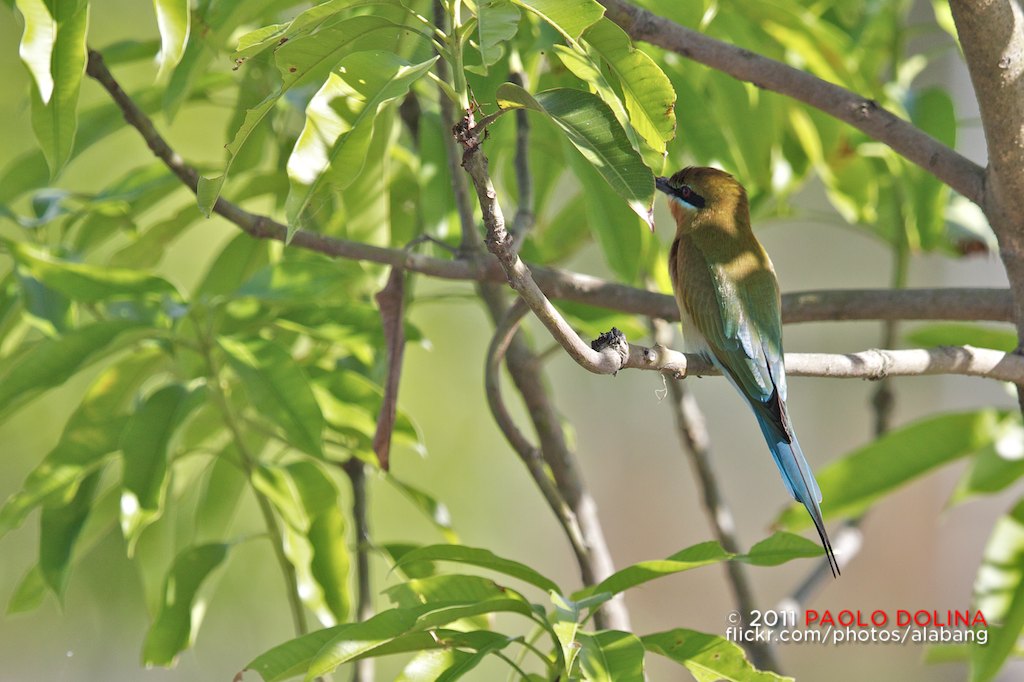
Blue-tailed Bee-eater (Merops philippinu) by alabang, on Flickr

This species has an extremely large range, and hence does not approach the thresholds for Vulnerable under the range size criterion (Extent of Occurrence 30% decline over ten years or three generations). The population size has not been quantified, but it is not believed to approach the thresholds for Vulnerable under the population size criterion (10% in ten years or three generations, or with a specified population structure). For these reasons the species is evaluated as Least Concern.

Source: Blue-tailed Bee-eater (Merops philippinus) - BirdLife species factsheet

Taken in Candaba, Pampanga, Philippines

Settings: 1/800 &#402;/8 ISO800 800 mm
 

Yellow-vented Bulbul (Pycnonotus goiavier) by alabang, on Flickr

The Yellow-vented Bulbul (Pycnonotus goiavier) is a member of the bulbul family of passerine birds. It is resident breeder in southeast Asia from southern Thailand and Cambodia south to Borneo and the Philippines.

It is found in a wide variety of open habitats, but not deep forest. It is one of the most common birds in cultivated areas. They appear to be nomadic, roaming from place to place regularly.

The Yellow-vented Bulbul builds a well-camouflaged but fragile, loose, deep, cup-shaped nest from grass, leaves, roots, vine stems, and twigs. The nest is untidy on the outside, but it is neatly lined with plant fibers. It may be built in a wide range of places from low bushes to high trees. This is a species adapted to humans and may even nest in gardens. The Yellow-vented Bulbul lays 2-5 eggs in February to June.

The Yellow-vented Bulbuls eats berries and small fruits. They also sip nectar, nibble on young shoots, and take some insects.

Source: Yellow-vented Bulbul - Wikipedia, the free encyclopedia

Settings: 1/160 &#402;/4 ISO800 600mm
 

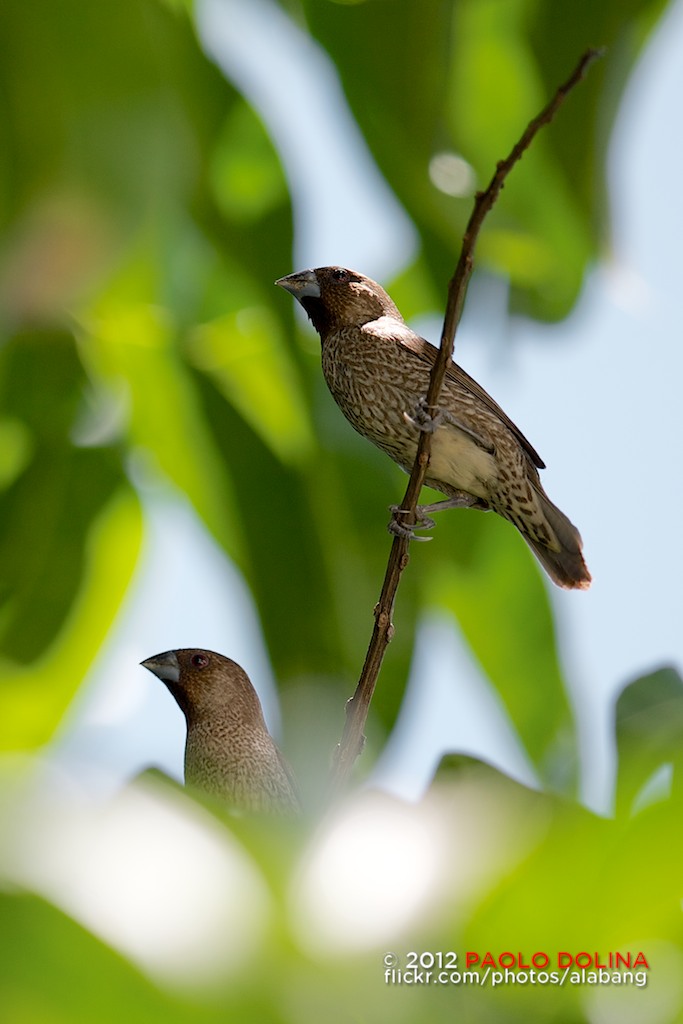
Spotted Munia (Lonchura punctulata) by alabang, on Flickr

The Scaly-breasted Munia or Spotted Munia (Lonchura punctulata), known in the pet trade as Nutmeg Mannikin or Spice Finch, is a sparrow-sized estrildid finch native to tropical Asia. A species of the genus Lonchura, it was formally described and named by Carl Linnaeus in 1758. Its name is based on the distinct scale-like feather markings on the breast and belly. The adult is brown above and has a dark conical bill. The species has 11 subspecies across their range and differ slightly in size and colour.

This Munia eats mainly on grass seeds apart from berries and small insects. They forage in flocks and communicate with soft calls and whistles. The species is highly social and may sometimes roost with other species of munias. This species is found in tropical plains and grasslands. Breeding pairs construct dome-shaped nests using grass or bamboo leaves.

The species is endemic to Asia and occurs from India and Sri Lanka east to Indonesia and the Philippines. It has been introduced into many other parts of the world and feral populations have established in Puerto Rico and Hispaniola as well as parts of Australia and the United States of America. The bird is listed as of Least Concern by the International Union for Conservation of Nature (IUCN).

Source: Scaly-breasted Munia - Wikipedia, the free encyclopedia

Taken in the Muntinlupa City, Philippines

Settings: 1/1000 &#402;/4 ISO250 600mm
 

Create an account or login to comment

You must be a member in order to leave a comment

Create account

Create an account on our community. It's easy!

Log in

Already have an account? Log in here.

New Topics

Back
Top Bottom