What's new

Camera Noob, pics included.

My favorite picture would have to be the one with the basketball. I like the simplicity of it all.

Anyway, I am no photography expert, but I will put in my two cents of how I feel.


1.) The fish photo is a little out of focus. When shooting people or animals, try to get their closest eye in focus. If you do that, it shouldn't really matter if some parts of it are blurred.

2.) I also like this photo of Mr. Potato Head. Again, I think it may be the simplicity.

3.) I already said how I feel about the basketball.

4.) I like this photo too, but I think it would be better if you had the whole motorcycle in focus.

5.) Puppy! The focus seems good, but something seems off. I am not an expert, so I don't know how to describe it.

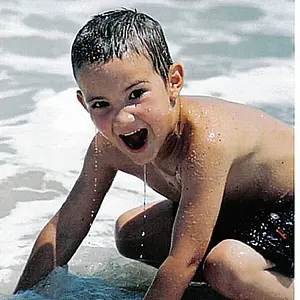
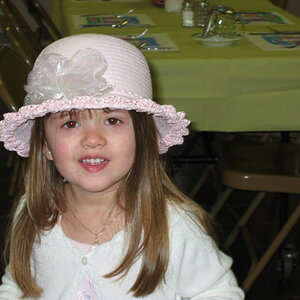
6.) I fail at taking pictures of people, so I cannot comment on this, other than by saying it looks good, but something is off.

agree few things are off in pictures, everybody likes the basket ball and spud head. I dont know why the full bike wasnt in focus something im doing wrong.
in regards to the fish, they wouldn't keep still so it was difficult for me to get a good shot each time i hit the button i missed the shot it took a while to focus and snap it.

i did it too use a lower fstop....
or longer shutter speed....

im pretty sure they are the same thing...

and my favorite was also the basketball one
 
every pic was took in a dark room using flash. However I was told from start not to use auto so I have not. everything else ill take on board and start learning. whats the best basic settings i should adjust my camera to?

There is no such thing. It's all about metering the light you are working in and then creating the exposure AND creating the image you want using the exposure triangle.
The elements of the exposure triangle control exposure AND something creatively. You have to use the proper settings that are correct for the light you are working in and are correct for what you need to make YOUR image. Start reading. The links given will get you some clue, but there are tons more to help.
Understanding Exposure by Bryan Peterson is an excellent launching point for getting a clue about what we're talking about.
 
i did it too use a lower fstop....
or longer shutter speed....

im pretty sure they are the same thing...

and my favorite was also the basketball one

Absolutely not the same thing. No where near it. They both control LIGHT, but beyond that they have a HUGE impact on the image in completely different ways.
 
I'm still new but F-Stop isn't the same as your shutter speed.

Adjusting the f-stop or aperture is much like your own eye the more it's open the more light it lets in and the further you can see for example if you want to capture a wide area in good focus a higher f-stop would be appropriate where as if you wanted a close up then a lower f-stop would be more suited however. Shutter speed however or how I think of it is as the time it takes to take the picture a short shutter speed will capture movement or moving objects like your fish as you said was moving too much, a longer shutter speed can be used to let in as much light as possible however with the extra time it takes a tripod is recommended.
 
i did it too use a lower fstop....
or longer shutter speed....

im pretty sure they are the same thing...

and my favorite was also the basketball one

Absolutely not the same thing. No where near it. They both control LIGHT, but beyond that they have a HUGE impact on the image in completely different ways.
\

ok thank you for clearing that up... i read that to fix it you were supposed to change them both...
 
I have had my camera a total of 2 days during day one all I did was take pictures in the auto mode, once I put it into manual I started to notice the difference but to be honest there isn't a basic setting for you to set as each time you take a picture the light, subject etc is different I have been reading up on shutter speed, aperture, ISO then going taking a picture of something very simple and seeing what changes each time I change something as I'm more of a hands on learner, I can't just read then put into practice.
In my opinion there is nothing wrong with using automatic as long as it is used as a learning tool. There is also a significant difference between full automatic and aperture or shutter priority automatic. You were using manual exposure mode however when using a flash it is still, in many respects, an automatic mode. Nikon's CLS (Creative Lighting System) automatically varies the flash duration and intensity to get a usable exposure with the manual shutter, ISO, and aperture values you had set. Had you taken those same photographs outside you would have probably gotten a mas of overexposed images.

Looking at the EXIF data in the photographs you have been using varying shutter, aperture, and ISO combinations but do you really know what you are doing when you change one (or more!) of the settings? Do this: Go outside, take your best guess as to a manual exposure and shoot something. Doesn't matter what; a tree, a car, a house, a dog, anything. Switch to full auto and shoot the exact same photograph. Then analyze the two photographs. One (the "Auto" image) is most likely going to be a lot better than the other. Find out why. Look at the different settings and understand WHY the camera chose those settings while you didn't.

Your camera is not a point-and-shoot. To be able to get much more out of it than you would have gotten with a cheap P&S you will have to do the work to figure out what is going on. The best first stop is your owner's manual. Read through it. Then look at some tutorials on exposure and composition on the internet. There are hundreds of thousands of them around. Once you stat to understand what is going on read your owner's manual AGAIN and it will start to make some sense.

We all started where you are right this minute. Some would like to pretend that they were prodigies but they weren't. Their first photos and my first photos and everyone else's first photos were lousy. We all went through the same learning curve you are going to have to go through and we all survived and managed to learn something. You will to.
 
I had a fiddle with settings but I didnt know what I was doing ill try that tomrrow with auto and manual. I'm thinking of taking up a course but I'll try the cheaper option first and do some research. Thanks for tips and advice.
 
Sean_GT said:
I had a fiddle with settings but I didnt know what I was doing ill try that tomrrow with auto and manual. I'm thinking of taking up a course but I'll try the cheaper option first and do some research. Thanks for tips and advice.

I really suggest using av or tv at first to get the idea of how they relate to each other
 
Sean_GT said:
av and tv mean nothing to me lol. I'm reading up on stuff tonight.

That's because you have a Nikon right? So it would be A = aperture priority and S = shutter priority. Have you seen the a, s, m, p on your camera? Well the a mode - you pick an aperture (f/#) and the camera determines the rest of the settings. S mode does the same thing but you pick the shutter speed.
 
Sean_GT said:
av and tv mean nothing to me lol. I'm reading up on stuff tonight.

That's because you have a Nikon right? So it would be A = aperture priority and S = shutter priority. Have you seen the a, s, m, p on your camera? Well the a mode - you pick an aperture (f/#) and the camera determines the rest of the settings. S mode does the same thing but you pick the shutter speed.

yes i thought m = manual lmao, im terrible I need to stop cutting corners and start again i think ill reset my settings
 
These look really similar to my first shots. I just got Understanding Exposure, and it's already looking very useful indeed.
 
I see posts like this and I honestly don't know how to respond. This sounds harsh, and that's not my intent either, but there is no value to these images. They are underexposed, without composition and painful to look at. That's the bad news.

The good news is you like taking photos and everybody starts at the beginning so take this as an opportunity to learn, to totally immerse yourself in this subject and keep shooting. Your images will get better.

Mind you--if you keep posting photos like that in this forum, you'd better have THICK skin because you'll get slaughtered.

Just my $0.02.
 
If you use P mode you can note the settings the camera uses becuase they are displayed in the viewfinder.

You can then consider those settings the camera choose based on the scene you shot.

You also have to conside which of the available reflected light metering modes are being used.
 

Create an account or login to comment

You must be a member in order to leave a comment

Create account

Create an account on our community. It's easy!

Log in

Already have an account? Log in here.

Back
Top Bottom