You are using an out of date browser. It may not display this or other websites correctly.
You should upgrade or use an alternative browser.
You should upgrade or use an alternative browser.
Can 85mm 1.4g be used for landscape?
- Thread Starter hamlet
- Start date


- Joined
- May 1, 2008
- Messages
- 25,507
- Reaction score
- 5,113
- Location
- UK - England
- Can others edit my Photos
- Photos OK to edit
- Moderator 🛠️
- #17
why would you want bokeh in landscape. Generally landscape needs full DOF. If not, then it isn't really landscape anymore is it...
It's ok to think of photography like that when you begin to learn as it helps give you boundaries to work within whilst building up ones skill set. However there comes a point where you have to put down the conventions of how to shoot something and experiment. For example some might argue that macro photography has to use small apertures for maximum depths of field - yet that leaves out a whole creative effect of minimum depth of field (if you've seen any of Mishel's flower photography you'll see that you don't "need" maximum depth of field at all!).
The camera is a box full of creative tools and the good photographers learn to experiment with a wide variety of them so that they can choose what works for them and find their own creative vision.
Now don't get me wrong many of the conventions are there because they do work; however it is not to say that they are the only things that work.

wyogirl
Oh crop!
- Joined
- Jun 18, 2013
- Messages
- 1,593
- Reaction score
- 611
- Location
- South West Wyoming
- Can others edit my Photos
- Photos OK to edit
I'd love to see an example of landscape photography with buttery bokeh. Because my mind is seeing all sorts of nature shots outside of articles that are a part of the landscape but don't qualify as a landscape photograph. I'm not being a smart ass, I really want to see an example so that maybe I can learn what Hamlet wants to achieve. Sure 85mm can be used in landscape, I use longer focal lengths all the time, but I don't get the bokeh in landscape idea at all.why would you want bokeh in landscape. Generally landscape needs full DOF. If not, then it isn't really landscape anymore is it...
It's ok to think of photography like that when you begin to learn as it helps give you boundaries to work within whilst building up ones skill set. However there comes a point where you have to put down the conventions of how to shoot something and experiment. For example some might argue that macro photography has to use small apertures for maximum depths of field - yet that leaves out a whole creative effect of minimum depth of field (if you've seen any of Mishel's flower photography you'll see that you don't "need" maximum depth of field at all!).
The camera is a box full of creative tools and the good photographers learn to experiment with a wide variety of them so that they can choose what works for them and find their own creative vision.
Now don't get me wrong many of the conventions are there because they do work; however it is not to say that they are the only things that work.
JTPhotography
No longer a newbie, moving up!
- Joined
- Dec 8, 2012
- Messages
- 902
- Reaction score
- 428
- Location
- South Mississippi
- Can others edit my Photos
- Photos NOT OK to edit
Of course. A 70-200 is one of the best landscape lenses you can own.
Don't get hung up on rules.
Don't get hung up on rules.

- Joined
- Aug 15, 2013
- Messages
- 13,698
- Reaction score
- 3,373
- Location
- SE Michigan
- Can others edit my Photos
- Photos OK to edit
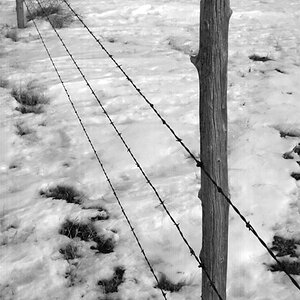
I've taken some nature shots (I don't consider landscape) such as taking a picture of a trail in the fall, and I use DOF to make OOF as you go down the field.
Pretty nice pictures.
But I generally think of landscape of a picture of a mountain with a lake in front of it. Generally all is in focus, but I've seen examples of the mountain OOF, etc.
I asked the question a few months ago of Bokeh vs OOF
http://www.thephotoforum.com/forum/beyond-basics/339979-bokeh-question.html

hamlet
No longer a newbie, moving up!
- Joined
- Sep 12, 2013
- Messages
- 2,894
- Reaction score
- 435
- Location
- Belgium
- Can others edit my Photos
- Photos OK to edit
- Thread Starter 🔹
- #21
Of course. A 70-200 is one of the best landscape lenses you can own.
Don't get hung up on rules.
Thank you, i will keep that in mind. Even though my pictures are not much to look at, its good to know there are people who understand what i'm trying to do.
hamlet
No longer a newbie, moving up!
- Joined
- Sep 12, 2013
- Messages
- 2,894
- Reaction score
- 435
- Location
- Belgium
- Can others edit my Photos
- Photos OK to edit
- Thread Starter 🔹
- #22
85mm for landscapes? Sure. Why not. I like a 70-200. It's often a great lens to pick out features with.
That lens belongs in my dream team. What incredible performance, sharpness, fast zoom and one of the best VR nikon has to offer. For a zoom lens its up there with the best.
JTPhotography
No longer a newbie, moving up!
- Joined
- Dec 8, 2012
- Messages
- 902
- Reaction score
- 428
- Location
- South Mississippi
- Can others edit my Photos
- Photos NOT OK to edit
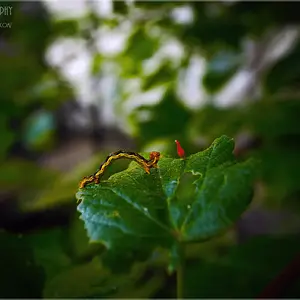
Here is a shot that was taken at 100mm with a 100-400 zoom.
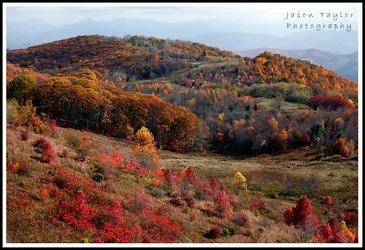
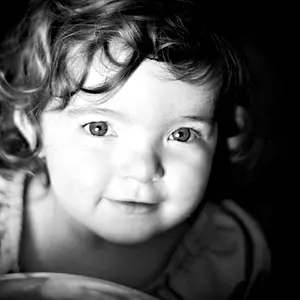
And here is a shot taken with an 85mm, at f1.4.
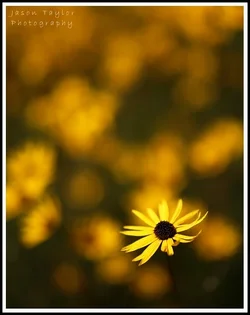
Not the greatest photos of all time but I just wanted to throw a few quick examples at you.
And here is a shot taken with an 85mm, at f1.4.
Not the greatest photos of all time but I just wanted to throw a few quick examples at you.
JTPhotography
No longer a newbie, moving up!
- Joined
- Dec 8, 2012
- Messages
- 902
- Reaction score
- 428
- Location
- South Mississippi
- Can others edit my Photos
- Photos NOT OK to edit
85mm for landscapes? Sure. Why not. I like a 70-200. It's often a great lens to pick out features with.
That lens belongs in my dream team. What incredible performance, sharpness, fast zoom and one of the best VR nikon has to offer. For a zoom lens its up there with the best.
Actually, unless you really need the 2.8 aperture, the f4 version is good too, and it focuses much closer, if you're into macro it might be a better choice.
hamlet
No longer a newbie, moving up!
- Joined
- Sep 12, 2013
- Messages
- 2,894
- Reaction score
- 435
- Location
- Belgium
- Can others edit my Photos
- Photos OK to edit
- Thread Starter 🔹
- #25
Here is a shot that was taken at 100mm with a 100-400 zoom.
And here is a shot taken with an 85mm, at f1.4.
View attachment 59938
Not the greatest photos of all time but I just wanted to throw a few quick examples at you.
Thank you, that is an excellent picture. You've managed to completely isolated the subject you wanted, that lens will give me so much more creative freedom.
hamlet
No longer a newbie, moving up!
- Joined
- Sep 12, 2013
- Messages
- 2,894
- Reaction score
- 435
- Location
- Belgium
- Can others edit my Photos
- Photos OK to edit
- Thread Starter 🔹
- #26
85mm for landscapes? Sure. Why not. I like a 70-200. It's often a great lens to pick out features with.
That lens belongs in my dream team. What incredible performance, sharpness, fast zoom and one of the best VR nikon has to offer. For a zoom lens its up there with the best.
Actually, unless you really need the 2.8 aperture, the f4 version is good too, and it focuses much closer, if you're into macro it might be a better choice.
I'll focus on the 85mm for now. But i will certainly take your advice into consideration.
- Joined
- Aug 15, 2013
- Messages
- 13,698
- Reaction score
- 3,373
- Location
- SE Michigan
- Can others edit my Photos
- Photos OK to edit
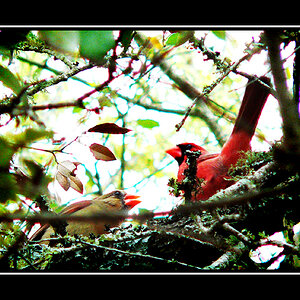
Here's some varying OOF backgrounds too. From a 75-300mm AF f/4.5-5.6 lens
BELOW: 220mm
View attachment 56048
BELOW: 300mm
View attachment 56047
View attachment 56049
BELOW: 220mm
View attachment 56048
BELOW: 300mm
View attachment 56047
View attachment 56049

Light Guru
Been spending a lot of time on here!
- Joined
- Apr 27, 2011
- Messages
- 3,403
- Reaction score
- 679
- Location
- Salt Lake City, UT
- Can others edit my Photos
- Photos NOT OK to edit
why would you want bokeh in landscape. Generally landscape needs full DOF. If not, then it isn't really landscape anymore is it...
Depends on the landscape image. You are just thinking of broad grand landscapes. Some landscape images are more intimate like a single tree.
Depending on the subject of the landscape your distance to it and how much you want to include or exclude in the image a 85mm lens may be the right choice or it may be the wrong choice.
JTPhotography
No longer a newbie, moving up!
- Joined
- Dec 8, 2012
- Messages
- 902
- Reaction score
- 428
- Location
- South Mississippi
- Can others edit my Photos
- Photos NOT OK to edit
I'd love to see an example of landscape photography with buttery bokeh. Because my mind is seeing all sorts of nature shots outside of articles that are a part of the landscape but don't qualify as a landscape photograph. I'm not being a smart ass, I really want to see an example so that maybe I can learn what Hamlet wants to achieve. Sure 85mm can be used in landscape, I use longer focal lengths all the time, but I don't get the bokeh in landscape idea at all.why would you want bokeh in landscape. Generally landscape needs full DOF. If not, then it isn't really landscape anymore is it...
It's ok to think of photography like that when you begin to learn as it helps give you boundaries to work within whilst building up ones skill set. However there comes a point where you have to put down the conventions of how to shoot something and experiment. For example some might argue that macro photography has to use small apertures for maximum depths of field - yet that leaves out a whole creative effect of minimum depth of field (if you've seen any of Mishel's flower photography you'll see that you don't "need" maximum depth of field at all!).
The camera is a box full of creative tools and the good photographers learn to experiment with a wide variety of them so that they can choose what works for them and find their own creative vision.
Now don't get me wrong many of the conventions are there because they do work; however it is not to say that they are the only things that work.
First, you are using the term "bokeh" incorrectly. Bokeh refers to the quality of the out of focus areas of the photo. If a lens produces a smooth and "buttery" blur, then it has a nice bokeh, if the out of focus areas are nervous and uneven, then the bokeh would be unpleasant.
Second, I can think of many examples of why you would want to isolate a subject in a landscape photo by have a background that is out of focus. I have one image, can't seem to find the darn thing at the moment, but I will keep looking. It is a photo of a large oak tree with a great shape located in the middle of a field. I shot it with a longer focal length and opened up the aperture quite a bit so I could get some seperation. You can still see the rolling hills in the distance but they were not clearly defined. Converted to black and white it was really nice.
Here is a link to an article with some nice examples:
http://blog.photowhoa.com/chris-odo...ing-gorgeous-bokeh-in-your-landscape-imagery/
Last edited:
Similar threads
- Replies
- 2
- Views
- 3K
- Replies
- 0
- Views
- 128
- Replies
- 1
- Views
- 413


- Replies
- 9
- Views
- 719