What's new

Comments Please

Ralest42

TPF Noob!
Joined
Jun 23, 2011
Messages
47
Reaction score
4
Location
United States
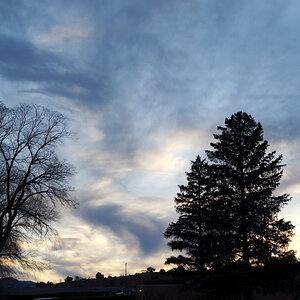
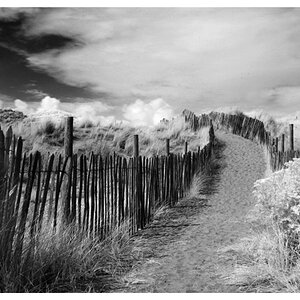
I've posted these elsewhere, as I'm still learning about this forum, I guess I have been doing things kind of backwards myself. Seems I've read that a couple of times on here by other people. I'm going to retry with 3 pictures here, these are me just playing around with my camera trying to get familiar with it. So please leave me some thoughts, any suggestions on what could make these better, or what they are missing? Anything particular you like or dislike about the way the shot looks?

I've read through a few places on this forum and I've notices that when asked specific questions like this will probably solicit the best response. Like I said, these are me just playing around with a camera that I am still as of yet unfamiliar with.

Attention.jpg


Relax.jpg


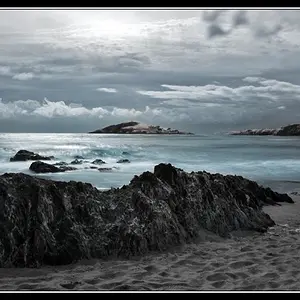
IntheClouds.jpg


The last picture was taken on a remote location up in the hills, it was taken to capture the clouds rolling over the mountain top.
 
The first two are pretty soft and the lighting on them is a bit flat. In people or animal photography, there is something called a catchlight. It is basically a reflection of the light source in the eyes of the subejct that is visible in the picture. In these, tht catchlight is missing and the eyes look a bit dull because of it.

For the third, you said it was taken to capture the clouds rolling over the mountain top, but the clouds are overexposed and aren't really visible. The top half of the frame looks basically white. A graduated neutral density filter could have helped this shot out quite a bit.
 
Thanks for the comments, I will work on the "catch-lighting" being as my primary area of interest for pictures is outdoor usually wild life.

Unfortunately for the third photo, I really wish I had the opportunity to try that one again. Making no excuses I just happened to have a camera with me at work one day and took this picture. In my mind it had come out looking like a good picture, but after your comment I do see what you are talking about. Had it not been for the couple of areas on the picture you never would have been able to tell that it was a cloud.
 
IntheClouds.jpg


The last picture was taken on a remote location up in the hills, it was taken to capture the clouds rolling over the mountain top.
Also investigate the different metering modes your camera likely has available.

I did a bit of quick editing using Camera Raw and Photoshop.

IntheCloudsEdit.jpg
 
Love Shelites, so I love without the catchlight :O) That edit Keith made is awesome. I LOVE it, just gorgeous!
 
I agree with the edit, you did make it look so much better. I've still got so much to learn not just about using the camera but how to edit decent pictures to make them stand out more.

As for the the Picture of The Sheltie and the Cat, I'm playing around with them in photoshop adding the appearance of catchlight, and maybe it's just the fact that I'm so new, or maybe it is that kind of editing really doesn't add a whole lot. My problem with the modification from what I've found online for artificial catchlight is that if a picture is zoomed in than it become apparent of the manual modification. When I've got it done, I'll re-upload the before and after for more critique on that.

Keith, with what you have done to that picture I do love the difference, I'm also going to play around with that and try to get a start point from there.

Thanks everyone for the comments
 
I wasn't really suggesting you add an artifical catchlight. My point was more to the fact that when a catchlight appears, generally at the top of the eye around the 11 o'clock or 1 o'clock position, it means you nailed your lighting. If there is no light falling on the eye, there can be no catchlight. The lack of light falling on the eye is what actually makes the eyes appear dull, although the catchlight does add some sparkle.

In any case, the eyes are the first thing most people will look at when viewing a photo of a person or animal. They need to be sharp and well lit.
 
Your first shot is soft because of the settings you used, 1/40 @ 300mm your minimum shutter speed should have been 1/300 or higher
 
Sorry for the length of time it took me to add my comment here. I know from the comments here that there are a lot of people who are "experts" or at the very least far more proficient in photography than I am. I will take all of your comments and try to learn from all of them, whether you classify yourself as expert or professional photographer or not, I really do appreciate all of your comments.

Please understand to this particular thread this will be my last comment but I will continue checking to see in anyone else has any critiques or comments and will equally use any other suggestions that are given in the future.

When I am able to capture new pictures, I will likewise upload them and hopefully will have captured at least some of the techniques you have all mentioned here and will be able to to get even more critique to still continue to improve on there.

Last question actually here, aside from the softness of the picture, how is the background, referring to the first pic, the blur was not deliberate, is there too much blur? Does it take away or add to the picture from someone with a more experiences eye?

Thank you all, Roger
 
Last question actually here, aside from the softness of the picture, how is the background, referring to the first pic, the blur was not deliberate, is there too much blur? Does it take away or add to the picture from someone with a more experiences eye?

In general, blurring the background is a good way to bring attention to your subject and to separate the subject from the background. In your first photo, aside from the tilt of the blown out part, I like the background...The foreground and the dirt patch on the right of the frame are not so great.
 
If you were painting those images, how much effort would you go to to render the foreground or background in the way the camera did? I'm guessing, not very much. So this means that the camera captured much more detail in the wrong place(s). The skill in photography is in bringing the attention of the viewer to the subject you want to show, and to eliminate (or minimize) the distractions. Kerbouchard has given you some excellent advice and Keith (KmH) has as usual his exemplary editing to show the possibilities. Gsgary makes a very valid point about the shutter speed. It really pays off taking the time to study a scene and to decide how to go about capturing it. Where is the light coming from? ( This determines highlights, shadows, dynamic range, your positioning). Do you need deep or shallow depth-of-field? (this determines the aperture). What's the main subject? (this determines whether or not you want the foreground/background in or out). There are many skills that come together to make beautiful photographs, and they do take time to acquire and master. However, you've got an eye to pick up the interesting stuff.
 

Create an account or login to comment

You must be a member in order to leave a comment

Create account

Create an account on our community. It's easy!

Log in

Already have an account? Log in here.

New Topics

Back
Top Bottom