What's new

Depth of Field Question

Joined
Jun 8, 2010
Messages
1,530
Reaction score
764
Location
Texas
Can others edit my Photos
Photos OK to edit
I asked on another forum with zero feed back so I figured I should ask on a forum that has a lot more traffic.

In this photo: *** | Flickr - Photo Sharing! (First photo I found for an example) and many like it, how is the DoF created? Is it a combination of using a longer focal length lens, wide aperture and getting a bit lower to create the blur in the foreground and back ground? Or was PP used to help create that?

I have seen this in many portraits and have always wanted to learn how to do it. In a large format class I took, the teacher was able to create this look but Im assuming it was because of the movements she used with the bellows and a wide aperture rather than the focal length of the lens. We used the same lens through out the class and I never had that style of DoF.

Hopefully that makes sense and someone has some insight into it.
 
DOF is constant with focal length, it is the aperture that controls the DOF and the quality of the blur is specific to the actual lens you are using.

See this for a good explanation.
 
She uses a long focal length (135mm) and shoots pretty wide open (f2.5 in that shot)
 
One of my favorite easy to understand explanations.

 
Last edited by a moderator:
[/QCLARIFICATION: FOCAL LENGTH AND DEPTH OF FIELD

Note that focal length has not been listed as influencing depth of field, contrary to popular belief. Even though telephoto lenses appear to create a much shallower depth of field, this is mainly because they are often used to magnify the subject when one is unable to get closer. If the subject occupies the same fraction of the image (constant magnification) for both a telephoto and a wide angle lens, the total depth of field is virtually* constant with focal length! This would of course require you to either get much closer with a wide angle lens or much further with a telephoto lens,

Understanding Depth of Field in Photography
 
Apparently I was taught incorrectly about focal length and DoF (Maybe I wasnt paying attention?). A longer focal length lens just changes the distribution of where the out of focus areas are.

Thanks for the read up
 
Many that teach photography may not understand DoF as well as they think they do.

I've posted many times here at TPF about how lens focal length DoF remains constant as long as subject scale in the image is maintained.
Longer focal length lenses magnify blurred background elements making them appear more OOF when they really aren't more blurred and are just bigger in the image frame.

By the same token, many people only consider the far limit of DoF and rarely if ever consider the near limit of DoF, and using the near limit to aid the use of 'selective focus'.

In the amateur photographer community it is dogma that a 50 mm f/1.8 lens is a desired portrait lens. That dogma seems to result more from the low priced "nifty fifty" 50 mm lenses that deliver less than quality bokeh (blur visual quality, not the blur itself) rather than the more expensive and longer focal length prime and zoom lenses professional portrait photographers routinely use.

No doubt, for many amateur portrait photographers, space limitations may pose a restriction on the lens focal lengths they can use.
However, I think even that aspect of the issue is over stated because the distance difference between using 85 mm instead of 50 mm for a head and shoulders shot is a single, somewhat longer than normal, step backwards.
 
Last edited:
Well I stand corrected.
 
In addition to long focal length and large aperture, people use clone tool to get rid the bright areas. Then they also use adjustment brush on LR with clarity slider to minimum and they use it on the background. That will make the background even creamier.
 
I could be wrong, but IMHO it looks like the ground at the bottom of the frame was blurred artificially. It just has that tilt-shifty look to it.
 
I could be wrong, but IMHO it looks like the ground at the bottom of the frame was blurred artificially. It just has that tilt-shifty look to it.


I'd say it's been Shopped. There should be parts of the ground at the bottom left and right that should be as pin-sharp as the child and dog are. It appears there's been some in-post hanky-panky done.
 
Perhaps an accurate observation there about hanky-panky Sparky-parky. lol But to try to give it the benefit of the doubt, maybe something got lost in translation when the images were reposted on other sites, I think it was photoshopped/blurred and may or may not have been shot using existing light (the light source doesn't make sense to me because the dog has light apparently hitting its left front leg, but maybe it was more sunny than it appears and the background was blurred/darkened to enhance the foggy effect).

The depth of field refers to the distance of the area that's in focus, between you & your camera and what's in the distance in front of you - that's the field of view, what you can see. That distance varies - if your lens is wide open, less distance will be in focus; if you shut down the lens all the way and focus to infinity then everything between you and infinity would be in focus. And other apertures in between would create a different depth of the field of vision for each aperture.

If your instructor had a field camera I suppose she could have cranked the bellows back into the camera to create a really narrow field of view, and depending on the lens she might have been able to blur a lot of background. (I haven't used a large format camera but I'm basing my thoughts about the field camera on what I've read and from having used an original Lensbaby which is basically a really small bellows of a sort that you can tilt and shift; but the effect doesn't look like the sample photo of the boy and dog, that seems to be a short wide lens and PP effects).
 
Perhaps an accurate observation there about hanky-panky Sparky-parky.

Oh crap. My Suess meter just redlined and then exploded.. lol

lol But to try to give it the benefit of the doubt, maybe something got lost in translation when the images were reposted on other sites, I think it was photoshopped/blurred and may or may not have been shot using existing light (the light source doesn't make sense to me because the dog has light apparently hitting its left front leg, but maybe it was more sunny than it appears and the background was blurred/darkened to enhance the foggy effect).

Thing that really struck me is I've never seen a dog who's fur stops with a distinct outline all the way around the animal. No little bits and tufts standing up here and there. And that is hanky panky, snappy wappy. Oh.. ouch.. That actually hurt. Yup.. time to replace the early Suess warning system I guess. Lol
 
Nothing suspicious here -- that image is no problem. It's one of the reasons I love my 135mm f/2 lens.

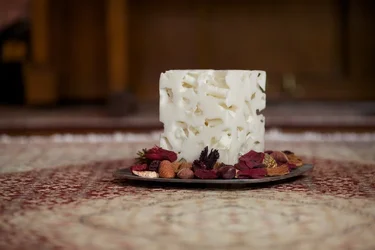
So... having peeked at the EXIF data, I grabbed my 5D II, my EF 135mm f/2L lens and looked quickly for something to demonstrate this. It's managed to warm all the way up to 12ºF outside (friggin' cold!) so I decided to just do this indoors. I used the rug with the intricate pattern as this would make it easy to see where the focused range begins and ends -- plopped this ornate candle on it -- and took a shot at the same f/2.5 focal ratio used in the shot with the St. Bernard and child.

Here's the result (and, btw, this is straight-out-of-the-camera -- no processing of any kind (well... I think the act of importing the image into Aperture auto-applies *some* processing... but not much.)

$IMG_6229.webp
 

Create an account or login to comment

You must be a member in order to leave a comment

Create account

Create an account on our community. It's easy!

Log in

Already have an account? Log in here.

New Topics

Back
Top Bottom