What's new

Feedback Requested for Penny's Portraits

311Photo

TPF Noob!
Joined
Oct 12, 2016
Messages
51
Reaction score
12
Can others edit my Photos
Photos OK to edit
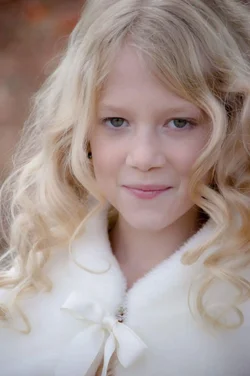
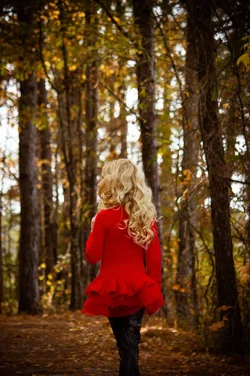
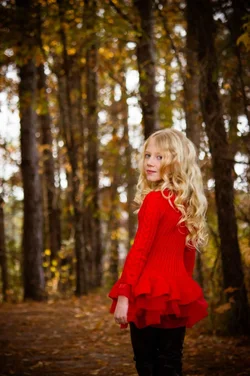
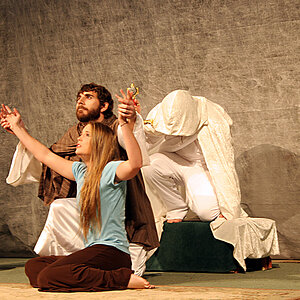
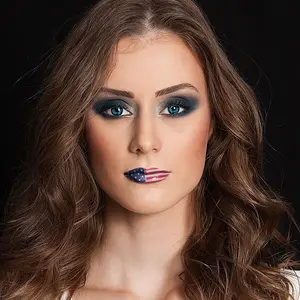
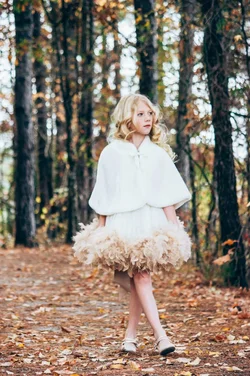
I photographed this beautiful little girl a few weeks ago. She does a lot of modeling, including some for the local photography school students. Her mom was thrilled with my work (which means a lot, given her experience with photographers), but I want the critiques of the pros.
[side note: these were uploaded to Facebook, downloaded from Facebook to Google Drive, downloaded from Drive to a flash drive, then uploaded to this site, so some of the image quality may have been lost in the process, so just keep that in mind - long story as to why I had to do all that, and it is definitely not what I do for my clients]

Thank you in advance!
 

Attachments

  • FB_IMG_1481808847681.webp
    FB_IMG_1481808847681.webp
    232.5 KB · Views: 257
  • FB_IMG_1481808852982.webp
    FB_IMG_1481808852982.webp
    76.9 KB · Views: 236
  • FB_IMG_1481808856095.webp
    FB_IMG_1481808856095.webp
    165 KB · Views: 248
  • FB_IMG_1481808866892.webp
    FB_IMG_1481808866892.webp
    114.9 KB · Views: 258
  • FB_IMG_1481808889220.webp
    FB_IMG_1481808889220.webp
    51.6 KB · Views: 275
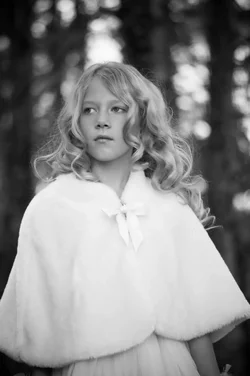
The first two are nice, the others in the red feel somewhat disconnected. The black and white does not work at all


p!nK
 
The first two are nice, the others in the red feel somewhat disconnected. The black and white does not work at all


p!nK
What doesn't work about it? I'm not arguing - I just want to know what I need to do differently.

Sent from my VS990 using Tapatalk
 
The bright white of the cloak (?) pull the eye downward away from the face. Light advances, dark recedes.


p!nK
 
it's a little hard to offer meaningful critique on these because I'm not sure if some of the issues I see are a result of your work, or simply the way these images have been crunched. They all seem very soft and there's a distinct loss of detail in the whites, but that could well just be continued resampling of the images.

A couple of things that strike me which are definitely not related to that are: (1) The absence of fill light. These appear to be all shot with only ambient light, and the eyes are lacking a 'sparkle' as a result. #982 for example seems slightly under-exposed, slightly cool in terms of WB, and rather 'flat' in terms of lighting. A bit of fill flash would have made a HUGE difference. Her face is also covered with fly-away hair which should have been dealt with.

The monorchorme, while a nice conversion doesn't work simply because the white cape is at least 2/3 stop brighter than her face and the brightest object in the scene. The human eye is always attracted to light over dark, so the viewer's eye is pulled away from her face and to the cape. Again, fill flash would have taken care of this.

I'm not sure what lens you're using (I can't pull up an EXIF data), but that is some really unattractive bokeh; what is often referred to as 'nervous' or 'jittery' bokeh. A portrait lens should have smooth, graduated bokeh.

They're a nice enough set of images, but with just a little more effort, they could have been really stand-out.
 
You need to create more room for the eyes to look into; having put the face too close to the so-called short side of the frame has created visual tension. B&W one close-up has racoon eyes. The quality of light is not good in these, and is gloomy and has no real direction of light. These are mostly about the subject, and not much about photographic skill or technique. On my phone,excuse the brevity. Allow some space to look "into"; avoid foot chops; strive for more eye sparkle.
 
Thanks, guys. I appreciate all of the feedback. It was indeed only shot in ambient light because I did not have any off-camera flash and the built in flash has a terribly long reset time. I used the two kit lenses (will have to go have and see what exactly they are called). So really the most basic equipment. I have since purchased an external flash and diffuser, so hopefully that can help many of the issues noted.
As for the feet being cropped, I just thought they looked funny. The crop was intentional, as he feet were just in an awkward position in most of the photos.

Sent from my VS990 using Tapatalk
 
Not much in the way of depth in these pics. There is also a lot of clipping happening here, add some more tonal range and contrast.
Also you need to be in charge of things like foot positions, smile and expression of your subjects by giving more direction to them for better snaps. Good portrait photographers are great directors. Of course moms are always thrilled with pictures of their kids. :) That's a given.
 
Not much in the way of depth in these pics. There is also a lot of clipping happening here, add some more tonal range and contrast.
Also you need to be in charge of things like foot positions, smile and expression of your subjects by giving more direction to them for better snaps. Good portrait photographers are great directors. Of course moms are always thrilled with pictures of their kids. :) That's a given.
How can you give all those directions and still capture genuine expressions?

Sent from my VS990 using Tapatalk
 
By directing like a director does. You don't say smile wider, you say something that gets that response naturally from the subject. You don't say stand this way or that, you give directions like take a step forward or whatever will result in a footing you like better for the subject. As silly as it might sound, a direction like 'walk over to that tree and touch it lightly, it likes that and will make it happy, and when you do, look over my shoulder at that tree over there' etc., for children such silliness can be effective. You have to know how to direct people without them knowing they are being directed if you understand that.
If not, then it's something you might not do well at and maybe other forms of photography will be more suited to your particular skillset. I am not trying to be rude, but it's just a fact that some people are better at certain types of photography than others. You need to understand and love working with people and know how to get what you want on the camera without sounding bossy to them and alienating them.
It sounds like something I can learn rather than just giving up and pursuing something else. Your example dialog was very helpful. Thank you.

Sent from my VS990 using Tapatalk
 
How can you give all those directions and still capture genuine expressions?
This is something that separates the professional from the amateur; the ability to engage with the talent and keep him/her/them relaxed and engaged, but still provide the necessary direction. My method is to try and keep up a steady banter, talking about whatever, and intersperse that dialogue with the necessary direction; "So, how long have you been modelling? Could you move your left arm down a little? Do you enjoy it? Right foot back a little please... Thanks! Chin up... Have you done many shoots? Perfect!..." Don't hide behind your camera and always be positive and encouraging.
This helps a lot. I need to work on this kind of communication. How do you do that? Just practice?
And I'll be the first to tell you I'm still very much on the amateur side of the equation, which is why I'm here and appreciate you guys!

Sent from my VS990 using Tapatalk
 
... How do you do that? Just practice?
Yep... like everything else. Practice makes... almost perfect. Any time you're shooting, even if it's just a family birthday snap, do it. I also spend a few minutes just chatting with and getting to know the talent before I expose frame one. I explain what my vision is, what I plan do for the whole shoot in general and for that set in particular, and I ask them if they have any thoughts or suggestions. I also try and add in humour wherever possible.
 
I knew a good portrait person would step up and share more. I have done film directing and not a lot of photo directing but it can be very similar in how you handle the actor (subject). I also have found that by shooting the pics in 4k video mode recording you can go through and find some great pics to use as stills as well and retain high resolution for printing them later. The drawback of that is you don't get RAW files to work with.
How can you give all those directions and still capture genuine expressions?
This is something that separates the professional from the amateur; the ability to engage with the talent and keep him/her/them relaxed and engaged, but still provide the necessary direction. My method is to try and keep up a steady banter, talking about whatever, and intersperse that dialogue with the necessary direction; "So, how long have you been modelling? Could you move your left arm down a little? Do you enjoy it? Right foot back a little please... Thanks! Chin up... Have you done many shoots? Perfect!..." Don't hide behind your camera and always be positive and encouraging.
 

Create an account or login to comment

You must be a member in order to leave a comment

Create account

Create an account on our community. It's easy!

Log in

Already have an account? Log in here.

Back
Top Bottom