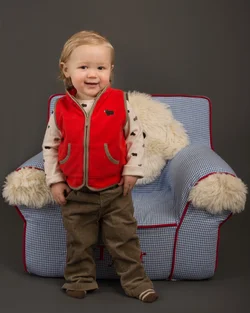
Yes, the lighting effect you achieved is pretty "flat"...soft, even lighting, with minimal shadows. Using two umbrellas (or two light sources) is one way to create low-contrast lighting that does not show a lot of texture. A classic method is over/under lighting, with one main light source above the lens axis, and a second light right below, which basically "fills in" the small micro-shadows created by the main light source on top; this works at the macro- and micro-contrast levels, and it's an old, old way to light people to minimize skin texture so as to alleviate the need to do a lot (or any) retouching or airbrushing. Same with the classic side-by-side, double-light source method, which is useful when photographing older people who have a lot of skin wrinkles that do NOT need "defining".
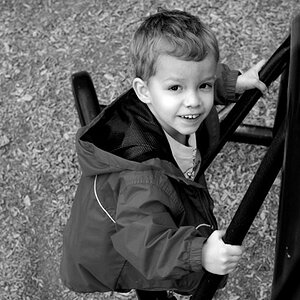
Toddlers of this age often have virtually perfect skin. If you are shooting in a smallish, low-ceilinged place, like say a room with 8 foot high ceilings, a pair of umbrellas can create a big wall of light, but they can also create a lot of what's called ambient spill, which bounces off the ceiling and walls and such, and creates a very high,high level of fill-in lighting. I've seen this many times with photos of infants and toddlers, who are literally, very "small subjects", smaller even than a smallish umbrella. If you want more shadowing, and more texture, and more 3-dimensional lighting on little kids, ditch the second umbrella in this type of situation. I mention "the situation", because say, in an apartment living room as opposed to say, a high school gymnasium, a single 42-inch umbrella in the apartment acts like a relatively large light source, whereas in a gymnasium, there is almost zero fill light created from ambient spill.





![[No title]](/data/xfmg/thumbnail/30/30990-df3df397f705643bc2c207cc9d579d08.jpg?1734159052)



![[No title]](/data/xfmg/thumbnail/37/37609-a1984365804384f841d8245ae7e3b9a7.jpg?1734170735)