What's new

Functioning Lightbulb Won't Work in Enlarger

Phlash

TPF Noob!
Joined
Sep 5, 2025
Messages
2
Reaction score
0
Location
California
Can others edit my Photos
Photos NOT OK to edit
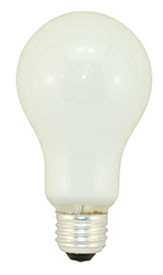
Hello. I just replaced the lightbulb in my Durst M700 enlarger with a Ushio PH212 Lamp (150W / 115-120V). This enlarger is rated for up to 150W bulbs. This bulb does not work in the enlarger, but it does work in lamps. And other tungsten lightbulbs work in the enlarger. I'm puzzled. Does anyone have idea why this functioning lightbulb won't work in the enlarger?
 
The standard watt for that enlarger is 75. Just because it is "rated up to 150w" does not mean it will work. IMO the 150w is way to bright and hot to use. I know some people want fast exposure times....but why? Take your time and learn how to use long times too dodge and burn. My shortest times are around 2-4 mins. But that's just my opinion.

 
The standard watt for that enlarger is 75. Just because it is "rated up to 150w" does not mean it will work. IMO the 150w is way to bright and hot to use. I know some people want fast exposure times....but why? Take your time and learn how to use long times too dodge and burn. My shortest times are around 2-4 mins. But that's just my opinion.

Thanks, webestang64.
Curiously, the 150w bulb works in my smaller Durst M600, not that I want to keep it there.
Different watt bulbs can be used with different negative densities. I read about a guy who uses a 200w PH213 for very dense negatives. Talk about hot!
But why a lightbulb doesn't work in only one receptacle, when others do, is very peculiar.
 
But why a lightbulb doesn't work in only one receptacle, when others do, is very peculiar.
I asked some darkroom guys about it at work ( I work in a camera store/lab) and they were just as perplexed.

I use a cool light enlarger (BW only) that uses projector bulbs for blue/green light but I have used many bulb condenser enlargers in my time as a lab tech and have never had this problem before. But then again I was using enlargers that were owned by the lab and I'm sure they were all factory spec.
 
Look straight down into the lamp socket. Is the center contact a flat piece of metal? If so, is it pushed into the socket as far as it can go without the lamp installed? If so, the lamp isn't making connection with that center contact.

Most people treat lamps like bolts and screws... they must be cranked down until they're on the verge of breaking. The proper way to install an Edison-based lamp is to turn the lamp far enough to light when the power is on, then 1/4 after that.

This prevents the aforementioned issue.

If the tab is all the way down, unplug the enlarger and use a small flat screwdriver to bend it back up.
 
Do you have a multimeter (VOM) and know how to use it? With the enlarger unplugged you need to have continuity from the center socket connector to one AC prongs and from the shell to the other prong with the switch on. If you don't meet those conditions darkness will prevail. The components in the circuit are the socket, the switch, and the AC plug.
 

Create an account or login to comment

You must be a member in order to leave a comment

Create account

Create an account on our community. It's easy!

Log in

Already have an account? Log in here.

New Topics

Back
Top Bottom