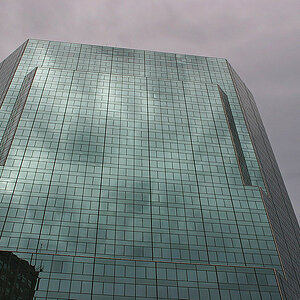
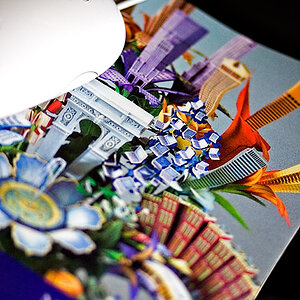
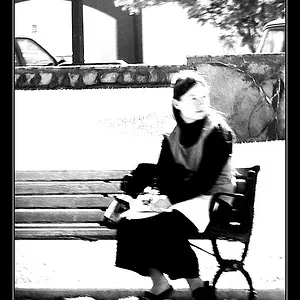
HDR stands for "High Dynamic Range". Basically, cameras can't see the entire range of light that our eyes can. If you've ever taken a picture on a bright sunny day of something in the shadows, you'll know what I mean. You can either see what's in the shadows, or the sky. Not both. But our eyes can. HDR is the remedy to this problem. You take several shots at different exposures (typically, at least 3). Some of the shots will be over exposed, some will be under exposed, and some will be in the middle. Then, the images are merged with software to give us an image that's more "true to life".
By messing with the settings in the HDR software, you can give images more contrast and saturation than the original image had. The result is a dramatic image that usually looks fake or CG. Some people like it, some don't.
The software most commonly used for this is Photomatix. It's not free, but you can download a fully functional trial that saves the image with a water mark. If you like it, it's $99 for the license.
BTW: Most cameras allow "Auto Exposure Bracketing" (AEB) that will take 3 or more pictures in a row, automatically under exposing, proper exposing, and then over exposing the scene for you. I recommend using this instead of changing the settings yourself. It's unlikely that you can change the settings without moving the camera.