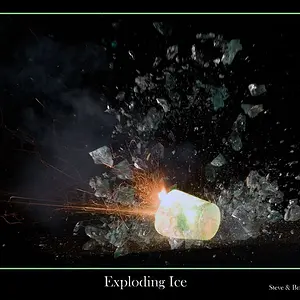
First I'll try to give you some idea of the difference between a zoom lens macro achiving about 1:2 and a real macro prime lens achiving 1:1 magnification.
Example of a Sigma 70-300mm f4-5.6 DG macro
more examples:
Random I 1000 - a set on Flickr
Compare that to 1:1 from a true macro lens (from 150mm sigma macro lens)
** note the above shots might be closer to 1.4:1 because I tend to do a lot of my work with a 1.4 teleconverter fitted to the macro lens.
actual 1:1 shot of a 2p UK coin
So you can see the actual difference between 1:2 and 1:1 is very noticable and certainly makes a difference with what you can do in macro terms with the setup.
I don't know that the OP is clear about what he's actually looking for.
1:1 Macro lenses for the D5000 under $1K:
$890 Nikon AF-S 105mm f/2.8G Micro VR
$730Sigma 150mm f/2.8 Macro (HSM)
$490 Nikon AF-S DX 85mm f/3.5G Micro VR
$460 -Tamron 90mm f/2.8 Macro (BIM)
A good list I'll also add the following:
Nikon 60mm macro
Tokina 60mm macro
Sigma 70mm macro
Tokina 100mm macro
Sigma 105mm macro
Sigma 180mm macro
Note that of all those lenses not one is a poor performer optically speaking - across the board they are all going to be very sharp lenses and in general even in test conditions any variations are going to be, overall, minor and subject to sample variation.
Thus choosing a macro lens is very much based upon you needs, budget and the features that each lens offers (like VR, HSM/USM etc..).
Also for focal lengths at 1:1 each of those lenses will give you the same framing of a shot - because 1:1 is a ratio of the size of the image reflected on the sensor : the size of the subject in real life. Thus at 150mm at 1:1 you get the same image as at 60mm at 1:1.
However a 150mm lens will let you get that shot from a little further away than the 60mm - this is important as if you want to work with insects the longer distance between you and subject lessens the chances of spooking the insect and having them fly/scurry/jump off. Generally 90mm or longer is recomended for insect work - that is not to say the shorter lenses cannot do this kind of work but that they can be a little more tricky to learn to do it with.
Also the canon MPE65mm macro - as mentioned earlier - is a totally macro specailist lens that starts at 1:1 and ends at 5:1 magnification - it can't shoot anything further away than 1:1 either.
To help give you an idea of this here is some examples:
1:1
3:1
5:1
note that I am just trying to give you an idea of what these magnifications are like; the lens is certainly not for beginners (unless you have very specific needs for highmagnification) and it is one of the hardest things to learn to do. Also note that whilst the MPE is unique to canon there are a varity of altnernative options that can be as optically good (and even sometimes better) than the MPE for getting to highmagnifications



![[No title]](/data/xfmg/thumbnail/38/38262-10a9668da9a2b36a92cddde57caf87bc.jpg?1734172150)

![[No title]](/data/xfmg/thumbnail/42/42478-4b86cc30ef794e056633611c9644b04e.jpg?1734177005)
![[No title]](/data/xfmg/thumbnail/38/38261-db20f6f92ee8f0d4c5cf1536e308638b.jpg?1734172147)
![[No title]](/data/xfmg/thumbnail/42/42480-70a0d1b3ccdeb380098dd12f512b4a17.jpg?1734177006)