What's new

How to improve early morning shots?

JustJazzie

Been spending a lot of time on here!
Joined
Jan 21, 2013
Messages
3,793
Reaction score
1,732
Location
Bailey, Colorado
Can others edit my Photos
Photos OK to edit
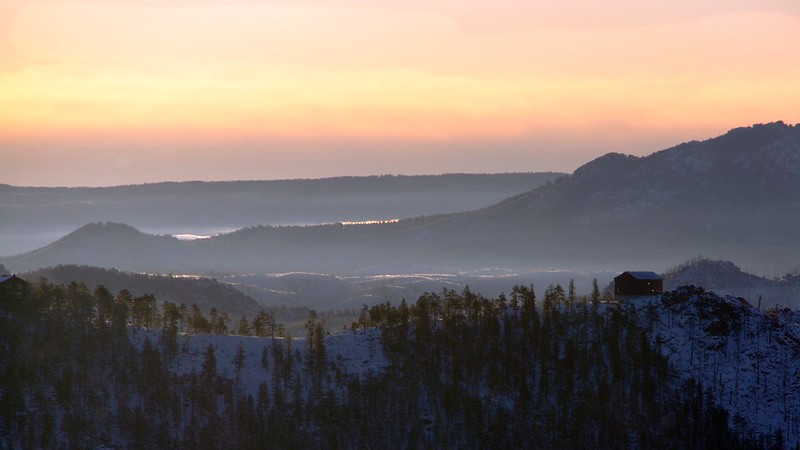
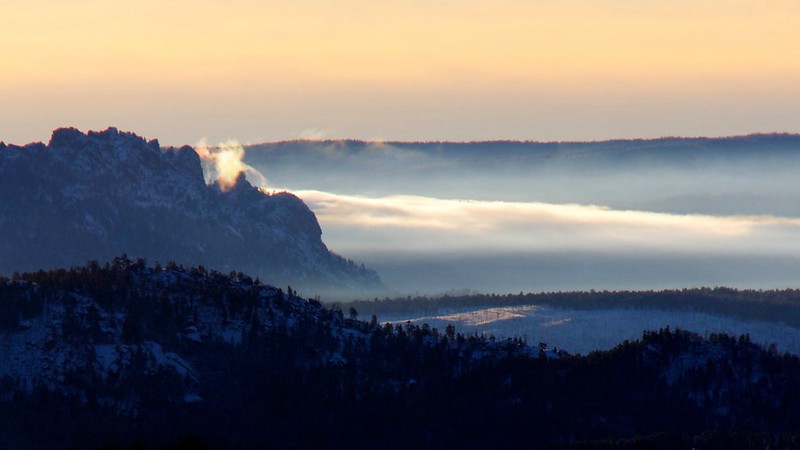
We are lucky to get lots of mornings like this off my porch. Unfortunately I'm not capturing it the way it is. Obviously I can't move the sun which is (I think?) causing the flat lighting. Soo, any suggestions for next time? Or is it just a bad time to shoot landscapes?
11223249504_e7cb4c12a6_c_d.jpg
11223264206_10432c955f_c_d.jpg
 
No, it's actually a great time to shoot, but the thing is, a lot of the details in the shadowed parts are going to need very meticulous processing...you need to show detail in the shadowed parts, but still retain the highlights, and still make the scene look "good". The top photo for example has a nice spot in the foreground where the trees on the ridge top, to the left of the building, are just starting to be back-lighted; that area could stand to be brightened up a bit, maybe by some judicious dodging. I'm not exactly sure how you want these shots to be rendered...the way the human eye sees is with a dynamic range that far, far exceeds any sensor, so what the photographer needs to do is to "fit" the scene DR into roughly 11 stops' worth on-screen...so you need to basically map out the tones, and "tweak" the shots. Curves, and black point, white balance, brightness level, exposure, and maybe split-toning, all could be used, as well as some dodging and maybe burning in too.

 
As Derrel said, its about the dynamic range.

You could also use a grad ND filter or take multiple exposures. Expose a shot for the sky, and one for the foreground and blend them in photoshop or a program like photomatix.
 
As Derrel said, its about the dynamic range. You could also use a grad ND filter or take multiple exposures. Expose a shot for the sky, and one for the foreground and blend them in photoshop or a program like photomatix.

I was wondering if HDR would be easier than all the PP. can't afford an hdr program right now though, so it looks like I will be trying to re PP these and see what I can do.
 
Isn't Derrel the cheese!? Play with AEB to take mutiple shots and play with them in post, try HDR, or you may need to look into neutral density filters. Forgive my short response because I am on am iPhone and my thumbs hate me right now.
 
I've tried my in camera HDR feature and it doesn't work so well, but maybe I will give it another shot.
 
I have a suggestion. You chose a good moment to shoot. Obviously this scene has potential. But I would suggest that big plain sky doesn't tell much of a story. The story is in the details and light patterns of the landscape. See that building at the lower right? I would want to explore that as the feature of the shot. If you could get it back- or side-lit with a rim of light against the fog of the landscape, that could be interesting. Or just isolate it against a smooth background of fog. Or you could isolate the rolling shapes and patterns of the hills. You would use a longer lens if possible. Same with the second image. Use a longer lens to isolate specific areas that tell a story. It's not always the whole scene. I think better shots are in this landscape; you just have to look for them and know how to tell a story.
 
Isn't Derrel the cheese!? Play with AEB to take mutiple shots and play with them in post, try HDR, or you may need to look into neutral density filters. Forgive my short response because I am on am iPhone and my thumbs hate me right now.

Derrel is not just the cheese, he's the cheese that comes in a can with all that cheesy, bacony goodness inside. Lol
 
There is a lot of particulate matter in the atmosphere in those shots that is lit up by the sun, mostly water droplets (fog/cloud), that is causing what you are calling 'flat lighting'.

The hills in the foreground facing the camera are dark because they are back lit.

The Sun is not at a 90° angle to the lens axis (causing the back lighting) so using a CPL filter would likely deliver an uneven effect. It's unfortunate, because a CPL filter would help to add some saturation to the blue and green colors in the scene.
You could use a hand held rectangular GND filter to reduce the exposure of the sky so the dynamic range of the scene is within the dynamic range your camera image sensor can record.
Another option is to make 2 exposures: 1 correct for the sky, 1 correct for the darker land, and then blend the 2 images using an image editing application.

Making a good HDR is a post process labor intensive approach that generally requires using several image editing applications.
 

Create an account or login to comment

You must be a member in order to leave a comment

Create account

Create an account on our community. It's easy!

Log in

Already have an account? Log in here.

New Topics

Back
Top Bottom