What's new

How to keep image sharp?

iLOVEhatephoto.com

TPF Noob!
Joined
Sep 22, 2014
Messages
34
Reaction score
3
Location
toronto
Can others edit my Photos
Photos NOT OK to edit
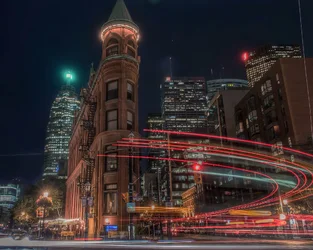
How do I keep my image sharp and light enough without blowing out areas of the image where there are bright lights present? Do I have to bracket my images?

Thanks,

alyssa
 

Attachments

  • streets of toronto.-8.webp
    streets of toronto.-8.webp
    369.3 KB · Views: 274
Last edited by a moderator:
Possibly. If the dynamic range is more that your camera can cope with then you will get blown out highlights or shadows so bracketing can be used to effectivley extend the dynamic range of your camera. Getting a sharp image is more about keeping your camera steady with long exposures so make sure you use a tripod, enable mirror lock up, have adequate depth of field, use a remote shutter release and shoot at the aperture that is the "sweet spot" of your lens. Then it should just be a matter of getting the exposure right. I find the zone method (where you spot meter on the highlights and shadows of the scene to know where your exposure should fall) quite useful for this.

Here is a nice wee tutorial on it:
Understanding & Using Ansel Adam's Zone System - Tuts+ Photo & Video Tutorial
 
Well, without looking at a specific scenario, you basically have a couple of options (when it comes to avoiding a situation where some highlights in the background dominate the photo and result in an underexposed foreground):

1. Setup the shot differently. This could mean doing things like....composing it so the bright lights aren't in the background, shooting it during a different time of day (so the street lamps aren't on or the sun isn't up or the glare isn't present).

2. Light the foreground. Even that nasty old pop-up flash...add some light to the foreground. That's why, when I'm shooting at noon on a beach I often bring a speed light and trigger.

3. Change exposure compensation or shoot manually.

There are obviously a gazillion other possibilities (depending upon the specific circumstances....go all HDR on us, use a graduated neutral density filter, etc.) but they apply to a specific situation. As for the sharpness, that's a function of shutter speed, movement by the subject, the ISO you're shooting at, and the amount of movement of the camera. Since this in the landscape-cityscape forum than I suggest you look at shooting with a tripod.
 
It looks reasonably sharp to me. Maybe at full resolution zoomed right in it isn't but you have to think who is looking that closely besides you.

It looks like you made it darker in your editing? The streaking headlights in the bottom left look grey when they should look white. Some of the other lights look unnaturally dark as well.
 
Shoot at twilight. You should be able to get it all in one exposure then. Beyond that it's quite likely that you'll need to use more than one exposure, depending on the ambient light levels and which camera you're using. You can try using a very flat, neutral picture style in camera to get a better idea of what the raw data looks like. Doing this you may find that you can use longer exposures before highlights start to clip, then it's a matter of pushing the shadows and pulling the highlights a bit in post.
 
That's a pretty good shot of the Flatiron Building! The bus' lights make the shot. The car on Front St, facing the camera is unfortunate, but not unexpected. I'm not sure what you were hoping for. I would crop the lower left corner out, which would remove most of the car's lights.

If you go back to shoot it again, take a wider lens to allow you to get all of the roof in, and to allow you to straighten the photo. You can lose quite a bit when straightening. The trees on the centre divider prevent you from moving east, so you only have the intersection to shoot across, but if you climb up on the planter, you get some elevation. Later in the fall, after the leaves are gone and before it snows, there may be an opportunity to shoot from further down the street.

If you are going for those long light trails, shooting earlier will be counter productive unless you have ND filters. If you had started your exposure a second or two earlier, the bus might have blocked the car's lights for part of the exposure which would have made them a little dimmer. Relying on traffic is hard. You take photo after photo, until you get what you want. Easier with digital than with film because you can check to see if you got the shot you wanted.

A sharp image comes from your camera and your subject(s) not moving. Not blowing out highlights comes from exposure, and in some cases from HDR.

 
It looks reasonably sharp to me. Maybe at full resolution zoomed right in it isn't but you have to think who is looking that closely besides you.

It looks like you made it darker in your editing? The streaking headlights in the bottom left look grey when they should look white. Some of the other lights look unnaturally dark as well.


Yeah very true. I did enlarge it and submit for a photo exhibition in the city of Toronto. I can't remember exactly off hand what I changed but I know that I did darken the lights from the cars because the lights from the street and buildings were too bright. I didn't know how else to go about it to achieve the best finished image.
 
That's a pretty good shot of the Flatiron Building! The bus' lights make the shot. The car on Front St, facing the camera is unfortunate, but not unexpected. I'm not sure what you were hoping for. I would crop the lower left corner out, which would remove most of the car's lights.

If you go back to shoot it again, take a wider lens to allow you to get all of the roof in, and to allow you to straighten the photo. You can lose quite a bit when straightening. The trees on the centre divider prevent you from moving east, so you only have the intersection to shoot across, but if you climb up on the planter, you get some elevation. Later in the fall, after the leaves are gone and before it snows, there may be an opportunity to shoot from further down the street.

If you are going for those long light trails, shooting earlier will be counter productive unless you have ND filters. If you had started your exposure a second or two earlier, the bus might have blocked the car's lights for part of the exposure which would have made them a little dimmer. Relying on traffic is hard. You take photo after photo, until you get what you want. Easier with digital than with film because you can check to see if you got the shot you wanted.

A sharp image comes from your camera and your subject(s) not moving. Not blowing out highlights comes from exposure, and in some cases from HDR.

Thank you! Yeah I waited for a car to pass by in front and was lucky enough for it to be a bus at the right time. It was difficult because when cars stopped facing towards me the lights were too bright causing problems so was hoping to catch something when there weren't any cars coming towards me.

Good point. I'm looking to purchase a wide angle lens. I believe I had my tripod on the planter. I like shooting at night to capture light streaks so not using a tripod isn't an option unless of course I do opt to shoot the building during the day.

Yes most of the issues were from the car lights. Especially the on coming traffic. Of course when you want a car to pass, then there aren't any.

Appreciate your help and feedback :)
 
Shoot at twilight. You should be able to get it all in one exposure then. Beyond that it's quite likely that you'll need to use more than one exposure, depending on the ambient light levels and which camera you're using. You can try using a very flat, neutral picture style in camera to get a better idea of what the raw data looks like. Doing this you may find that you can use longer exposures before highlights start to clip, then it's a matter of pushing the shadows and pulling the highlights a bit in post.

That's another option to consider thanks. I just didn't like the tone of the sky that very evening and was hoping to achieve a shot after dark. However that posed a lot more problems than I had anticipated even at different perspectives. I'm using a Canon 70D.

Thanks for the suggestions. I will go back and try again a little earlier in the evening and see what I get.
 
Well, without looking at a specific scenario, you basically have a couple of options (when it comes to avoiding a situation where some highlights in the background dominate the photo and result in an underexposed foreground):

1. Setup the shot differently. This could mean doing things like....composing it so the bright lights aren't in the background, shooting it during a different time of day (so the street lamps aren't on or the sun isn't up or the glare isn't present).

2. Light the foreground. Even that nasty old pop-up flash...add some light to the foreground. That's why, when I'm shooting at noon on a beach I often bring a speed light and trigger.

3. Change exposure compensation or shoot manually.

There are obviously a gazillion other possibilities (depending upon the specific circumstances....go all HDR on us, use a graduated neutral density filter, etc.) but they apply to a specific situation. As for the sharpness, that's a function of shutter speed, movement by the subject, the ISO you're shooting at, and the amount of movement of the camera. Since this in the landscape-cityscape forum than I suggest you look at shooting with a tripod.

The highlights in the background were much more challenging than I expected especially facing cars that would stop at the light.

I tried a few different perspectives at this location but there are a lot of street and city lights illuminating the area.

Your second suggestion isn't something I have tried. So I think when I go back I will attempt this way.

Okay I will check the other forums as well.

Thanks for your advice :)
 
Possibly. If the dynamic range is more that your camera can cope with then you will get blown out highlights or shadows so bracketing can be used to effectivley extend the dynamic range of your camera. Getting a sharp image is more about keeping your camera steady with long exposures so make sure you use a tripod, enable mirror lock up, have adequate depth of field, use a remote shutter release and shoot at the aperture that is the "sweet spot" of your lens. Then it should just be a matter of getting the exposure right. I find the zone method (where you spot meter on the highlights and shadows of the scene to know where your exposure should fall) quite useful for this.

Here is a nice wee tutorial on it:
Understanding & Using Ansel Adam's Zone System - Tuts+ Photo & Video Tutorial

Great I appreciate you attaching the tutorial. I always like to look at other options once I feel I have exhausted all my own. I get stuck in the same position so receiving advice from others that are more skilled is always helpful.

Thank you!
 
..........
If you are going for those long light trails, shooting earlier will be counter productive unless you have ND filters. .............................
You can get an exposure that is plenty long at twilight while still being able to balance the natural with the artificial light. ;) I've got twilight shots that are 25 and 30 seconds long.
 

Create an account or login to comment

You must be a member in order to leave a comment

Create account

Create an account on our community. It's easy!

Log in

Already have an account? Log in here.

Back
Top Bottom