What's new

I tried out what I just learned.

mostlysunny

TPF Noob!
Joined
Sep 4, 2012
Messages
46
Reaction score
14
Location
Northhridge, Ca
Can others edit my Photos
Photos OK to edit
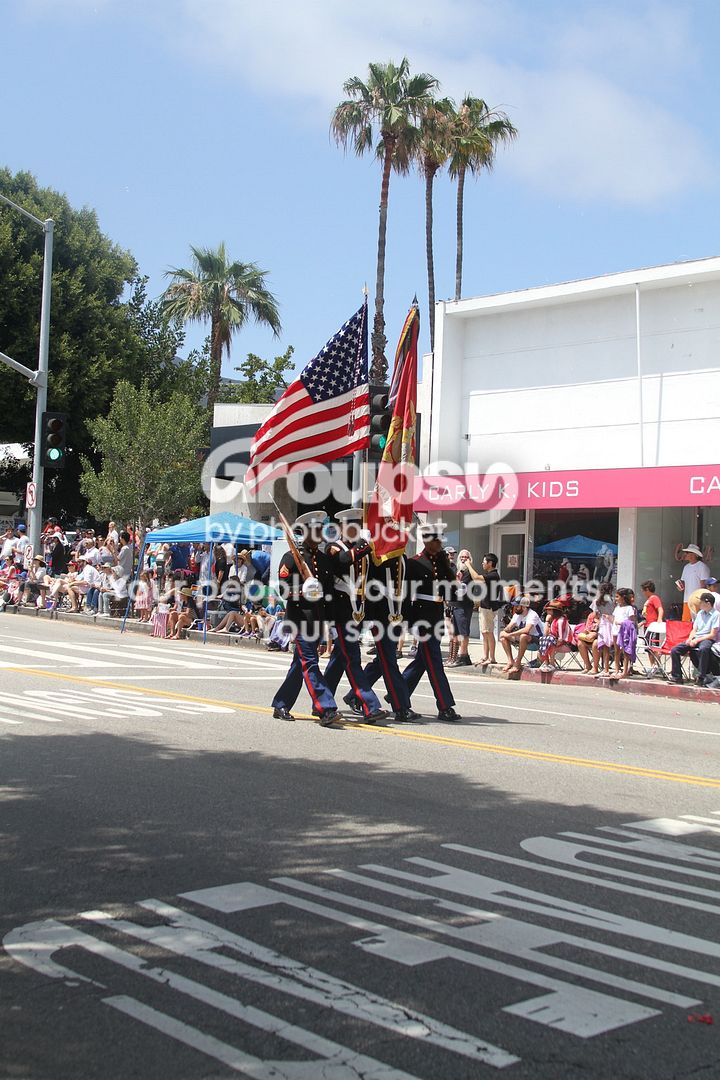
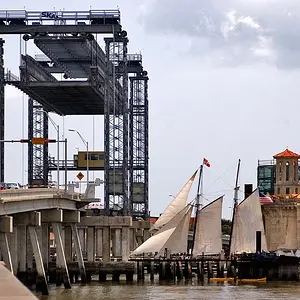
In my last class I learned how to read the meter on my camera. I am not sure I am adjusting it properly. This is what happened. My pictures all have the same coloring in them.. But let me ask about this picture. Doesn't it look a bit out of focus. I am still trying to understand exposure.. So keep that is mind. Any help appreciated..

 
OK, it helps to know the details about the shot.
For instance you shot this with your Canon 7D and speed was 1/640 (fast enough), ISO was 160 (also OK) but the shutter was set at f5.0 so you didn't get the best depth of field you could.
You could have raised the ISO a tad and lowered the speed to say 400 and had the ability to raise the f number up to say 11 or more. Same exposure but more depth of field......
 
Adjusting shutter speed and aperture together in opposite directions will give the same exposure but different images.

A slow shutter speed with a small aperture will give high depth of field but may have blurred motion, where movement isn't frozen by a fast shutter.

A fast shutter speed with a large aperture will freeze motion but show a shallow depth of field, with foreground and background more out of focus.

If you need the fast shutter speed but your aperture is too large when exposed properly (depth of field too shallow) then you need to raise the ISO which will allow you to use a smaller aperture and increase the depth of field.

Generally you set the ISO and then adjust shutter and/or aperture as needed using the meter. If you can't get the range you need in those settings, then you adjust the ISO.

Depth of field is not metered and it's not part of exposure, per se. It's a consequence of the aperture setting, and you have to be aware of what aperture you want to be using the get the depth of field you need.
 
OK, it helps to know the details about the shot...............

Camera Maker: Canon
Camera Model: Canon EOS 7D
Lens: EF28-135mm f/3.5-5.6 IS USM
Image Date: 2015-07-04 14:20:32 (no TZ)
Focal Length: 33.0mm
Aperture: ƒ/5.0
Exposure Time: 0.0016 s (1/640)
ISO equiv: 160
Exposure Bias: none
Metering Mode: Matrix
Exposure: Manual
Exposure Mode: Manual
White Balance: Auto
Flash Fired: No (enforced)
Orientation: Normal
Color Space: sRGB
GPS Coordinate: undefined, undefined
 
Everything you all mentioned was taught in class last week. I am a little slow. I am not completely understanding. I was always slow to get things. Our instructor told us that the shutter speed and F/stop is something that will become second nature. We have a cheat sheet.. But I don't even understand it... Maybe next class.. :Clown: While I have had my camera a LONG time. I never knew how to use it.
:cocksure:
 
Everything you all mentioned was taught in class last week. I am a little slow. I am not completely understanding. I was always slow to get things. Our instructor told us that the shutter speed and F/stop is something that will become second nature. We have a cheat sheet.. But I don't even understand it... Maybe next class.. :Clown: While I have had my camera a LONG time. I never knew how to use it.
:cocksure:

The shutter opens to allow light to enter the camera and you determine how long it will be open; the longer it's open the more light strikes the sensor which is referred to as exposure. The f stop refers to the aperture which works much like the iris in your eye. It opens in varying amounts to allow more or less light in. The f number states the size of the opening, the smaller the number the larger the opening and, in turn, more light. The greater the number the smaller the opening equals less light.

Someone above referred to a 'shutter value of f5', which is incorrect. Shutter values are time as in 1/160th of a second.

Good little Wiki article you might look at: Aperture - Wikipedia the free encyclopedia
 
You can think about water in a bucket? The size of the bucket tells you how much is needed (meter reading). The size of the spout opening tells how much water will flow in a given time (f-stop) and the time you pore (shutter speed)tells how long it takes to fill the bucket. Always will take the same amount of water but you can pour longer with a small opening or shorter with a large opening.................
Silly analogy but spot-on.
 
I think it turned out pretty well. I would have probably used a smaller aperture because with a parade you're photographing an area from fairly close to you, to across the street. You want all of that in focus.

I would have probably been in the f8 or 11 to f16 range on a nice sunny day - depending on what's going by, for a large group of people like a marching band I'd probably want more depth of field and set it closer to f11 or 16.

On a sunny day you're probably fine with an ISO in the 100-200 range. The ISO is a measure of light sensitivity. If it's not as bright, that's when you need a higher ISO (more light sensitivity).

It was probably good having a fairly fast shutter speed because you were shooting movement and that would avoid blur,

My starting point (and where I reset my camera so it's ready for next time I use it) is midrange, f8. So then I just have to open or close the lens a couple of stops to adjust aperture. I usually start at 1/125 shutter speed and set it faster to at least 1/250 or faster if it's sunny or if I'm doing sports. Usually I go with an ISO of 100-200 outdoors sunlight and 400 in lower light or cloudy days, depends on the time of day (higher ISO for low light indoors).

It will take time to get the hang of it all and figure out what works for you. With this one I'd think about making a copy and cropping the left side some to get rid of the pole that's at an odd angle. It would have been nice to have less of the street in the foreground but you couldn't get any closer, and since there's lettering there I'm not sure if/where I'd crop the bottom. Then you'd have a nice photo I think. Keep practicing.
 
It looks to me like a very slight case of back-focusing. My guess is that the camera was allowed to select the focusing point or points used to set the ACTUAL focus distance...the clue is the wording in the crosswalk...the closer lettering is out of focus...the many,many people in the background all serve to create a high-contrast target for a brainless, automated machine system...MANY times, strongly-patterned or strongly-differentiated backgrounds will cause an AF system to back-focus, or to focus in back of closer subjects...this looks that way just a bit. At /5 at 33mm at that distance, the OOF foreground will not be terribly OOF, but just a tiny bit...to me it looks just slightly back-focused. Look at the yellow line in the street...it looks just barely OOF...behind the far man the focus appears to be optimal, but this is close enough for the issue not to be glaring, but very subtle.
 
Try to think of it this way: All three items (ISO, Aperture, & Shutter Speed) are all related to each other!!

So, changing the ISO from 100 to 200 makes the sensor (or film) MORE sensitive to light by a factor of

two. Going from 200 to 400 doubles it again. However going from 400 to 200 halves it back to its original sensitivity! Shutter speed does the same thing so going from 60 to 125 milliseconds, HALVES the amount of light reaching the sensor. By making the shutter move quicker. So going from 125 to 60 doubles the amount of light by making the shutter move slower! Adjusting the lens aperture, will have a similar effect; so adjusting the lens aperture from f4 to f5.6 halves the amount of light coming through the lens, by making the aperture physically smaller. Or going from f5.6 to f4, doubles the amount of light coming through the lens. All of these keep the camera

from OVEREXPOSING or UNDEREXPOSING your photographs! However, adjusting any/all of these will have different effects on the photographs you take. Something to go into at a different time, once you have grasped the subject gone into here!!

If you need any more info, please contact me & if I can help, I will!! Hope this helps!

 
Shutter speed does the same thing so going from 60 to 125 milliseconds,

Just a small correction if I may.....shutter speed is measured in fractional parts of a second. A millisecond is 1 one thousandth of a second. That is, a shutter speed of 1/60 is one 60th of a second not 60 milliseconds. One 60th of a second is .016 or 16 milliseconds. One 125th equals .008 or 8 milliseconds.
 

Create an account or login to comment

You must be a member in order to leave a comment

Create account

Create an account on our community. It's easy!

Log in

Already have an account? Log in here.

New Topics

Back
Top Bottom