My written hand book doesn't show the 89B so I haven't got reference to it's transmission spectra, but the web recons it transmits from 690nm (Kolari class it as a 720nm equivalent).
The 87 starts transmitting about 740nm & reaches 50% around 800nm (50% transmission usually being the wavelength quoted).
If your new camera hasn't been specifically converted to IR (by removal of the hot mirror) I suspect the 89B will include significant longer wavelength visible reds - but this will depend on the actual transmission of the hot mirror. The 87 should only give pure IR so would probably give better results (higher contrast & sharper images, but no chance of drawing out any color - which is possible with 720 filters).
My main IR camera is full spectrum converted seeing IR, visible & (some)UV. I use it with a very wide selection of filters for different effects including many normal photography filters - most of which transmit IR. I occasionally still use unmodified cameras for IR (usually for longer exposures) but with these I never use filters with a cut off below 720nm.
You can get very cheap Chinese IR filters in many wavelengths including 720nm ~ something around 800nm. I've always had acceptable results from these cheap filters. So it may be a good idea to try them before splashing out on more expensive filters especially if your not sure which will be best for you.
I'm afraid I can't offer specific advise on lenses - I don't have any F-mount lenses. The only real problem I've seen in using lenses for IR is hotspots. There are lists of 'lenses that give hotspots' out on the web but I suspect there are too many variables for them to be reliable. I've had hotspots at some apertures using a lens on a normal camera for IR, but never seen them using the same lens for months on the converted camera.



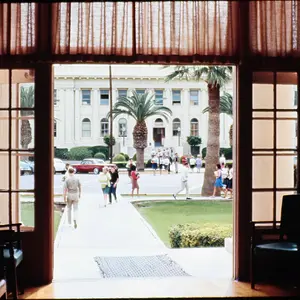
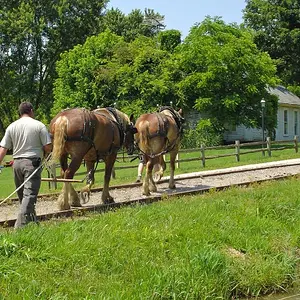
![[No title]](/data/xfmg/thumbnail/32/32929-22e23acc63d6ecb25e5ee941be87121f.jpg?1734162700)

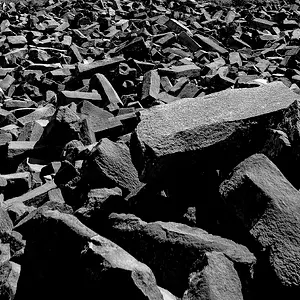
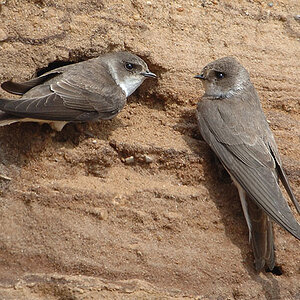
![[No title]](/data/xfmg/thumbnail/35/35962-c0d3c2e7c3fd7f9bd7e12c21f955f4f0.jpg?1734167808)
![[No title]](/data/xfmg/thumbnail/35/35966-4f59fb71a71adfe775ae568f8c534699.jpg?1734167835)
![[No title]](/data/xfmg/thumbnail/32/32930-09414fc020c2a60a456ff59a05c5ef8f.jpg?1734162706)
![[No title]](/data/xfmg/thumbnail/34/34055-9c9c587b8094b98e1010fe73cead6994.jpg?1734164467)
![[No title]](/data/xfmg/thumbnail/34/34346-f7996f51f0624620cfd54a488abeacf9.jpg?1734164887)