What's new

ISO reality...

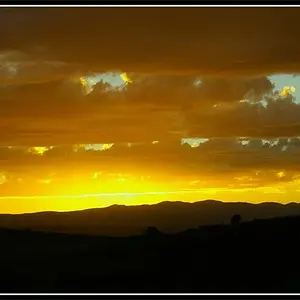
My rule of thumb is shoot at the lowest ISO possible, usually 100. Sometimes, when flash is used, I start at 200 since the difference in quality is minimal and it saves the flash some work. The upper limit is how high your camera goes. The super high ISOs are something I'd reserve for when the need to get the shot trumps any other photographic element, which is rare. One of your problems is shooting from the hip at dusk. If you were to use a tripod, you could use 100 more often. When I can't get what I need at 100, I go up a stop at a time until I get it. In Hawaii, even at a luau, I never went above 800. I took a low-light sunset shot while illuminating foreground flowers with OCF, all hand-held, at ISO 400. This worked because exposing for the sunset gave me a decent shutter speed for the sky and the OCF helped freeze any motion in the foreground. Joel Nisleit Photography | Colors of Hawaii | Kaanapali Sunset.
 
So Tim, is the noise brand-dependent, or is it like fingerprints...every camera is different?

I'd say more "model" dependent. Technically there is some fingerprint-like noise that shows up in a sensor which is unique to that sensor (another identical camera would have a different pattern.) Astro-imagers notice that problem because it can be difficult to distinguish noise from very faint stars. Basically they take multiple frames to look for random noise and remove it, but the pattern noise will remain... dark frames and dithering (dithering involves taking multiple exposures of the same deep-sky object, but offsetting each image slightly. True stars will shift, but pattern noise will remain in place.)

Noise is also proportional to operating temperature of the sensor. I might start out imaging and the sensor will be cool... but after imaging for a while it'll warm up considerably and there will be more noise. Colder sensors have less noise. High end astro-imaging cameras often have cooling systems to keep the temperature cold.

The amount of noise will be approximately the same between two sensors of the same model on the same camera.
 
Here's an example that Canon fanboys really hated seeing when it came out. Why? because it was done by none other than Mr. Fred Miranda, himself, and it was done side-by-side, using the same,exact lens on an adapter, and it pitted the Canon 5D-III against the Nikon D800. it kind of shows the noise issue that has plagued Canon for the last five years; pattern noise in the shadows, even on $3,500, brand-new higher-end cameras...

Part II - Controlled tests

Canon 5D-III: canon-mk3-2b.jpg

Nikon D800:nikon2b.jpg
 
Cameras are built for a BROAD range of users. While it may be true that if you were the only user of canon, canon would have stopped making ISO lower than 1600, and really worked on high iso, that's not the case.

But, be that as it may, have you looked in detail at shots taken at ISO 100 and ISO 800? I shoot with a D700, which is a respectable full frame Nikon.

If I shoot at ISO 1600, sure I don't see a difference in image quality when zoomed out. But if I view at the highest zoom level there is a HUGE difference in detail available.

Try standing still, in bright sunlight, where you can shoot f8 at ISO 100 and ISO 800. Make sure your shutter speed is reasonably fast (say at least 1/125 on ISO 100). You'll see a definite difference in details in the pixels
 
So Tim, is the noise brand-dependent, or is it like fingerprints...every camera is different?

Every model is different. Noise is dependent on a very VERY wide variety of things. You can't even compare sensor models as an indication of noise. As an example I upgraded from a D200 to a D800 partially to reduce high-ISO noise. That wasn't enough for me recently so I upgraded my D800 and replaced it with a camera that has the same sensor as the D200 did yet performed better still for my purposes (low noise, long exposure times).

Some manufacturers are better than others. Then the fanboys come out and say "We're so much better blah blah blah". Nikon used to get blasted for it's high ISO performance. It was crap. The D200 at the time was beaten by Canon cameras which were cheaper. Fast forward 5 years and Canon can't seem to get anywhere near Nikon in terms of high ISO performance. Does that mean Nikon is better? Now, maybe, but this could all change with next year's models.

.

To touch on your initial question, raising the ISO has effects other than noise including lower dynamic range and less accurate colour reproduction. You should always shoot with the lowest ISO you can get away with. This is situation dependent. Anyone who quotes you a number is likely to ruin more photos then they should if they selected something appropriate. If I'm on a tripod taking a long exposure, ISO100 almost no doubt. If I'm shooting in the street ISO100 may be fine, but I may instead choose ISO400 as who the hell knows, the next time I shoot from the hip the subject could be in the shade or there could be a cloud etc.
 
Great band name BTW.
 
I use ISO 3200 all the time on my D90.


I'm not get paid though.
 

Create an account or login to comment

You must be a member in order to leave a comment

Create account

Create an account on our community. It's easy!

Log in

Already have an account? Log in here.

New Topics

Back
Top Bottom